

Pond Farmers is a term of affection among the alumni of the Pond Farm Pottery studio, which was founded by Marguerite Wildenhain in Armstrong Woods near Guerneville and ran from 1949 up until 1980. About 20 of the Pond Farmers showed up at the Sebastopol Center for the Arts on a Friday evening in March for the debut screening of a short documentary film, Bauhaus Legacy, that followed a group of them as they travelled to the historic sites of the Bauhaus in Germany in 2025.
“The Legacy of Pond Farm” by local poet and biographer, Iris Jahmal Dunkle, provides a good overview of Wildenhain and the origins of Pond Farm.
The Pond Farmers in the audience greeted one another warmly like old friends and you’d hear them ask each other gently, “Are you still making pots?”
“Oh yes, regularly.”
“Some.”
“Occasionally”
“Not very often anymore.”
Making pots was the reason they went to Pond Farm to learn from a Bauhaus master who remains a common connection more than 50 years later. The Pond Farmers also represent a community that has carried Wildenhain’s legacy forward in their own time. “There’s an awful lot of great potters in the room,” a volunteer in the ceramics department at SebArts told me excitedly. When Serafina Palandech introduced the event, she said how the ceramics department was the heart of SebArts, open 24-7 for local potters. “We call it the Clayground,” she said.
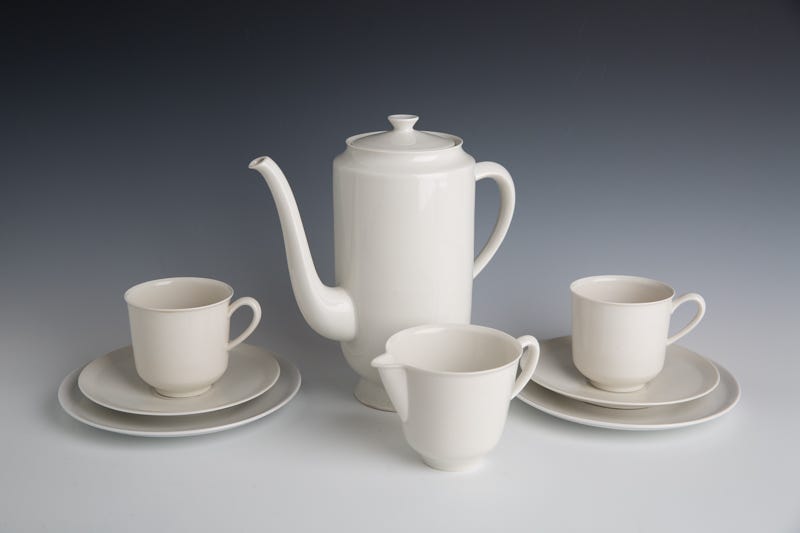
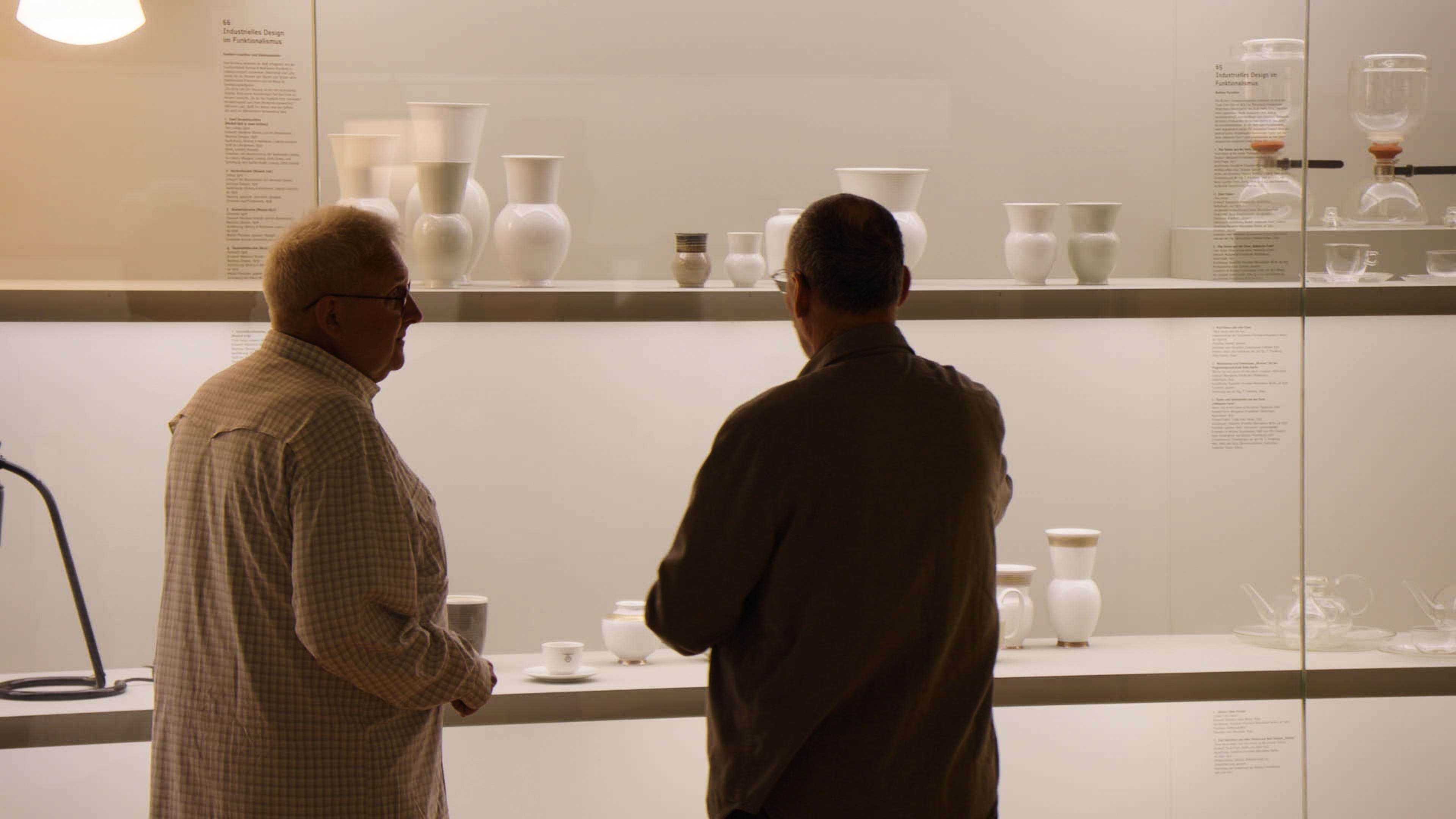
Brent Johnson was the organizer of last year’s trip to the Bauhaus, which was the subject of the film. “My goal was to invite a group of Pond Farmers on a multi-city, ten-day tour of Bauhaus Museums and historical sites that began in Weimar and ended in Berlin where we toured the Porcelain factory that produced Marguerite’s celebrated Hallesche Forms. They were pure in form (white porcelain) and free of any decoration which critics hailed as one of the first true example of Modern ceramic design.”
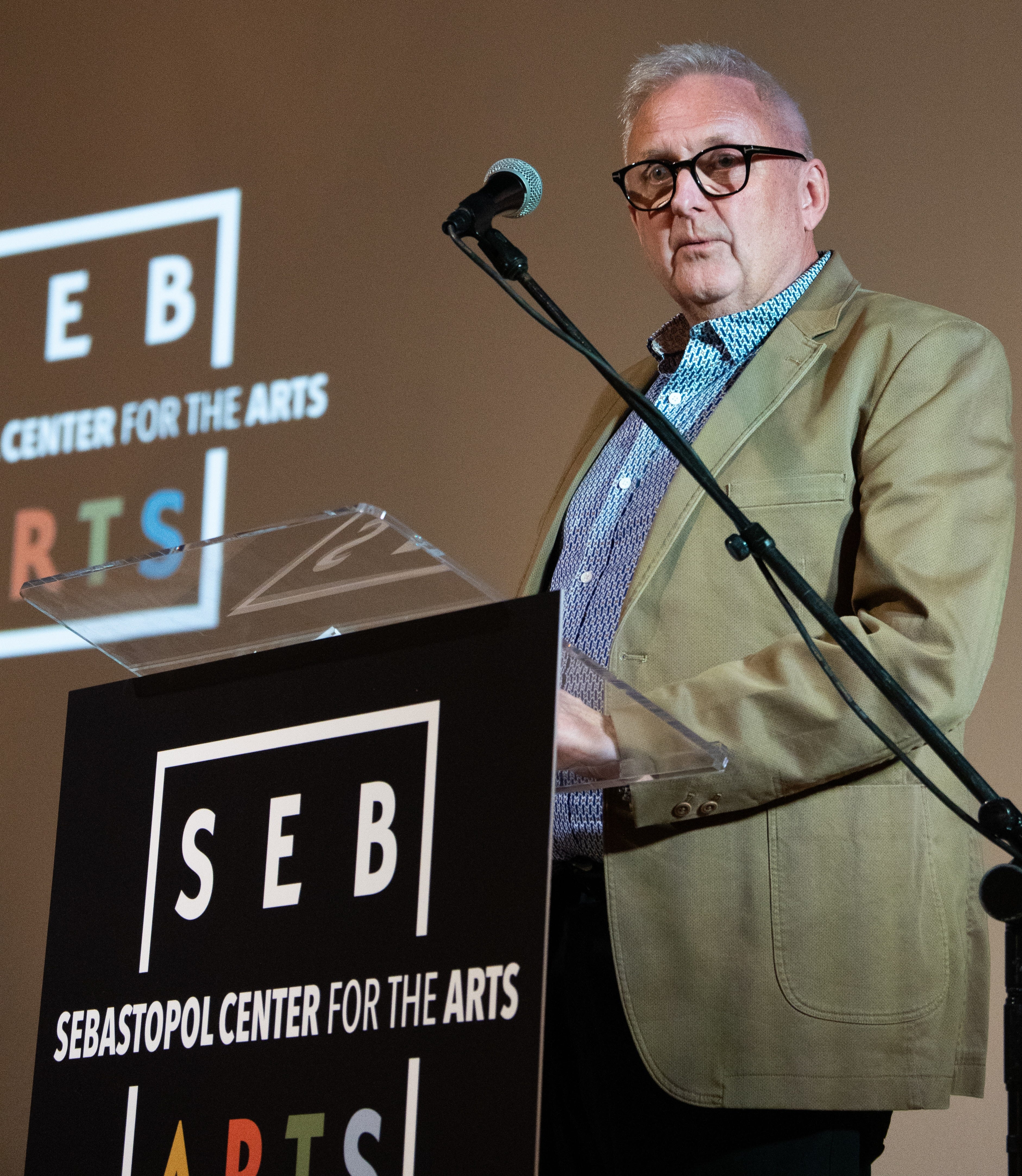
“The Pond Farmers had trained with Marguerite,” said Johnson. “But they didn’t know how she had been trained, other than they knew about the Bauhaus. And this trip allowed them to explore that.”
Johnson had made previous trips with Dean and Geraldine Schwarz to Germany. Schwarz developed his own pottery school in the Midwest, the South Bear School in Iowa, following the model of Pond Farm. Johnson was a student of Schwarz and received his training at the school.
“Many of those who went on study with Marguerite at Pond Farm began their studies under Dean Schwarz who was a Pond Farmer himself in the 1960’s,” said Johnson. Schwarz established South Bear School in 1970 in rural Iowa and modeled the school after Pond Farm. “He taught us the same lessons Marguerite taught him and she learned from her Bauhaus masters,” said Johnson.
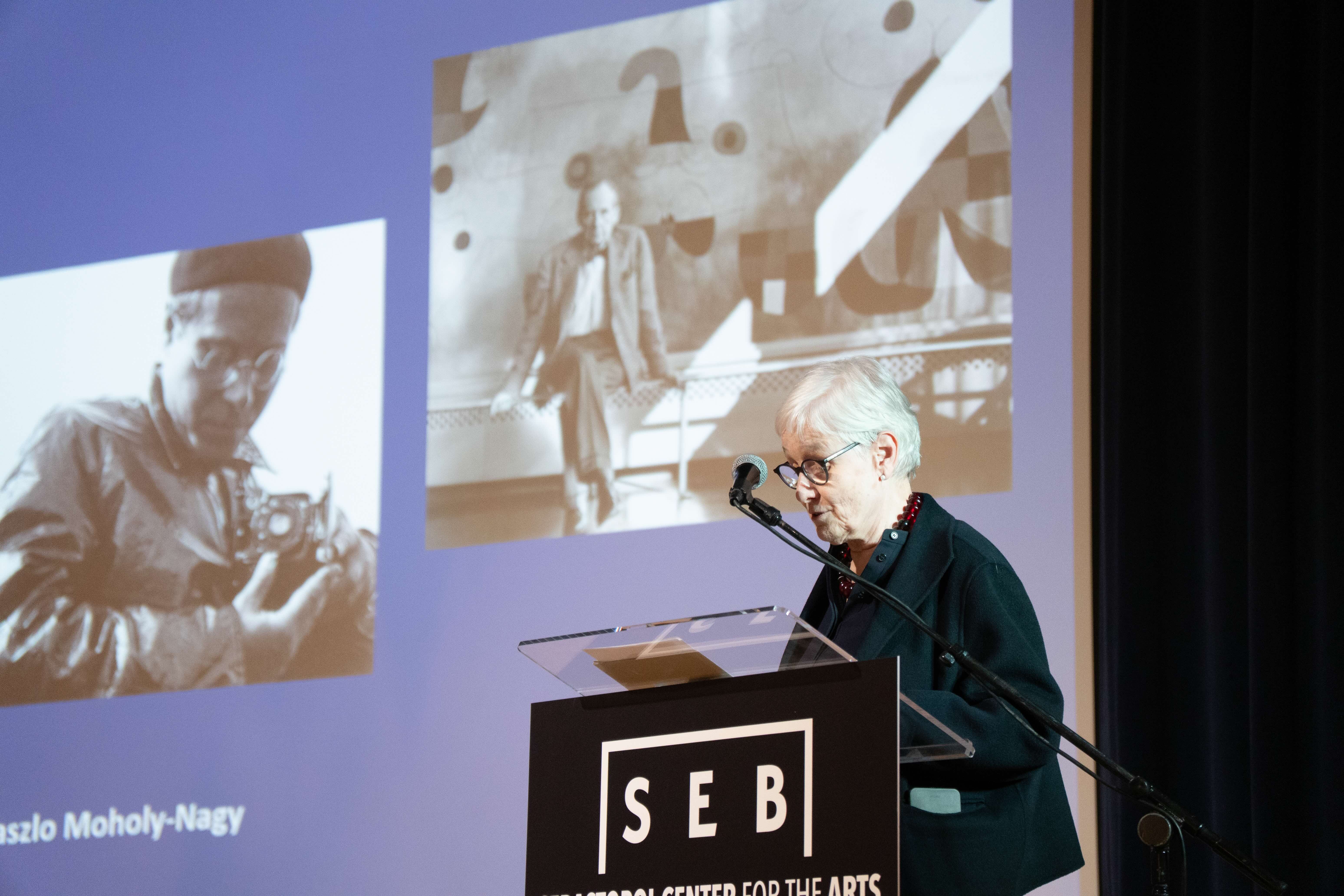
At this event, Johnson introduced author and art historian Katja Schneider-Stief, who traveled from Halle Germany to present a lecture on Marguerite Friedlaender at the Bauhaus and Burg Giebichenstein (1919-1933), which was the subject of her doctoral dissertation. She is currently working on a new biography about Marguerite Friedlaneder Wildenhain. (Marguerite married Franz Wildenhain in 1930 but is still often referred to as Marguerite Friedlaender in Germany.)
“I met Katja 25 years ago through Dean when she was the director of the Mortizburg Museum in Halle,” said Johnson. On that earlier trip, Johnson found that Marguerite Wildenhain was not well-known in Germany. “She was considered a footnote to Bauhaus history,” said Johnson. “This recent trip helped to create momentum for bringing her story back to Germany.”
On this trip, Johnson said Schneider-Stief “emptied the vault, and set out all these wonderful pots for us. She’s just always been very supportive of helping to educate us about Marguerite in Germany.
Marguerite spent half her young life in Germany, moving there with her parents from France in 1919. She remained until 1933, when she fled to Holland because she was Jewish and Hitler had come to power. Later, when the Germans invaded Holland, Marguerite was able to leave for the United States but her German husband was not.
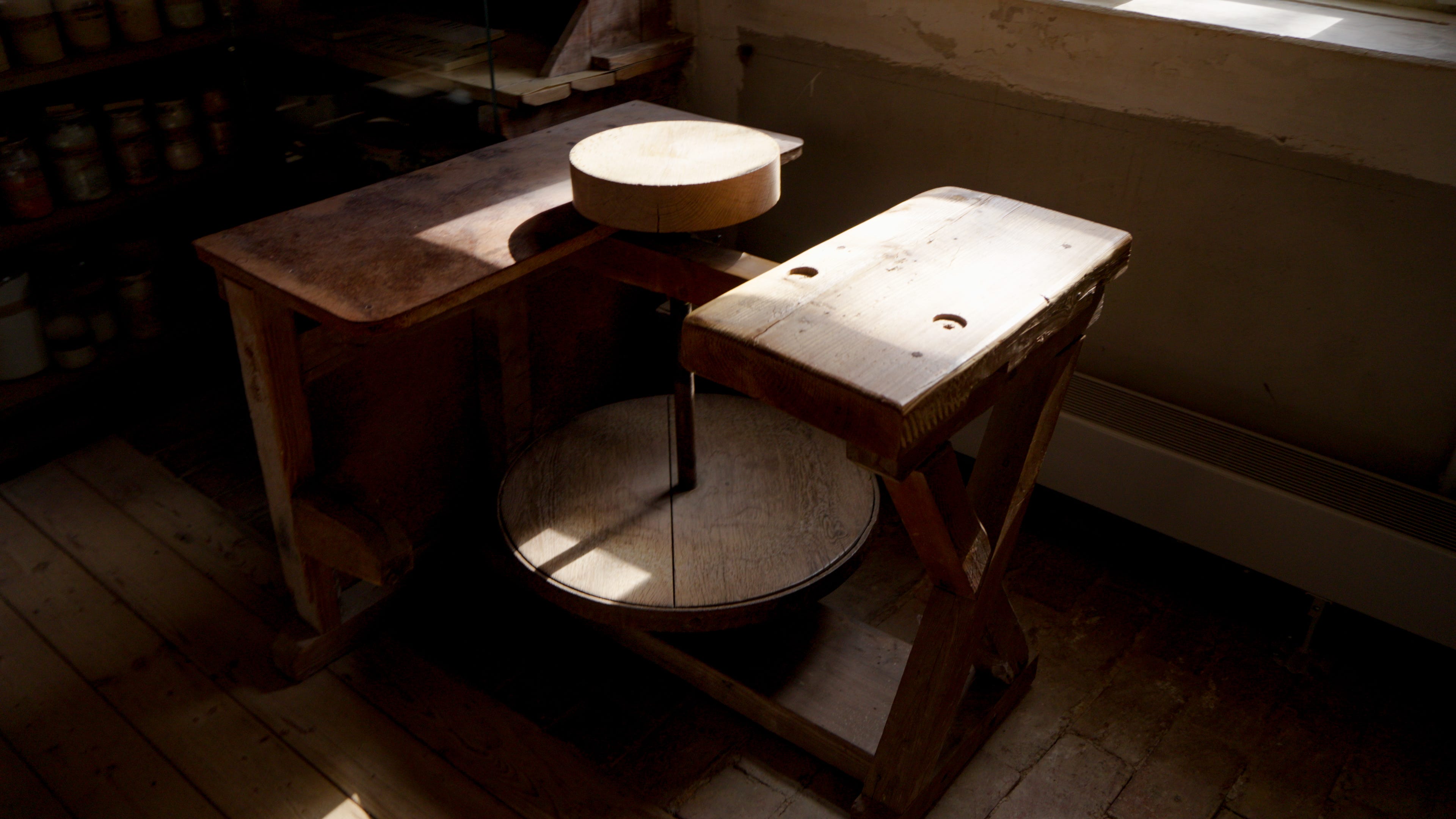
Schneider-Stief gave some of the short history of the Bauhaus pottery workshop, which was located in Dornburg apart from the main Bauhaus campus in Weimar. It was at the beginning of the Weimar Republic in 1919 that Marguerite saw a poster with the Bauhaus manifesto. It was calling for students to enroll in a new art school devoted to the unification of artists and craftsmen organized around the goal of developing the new art and architecture for living in a modern post-World-War-One-world. Marguerite was the first potter at the Bauhaus, and she was the first woman certified as a master potter in Germany. When the Weimar Bauhaus moved to Dessau in 1925, the pottery workshop separated from the Bauhaus. Marguerite went on to become the director of the ceramics program at the Burg Giebichenstein in Halle.
Schneider-Stief said Bauhaus represented a “philosophy of life and a way of life,” which Marguerite would bring with her to Pond Farm.
The Bauhaus Legacy film
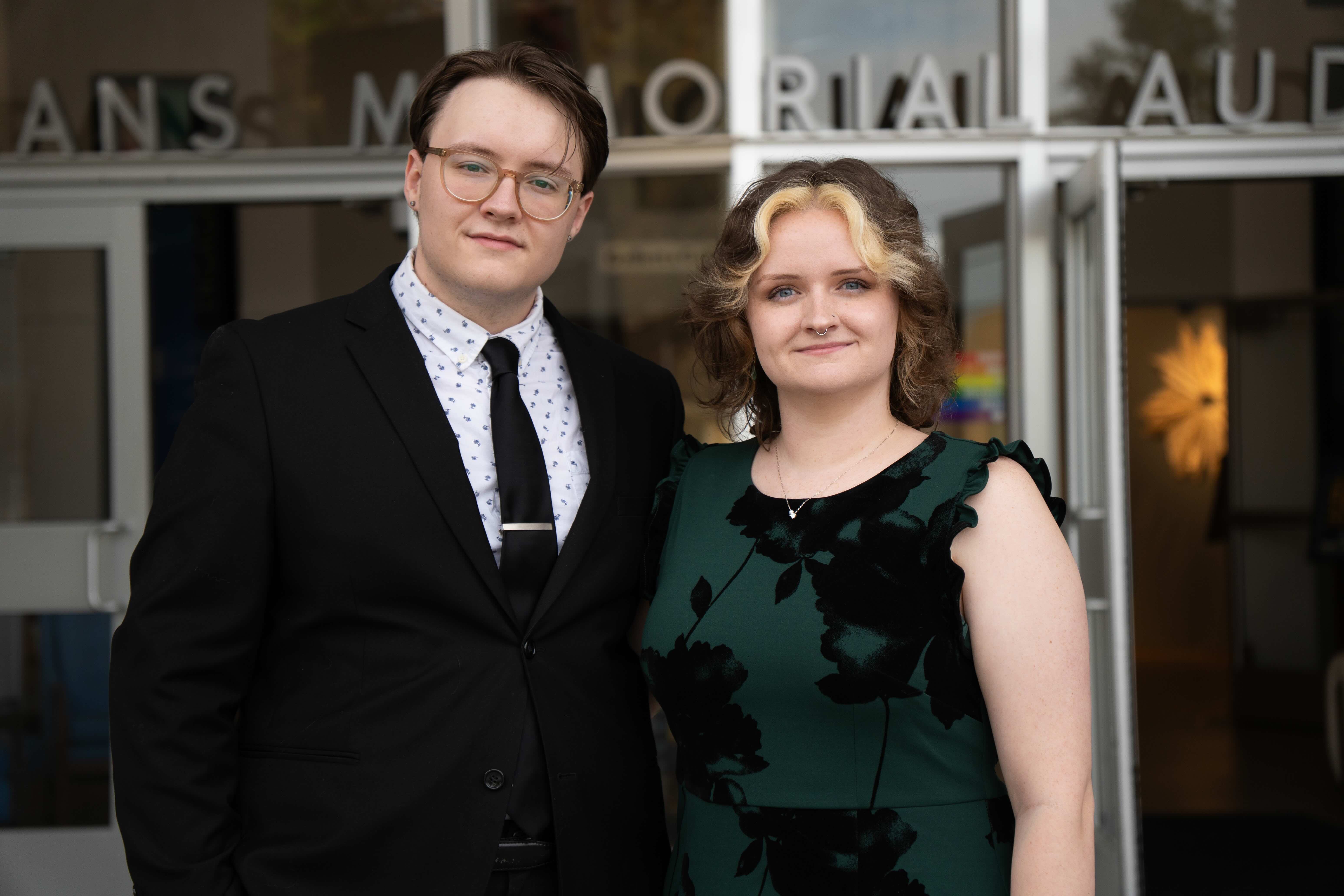
Will Schwarz, the grandson of Dean Schwarz, is the director of Bauhaus Legacy, along with his partner, Kayla Laird, who was the director of photography. The film is partly a travelogue with the Pond Farmers making their way through various sites associated with Bauhaus and the places where Marguerite Friedlander lived and worked.
Here’s a trailer for the film.
“All was really new,” said Michael Siebenbrodt, a former director of the Bauhaus Museum Weimar, in the film, speaking of the Bauhaus. “This was not a school of a new style but a school of new thinking, and the most important thing was for students to find their own personality, to make your own thing, not to copy the masters.” He added that students were “to find yourself, (through) a new sensibility of your hands, a new sensibility of your eyes.”
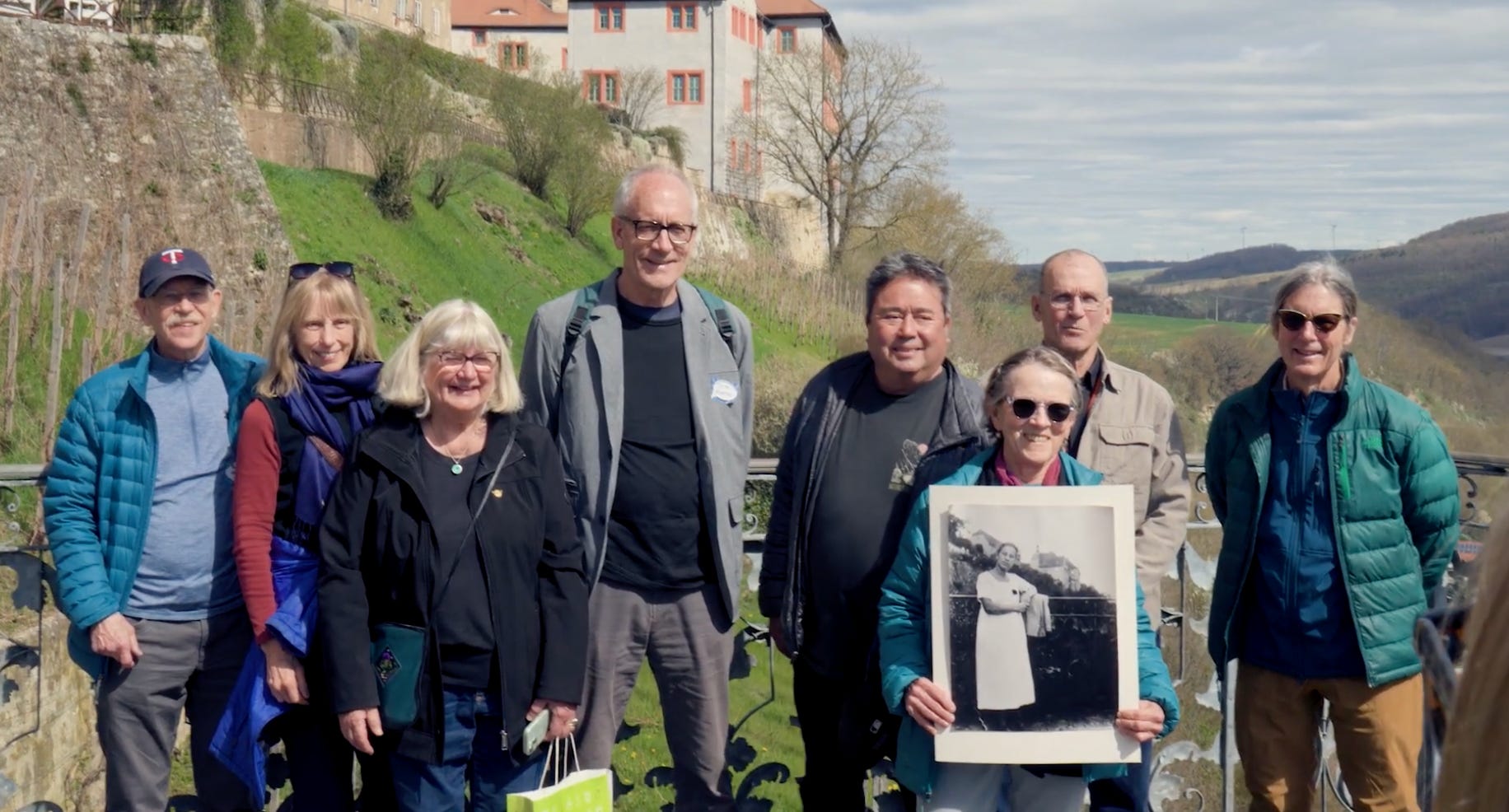
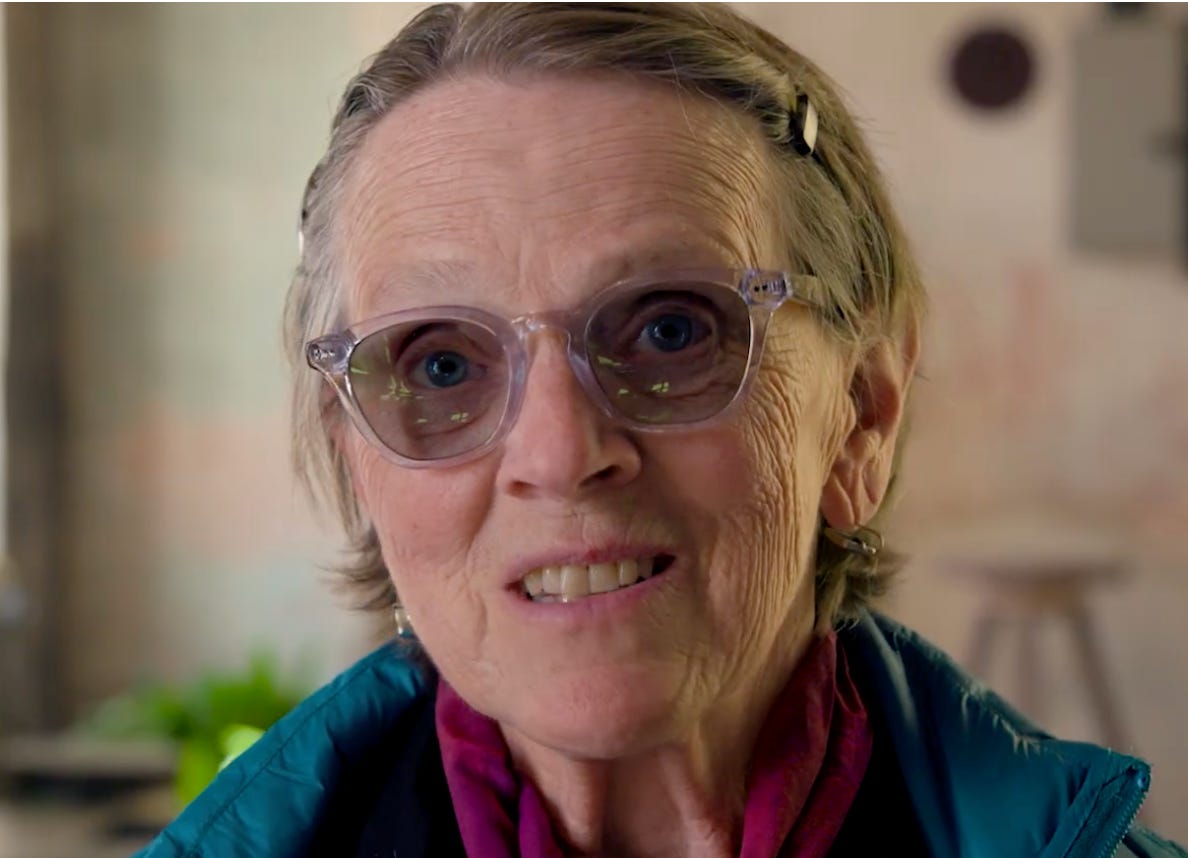
Sonja Juffer studied with Dean Schwarz at the South Bear School before applying to Pond Farm. She was accepted and stayed there five or six years. She said that “seeing where Marguerite worked and seeing the workshop is…” she said, pausing to gather herself. “We’ve been with her a long time, but we didn’t know so many things.”
Paul Lanier recalled that Wildenhain was strict with her students. On his second day, he showed up ten minutes late. “You cannot be late,” she told him. “I don’t need you. You need me.”
The panel that followed the film brought the filmmakers and the Pond Farmers on stage. Peder Hegland, a Pond Farmer living in Minnesota, said that Wildenhain’s life had two different sides, very much separated from each other. The trip helped them learn about the side of her that they didn’t know much about because she never talked about it. They all seemed to agree that their time with Marguerite had transformed their lives.
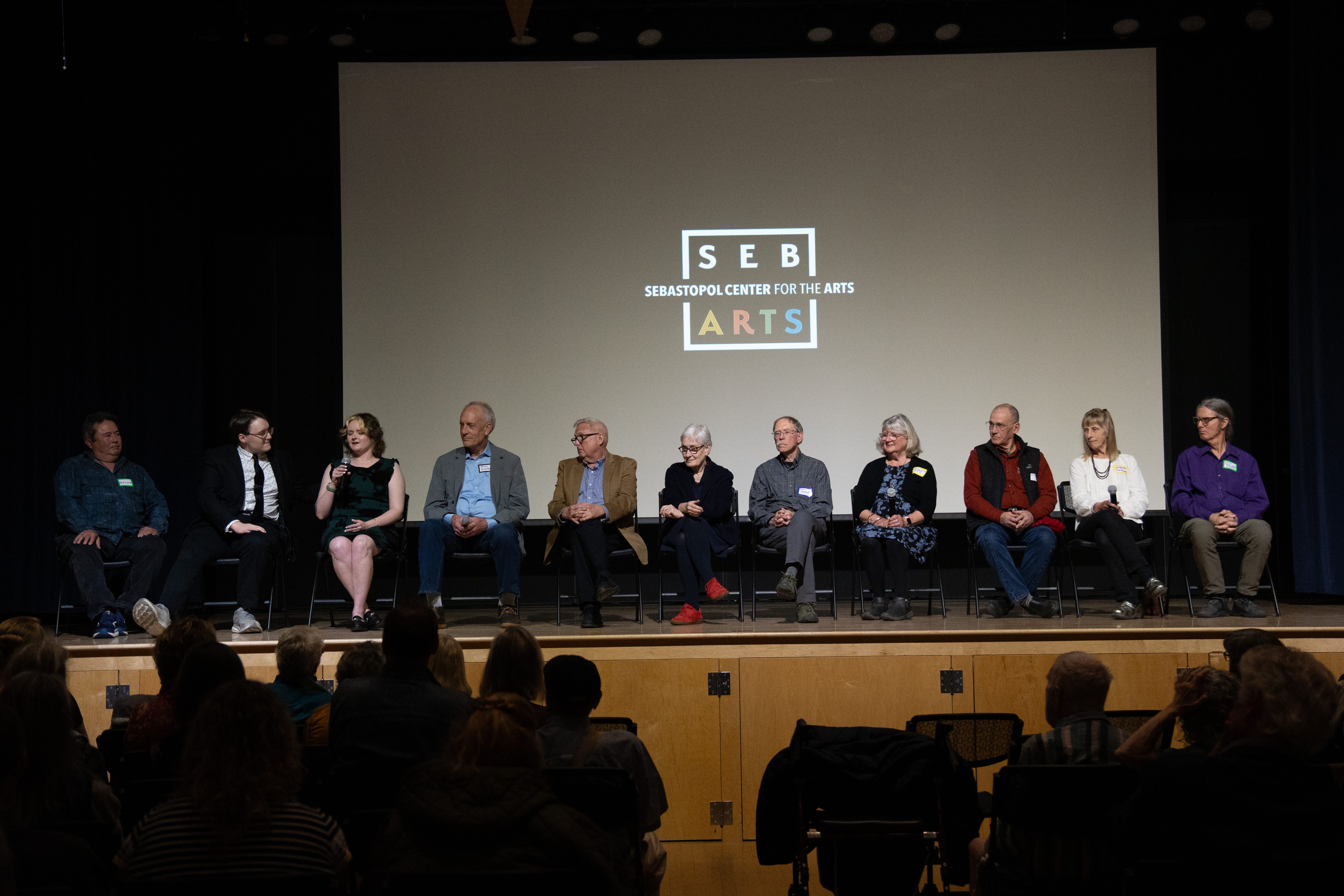
Lanier said he noticed that Marguerite was “tougher on the women students,” but she had high standards for all of them. She would look at their pots and tell them to discard them, telling the students: “the next one will be better.” He said that her highest praise was “not bad.”
One of the questions from the audience, which was rather telling in our time, asked if Marguerite saw her art as a political act. Schneider replied: “No. I wouldn’t say that she saw it as a political act.” Another panelist said she rarely talked politics and saw her work as spiritual and that nature was her refuge.
In a follow-up conversation with Brent Johnson, he mentioned a side story that wasn’t in the film. “One of the reasons we went over was to present a diary that Marguerite had written in 1925 after the death of her master, Max Krehahn, where she’s just distraught and pours out her emotions and affection for this master.” The diary had been given to Dean Schwarz, who gave it to another student, who asked Johnson if he could figure out a place for it. “Where it really belongs is at the Bauhaus archive so that others can have access to it,” said Johnson. They met with the director of the Bauhaus archive in Berlin, Annmarie Jaeggi. “She was very excited to have it,” he said.
Reflecting on the event, Johnson said: “You’d heard it said a couple times that she wasn’t just take teaching us to make pottery. She was teaching us how to live.” He added “that it really went beyond the Bauhaus and went back to her upbringing.” She would teach you how to sip champagne at a party and not gulp it down. “Sometimes too much is ascribed to Bauhaus in accounting for who she was,” he said. “She came to the Bauhaus with a level of sophistication that was quite unique in and of itself, and that shaped who she was.”
Johnson wanted to acknowledge Forrest Merrill, who encouraged him to organize the SebArts event and provided a set of porcelain pieces designed by Marguerite from his collection for exhibition. “He is one of the major collectors of American Crafts in the country of various media and, certainly THE major collector of Marguerite’s work.”
“My hope for the event was that there would be another opportunity for this rapidly aging group of Pond Farmers to get together again. I would guess there were at least 24 of them,” said Johnson. “We went out for drinks afterward and a little late supper. Who knows how many more times we’ll have?”
Will Schwarz said he plans on “expanding this film into a feature length documentary about Marguerite Wildenhain, the rift between the two halves of her life, and how her legacy has shaped the modern ceramics world.” He appreciated the reception for the film in Sebastopol. “Among those who had known about Marguerite's story and those totally new to the legacy, both said they'd learned a lot and were really taken with the early period of her life and how strong she was to survive so much hardship.”
“I was overwhelmed by the support of the community that came out and were interested in this subject,” said Brent Johnson. Will Schwarz added that the Pond Farmers “gave him a lot of strong critique just like Marguerite taught them” and their feedback will help him make the feature-length film better.
Thanks to Will Schwarz and Kayla Laird for sharing photos from the event and stills from Bauhaus Legacy.
And for a local connection, there is Pond Farm Pottery the former home and studio of Marguerite Wildenhain above and accessed thru Armstrong Redwoods State Park in Guerneville.