

Last fall, Analy instituted a new system designed to foster school spirit and a feeling of “joy and belonging.” Now, nearly a full school year later, house leaders reflect on how the first year of this program has gone and what is coming in the future.
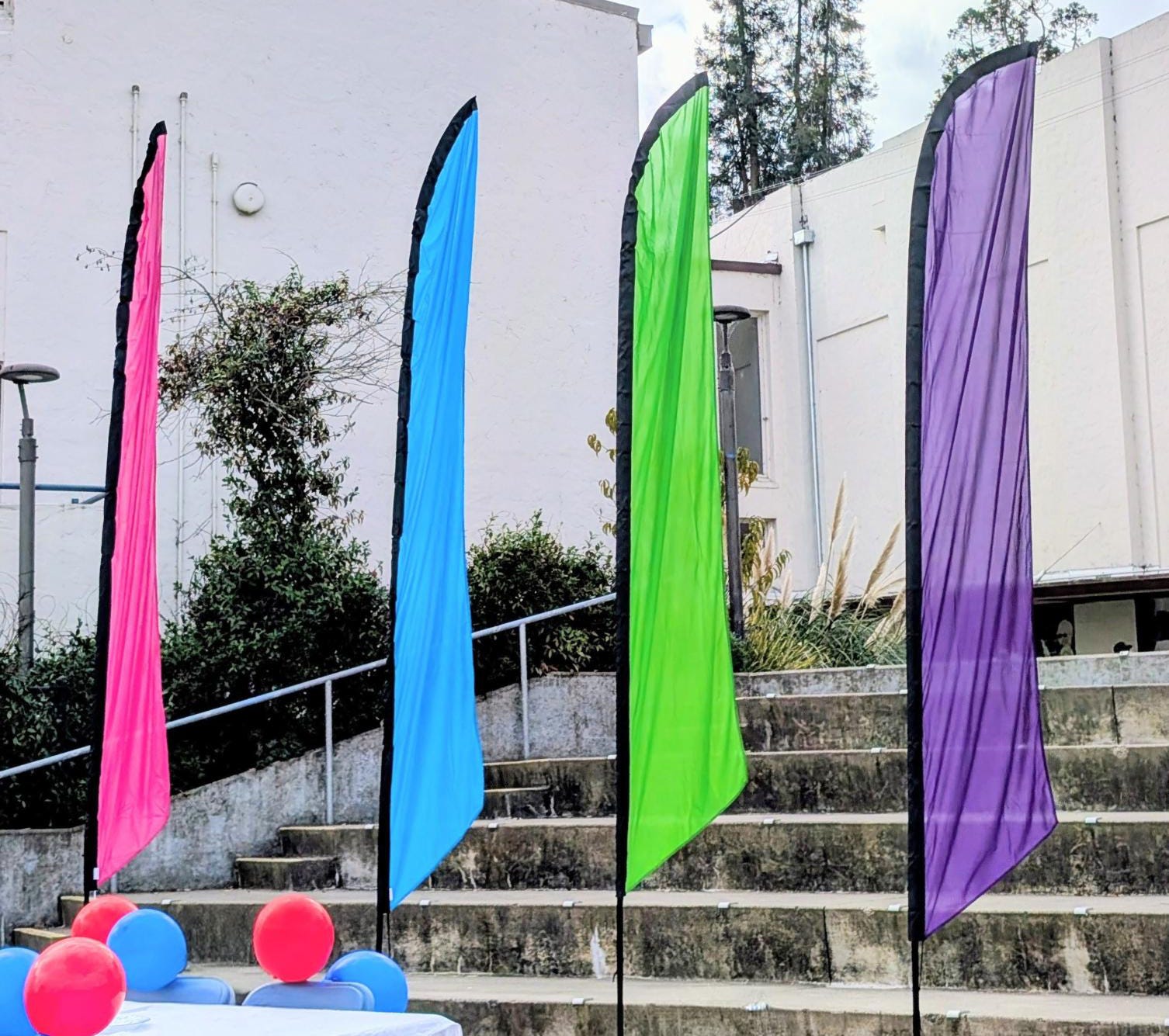
Introduced at the beginning of this school year, this program is a re-envisioned idea of what school spirit could look like. The school population was divided randomly into one of four houses: Ignis, Terra, Laguz and Aether. The houses are named after the Latin names for fire, earth, water, and air, meant to be symbols all students could get behind, with the end goal being to earn as many points as possible for their house. These points could be collected through a variety of ways, ranging from simple school-oriented tasks like showing up to sporting events to larger events like competing in house activities during rallies.
Recently, at the final house meeting of the year, Aether, the house that had the highest number of points, won a prize. Students who earned a large number of points for their houses were also recognized.
Each of these teams is led by two teachers per house, who each volunteered for the role.
Brooke Bell, one of the teachers who stepped forward to be a house leader, explained that it’s important to “break it down a little bit to have kind of some smaller groups so that maybe people can feel some connections in a way that they haven’t had before.”
Jolene Johnson, another house organizer, added, “[The houses are] another way for kids to potentially meet together — meet outside of their normal friend groups, sports group, grade level — and for us as teachers to give out information and different opportunities to kind of help those new connections.”
Henry Atherley, a math teacher who originally came up with the idea of a house system and pushed for it to be implemented, said, “We’re talking about joy and belonging to Analy,” which has emerged as the main goal of the program.
He mentioned the merger of El Molino High School and Analy High School in the fall of 2021. The two schools that were once rivals were abruptly thrust together onto one campus, forced to unite under a new identity — first West County High School before the name was changed back to Analy. He explained that since this consolidation, bringing students together has been more difficult. “We’re trying to find ‘What is the new Analy?’” he said. “We’re also trying to build on the two high schools coming together, right? It’s not El Molino only. It’s not the old Analy.”
When it was introduced last fall, there was initial trepidation from the students about the program. Many were concerned about the houses taking precedence over other academic responsibilities or the lack of student representation in the decision-making.
“I just don’t feel like the house meetings are long enough to actually make friends, so you just end up standing there and waiting for it to be done,” one student said in November.

Sponsored Content
This weekend: Experience the “Taste of Sebastopol” at The Canopy’s Grand Opening!
California’s leading builder of solar-powered, ecologically responsible homes, City Ventures, invites you to celebrate the Grand Opening of The Canopy in Sebastopol on Saturday, May 9th from 11 am to 3 pm. Enjoy a festive “Taste of Sebastopol” experience featuring local bites, refreshing sips, and a vibrant atmosphere highlighting the best of the region. Plus, be among the first to explore this brand-new community and tour its beautifully decorated model homes. Meet the City Ventures team, learn about available homes, and see how innovation, sustainability, and modern design come together. Don’t miss this exciting opportunity! Address: 1009 Gravenstein Hwy N, Sebastopol, CA. For more details & directions, visit: www.CityVentures.com/TheCanopy-Opening

Others were simply confused about what the house system was and didn’t want to be dragged into activities they weren’t interested in. Although some students enjoyed it from the outset, many thought it was a silly activity.
Over the course of the year, some who were initially unimpressed started to enjoy it more, as the houses evolved to include more activities that interested them. As the year went on, the houses became an integral part of the Analy community.
“I was really hesitant about attending house meetings because it seemed like no one knew what they were doing. But it became clear that, over the year, people started making new friends, so that was cool,” one student commented.
House meetings were held sporadically throughout the year during Analy’s designated “tutorial” time — a mandatory period where students have the chance to work on homework or check in with teachers about assignments. The meetings allowed for houses to compete against each other in live games.
Other activities spanned multiple days and allowed for the creation of smaller teams to play games and earn points. Some games required teams from within a single house, and others required collaboration between the four houses.
Johnson recalled her favorite of these, saying, “I think the duck hunt was really fun.” In this competition, staff hid rubber duckies around the campus, tasking students with finding as many as possible. During the weeks this event was taking place, students could be seen dashing across campus during passing periods trying to find as many ducks as possible, while the ducks’ high-pitched squeaks pierced through the halls.
Atherley noted that this was their first year, and the teachers were still learning. “We have to adjust the houses to meet the needs of the students,” he said.
Bell noted that teachers were struggling with students leaving campus, due to a less-than-ideal method of taking attendance: students checked in with their teachers, but this did not guarantee that students would then proceed to the house meeting. At one meeting with particularly large numbers of students absent, one of the house leaders questioned, “Where did they all go?” Teachers have since tightened the system, implementing a better way to verify that students attend the gatherings.
“We saw that was a low point,” Bell explained, “There are kids who actually don’t want to be active, so our thought is, okay, how do we create a safe space for them that still feels inclusive, where they can kind of stay within their comfort zone?”
A recent house activity, known as the House Olympics, clearly reflects this adaptation to be as inclusive as possible. These Olympics are a series of events that range from cornhole to art challenges to video game competitions. Countless students came together with their favorite activities: some forming trivia teams while others clustered around a teacher’s television playing Mario Kart, their cheers echoing through the halls. When asked whether they would like to see the house system stay next year, a group of freshmen and sophomores responded, “Yeah!”
“We realized it couldn’t be athletics for everybody,” Atherley explained. “Last week we had a bunch of kids sitting down in the corner, and they saw the sack races, and it was amazing to see them get up and start jumping for the sack race…these weren’t kids that aren’t normally athletic or participatory, but here they were enjoying themselves, falling down and then going, ‘It’s going to be all right.’ And that’s what we’re looking for. Building culture,” he said. “Do we have it right yet? We think it’s a work in progress. And I believe next year, if we get more student leaders, we can tap into more of what students want,” Atherley reflected.
The program has been entirely created and primarily funded by the teachers, with some help from the school in funding the final prize. In order to expand the house system, they are looking for community support for next year. “We would love to buy shirts for everyone, or handkerchiefs, and leis again…so that each house has the same thing, so at least that’s equal and equitable in that sense,” Johnson said, explaining that they were “really trying to find funding and reach out to the community.”
“We hope that the community and parents and students embrace the opportunity of what could happen, what could be, instead of worrying about what always has been,” Johnson concluded.

My son's high school (in San Mateo) used a "house" concept as well, and it seemed to be very effective. There were one set of houses for grades 9 & 10 and another set of houses for grades 11 & 12. I do think it helped students develop deeper relationships with their core (house) teachers and also other students in their house.