

Analy High School graduation is tonight, June 4, at 5:30 pm. In honor of this event, I reached out to one of Analy’s star students to find out what he learned at Analy High School and where he’s going next.
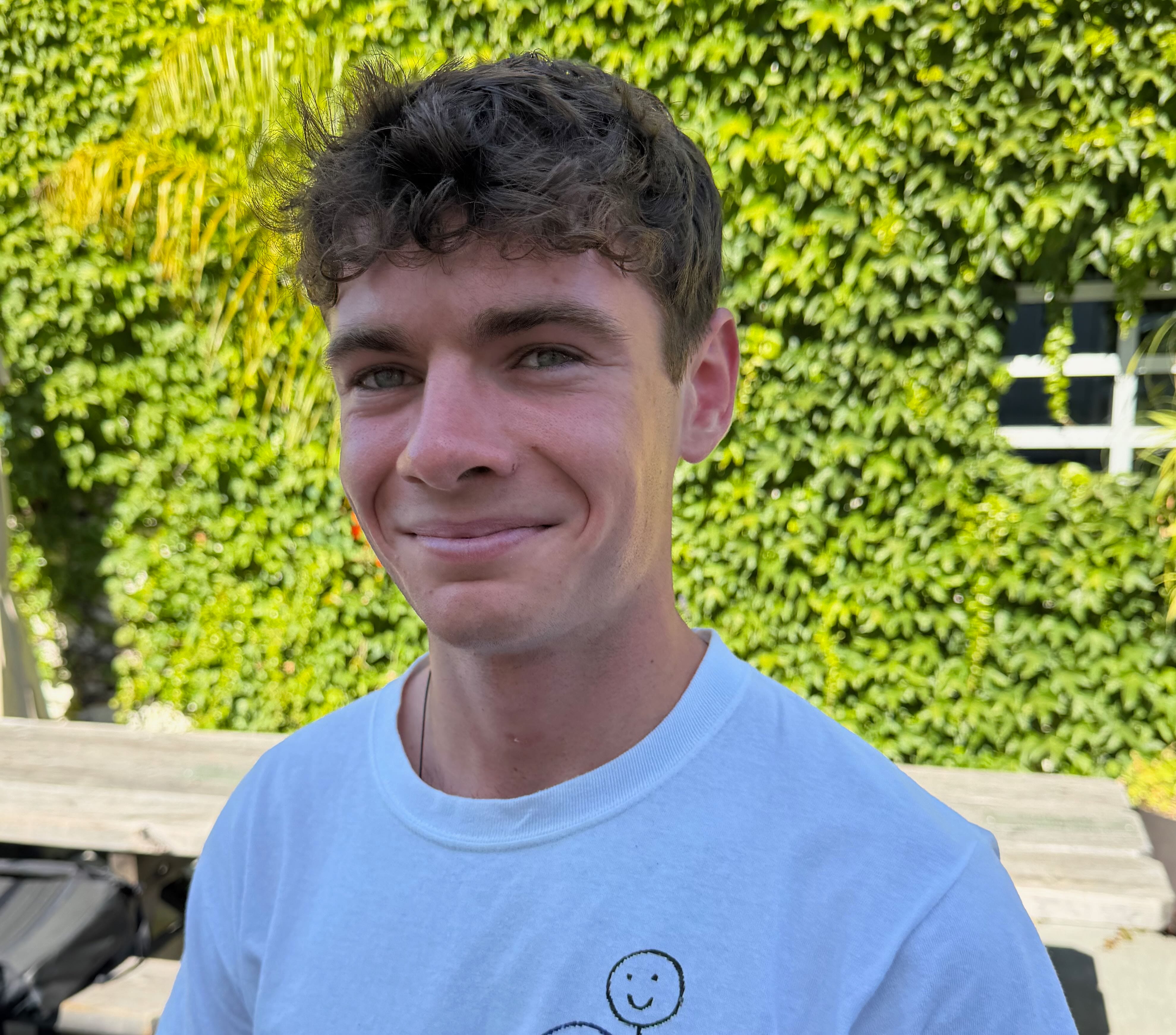
I wonder sometimes if, in this country, we have lost our sense of optimism for the future along with the conviction that we can do the important things that make life better for others and ourselves. Owen Woods Dawson, Analy Class of 2026, is a bright, young man whose optimism and focused energy can make you excited for the future and believe in the young people who will be creating it.
Where were you born and what year?
I was born in New York, White Plains, 2008.
Tell me about your family.
I have one sister. She just graduated from Berkeley. She studied psychology and cognitive science, and she was the distance captain of the Berkeley track team.
My mom is from Great Britain originally, and she moved to Boston as a child. She met my father at Tufts University. My dad was from New York as well. We lived in Connecticut for a while where I spent the first 5 years of my life. Then we moved out to California, and we’ve been here ever since then.
Where’d you go to middle school?
Hillcrest.
Do you remember your first day in high school and how you felt?
I do remember my first day. I was really excited because my sister had told me all about Analy, and I really wanted to follow in her footsteps as I had through Gravenstein Elementary and Hillcrest. I’d always done what she had done.
She played soccer for a while, and I decided to play soccer, then she switched to running for a little bit, and I just decided to switch to running. Then we took the same classes. She made my schedule for me for my first year of high school.
I was just really excited because I’d heard all these great stories and memories she had.
What surprised you about Analy?
The teachers, specifically my AP teachers, cared a lot about the students. They constantly wanted to know how the students were doing, what was going on in their lives, and it felt like a really, really tight-knit community.
For example, I had my AP world history teacher, Mr. Forsland, sophomore year. He was one of the nicest guys I’ve ever met. Unfortunately, he’s retired from Analy now, but he was there for roughly 27 or 28 years. It was just incredible to see because the children of his former students started coming through Analy, and he knew exactly who they were, and he remembered their parents, and it was really interesting to see how much he cared about the students.
Were you a good student from the start?
I like to think so.
I took accelerated math in middle school and the same with language arts. They carried into high school.
Did you make friends easily?
I did. I had all my childhood best friends from Gravenstein. I moved here when I was five and went straight into kindergarten. I’m still friends with my best friends since kindergarten. I came in with a good group.
But I hadn’t met friends with Quince Holman before or this other guy, Austin, and we met in sophomore year, and we really became close over the course of junior year. Now they’re my closest friends.
Are they similar or different than you?
I’d say Austin’s fairly different. Austin doesn’t have, like, any of the same extracurriculars as we do, but we all share like a love for nature. We spend a lot of time outside together going on trips and various outdoor activities, like hiking, free diving and off-roading.
I’d say Quince and I are very, very similar. We do almost the exact same things. We take all the same classes. We spend all our days together. I’d say him and I are pretty parallel.
Have you been involved in sports and which ones?
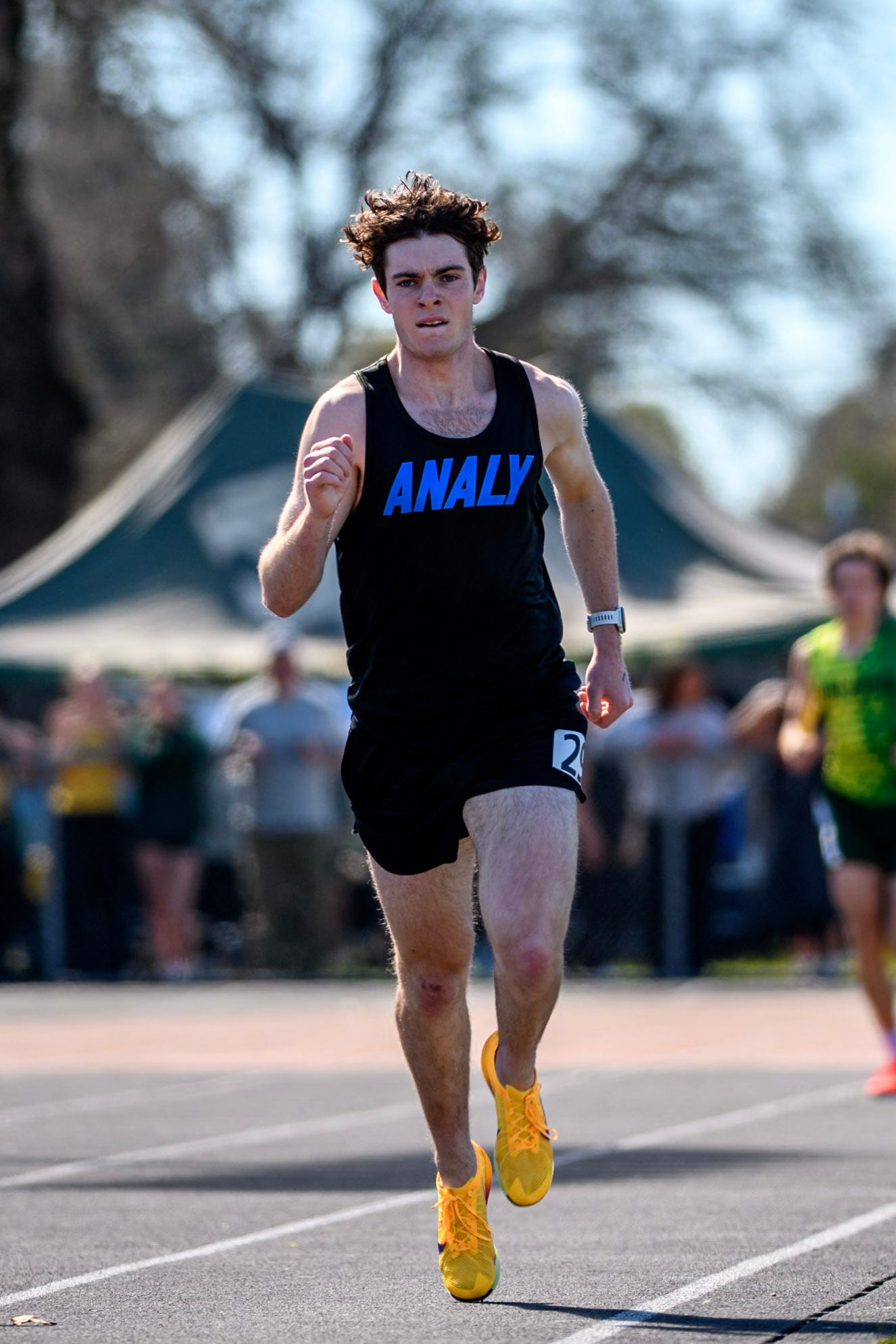
I’ve been doing cross country and track and field for all four years. I got recruited to the University of Chicago to continue cross-country and track.
Have you ever been to Chicago?
I have for one day to tour the school and meet the coach and see the facilities.
What was your favorite subject in school and why?
Science was definitely my favorite. I’ve just always been fascinated by chemistry and biology specifically. And physics. I really, really like it.
Growing up in elementary school and middle school, I wanted to be an aerospace engineer because space really fascinated me. Anything to do with space, physics or chemistry, or life and organisms was really fascinating to me.
Will you study science when you go to Chicago?
I’m doing molecular engineering, and then there’s specific tracks in molecular engineering: a chemistry track, which is like nanofabrication, and then there’s a biology track, which is bioengineering, and then a quantum engineering track, which is like quantum mechanics, quantum computing, things like that.
I’m going to go the quantum mechanics route, and then I’m gonna minor in biochemistry. Then I’m going do a major in Econ.
I really want to be involved in some kind of startup after college that’s related to synthetic biology, but specifically the convergence of quantum mechanics and biology. It’s a largely untapped field, but I think there’s a lot of potential there.
What class at Analy challenged you the most?
That’s hard to say because they challenged me in very different ways. AP World History was, at the time, a big jump in workload. We had to read a chapter—a really, really large chapter—from this textbook every week and then write an eight-to-10 page paper. We had tests constantly and very, very harsh grading. It was kind of a steep transition from my first year classes.
But in terms of true difficulty, as in what would I think would be the hardest, even to go back and do again, I’d say probably AP Calculus was my hardest. That was a hard class for me to balance because I was taking AP Chemistry and AP Biology at the same time.
Two sciences and a math. It led to a pretty, pretty large workload, plus your outside activities as well.
Yeah, yeah, yeah.
Was there something unexpected that you figured out in or outside of school?
I had always thought that life and nature and forests and animals were fascinating, but I didn’t really see the potential for a career in that growing up. I was dead-set on physics, astrophysics, aerospace, that kind of stuff.
Then going into my junior year, during summer, I had an internship at NASA at the GeneLab for High Schools program, where we did a lot of research on plant transcriptomics. It’s like bioinformatics, but specifically the RNA. We were looking at a data set of a plant called Arabidopsis Stalliana that had been on the International Space Station, and we were first analyzing how the genes were suppressed or upregulated as a result of the conditions in space. Then we looked to see what conditions were causing that and what potential solutions we could advise to prevent any of the problems of being in space.
What NASA location were you at?
It was online. It had previously been an in-person program. They switched it to online after COVID. The scientists were at Ames Research Center, and then we flew out to Puerto Rico in December for the American Society of Gravitational Space Research Conference. We presented our work there with the scientists and the international community.
I’d never before seen a path in biology, but then immediately after that internship, I was completely fascinated with plant biology and genes and protein synthesis and all that.
How many AP classes did you take?
I believe I took 12. I took one sophomore year, five in junior year, and then technically six this year.
That’s a pretty heavy load.
It wasn’t the lightest load, no, but, as long as you manage your time efficiently, it’s not terrible.
Did you do any community service in high school?
I did. I worked for Food for Thought for a while. I did a few drives where I would work seven-hour shifts at the front of Safeway or Pacific Market or the Safeways in Santa Rosa. I also just worked at the actual Food for Thought location, organizing the shelves, organizing food orders, and then packaging up food in boxes.
You developed a sense already of what you want to do after high school and you seem to know that kind of early on.
I knew the direction I wanted to go in more or less. But I did change a little bit, going to biology instead of aerospace engineering.
What kind of impact do you want to have with your life?
Ultimately, I’d be looking to do biologically based nanobots and sensors — quantum sensors. They would use quantum sensing via coherence.
I’ve omitted Owen’s good explanation of quantum sensors.
It could act as a sensor to detect oxidative stress in the body, for example, which is the precursor to cancer. I’d be looking to go in a pharmaceutical direction, maybe exploring solutions to genetic diseases.
Do you have a mentor or role model?
My sister is my biggest role model.
What will be on your mind tomorrow when you get your high school diploma?
That’s a good question. It’s going to be hard because I’m going to go 2,000 miles away from Sonoma County. All the friends and people that I’ve met over the course of my entire life, ever since I was five, I’m going to be saying goodbye to, not necessarily goodbye forever, but there’s going to be a sense of departure.
It’s going to be kind of hard to see all those people that I will leave. It’s bittersweet, but I’m really excited for all the different directions that we are all going in. I’m going to be thinking about the people that I may not be able to see again ever.
What do you have planned this summer?
I’m going to Europe with my family for two weeks, and then I’m looking to do two internships, potentially. There’s one internship that may be a possibility with a biotech investment firm, and then another internship potentially at a fiber optics cable company. I’ll see where those lead.
I’m flying out in early August to Chicago for the preseason track training.
Have you determined whether you’re a White Sox or a Cubs fan?
My dad has told me I have to be a Cubs fan, but my girlfriend, who’s from Chicago, she told me I have to be a Sox fan, especially with University of Chicago in the South Loop.
Is there anything I didn’t ask about you and your time in high school?
We didn’t really touch on debate. Quince and I, we did speech and debate. We were the presidents for two years, and then we went to the state championships, this past year, about two months ago.
The speech and debate team has kind of shrunken in numbers, and it’s going through some upheaval in the next year in terms of the coaching staff. But I think it’s played a vital role in my ability to write and speak publicly.
AP World History gave me the knowledge to succeed in debate, and then debate gave back to me the ability to really think on my feet quickly and write quickly.
Will you keep doing speech and debate at college?
I’m not sure I’ll have time. I will have two majors and a minor and the track team, plus I’ll probably be in the lab for a while because I’m looking to get a few internships at the labs there. University of Chicago just got funding for a quantum biology lab, and it’s one of the only ones in the country if not the world.
Wow! I keep coming across these remarkable graduates and each time I’m more hopeful that they will find a solution to the mess their parents and grandparents have made. Thanks Dale for the story.
This story gives me hope for the future. What an inspiring young man!