

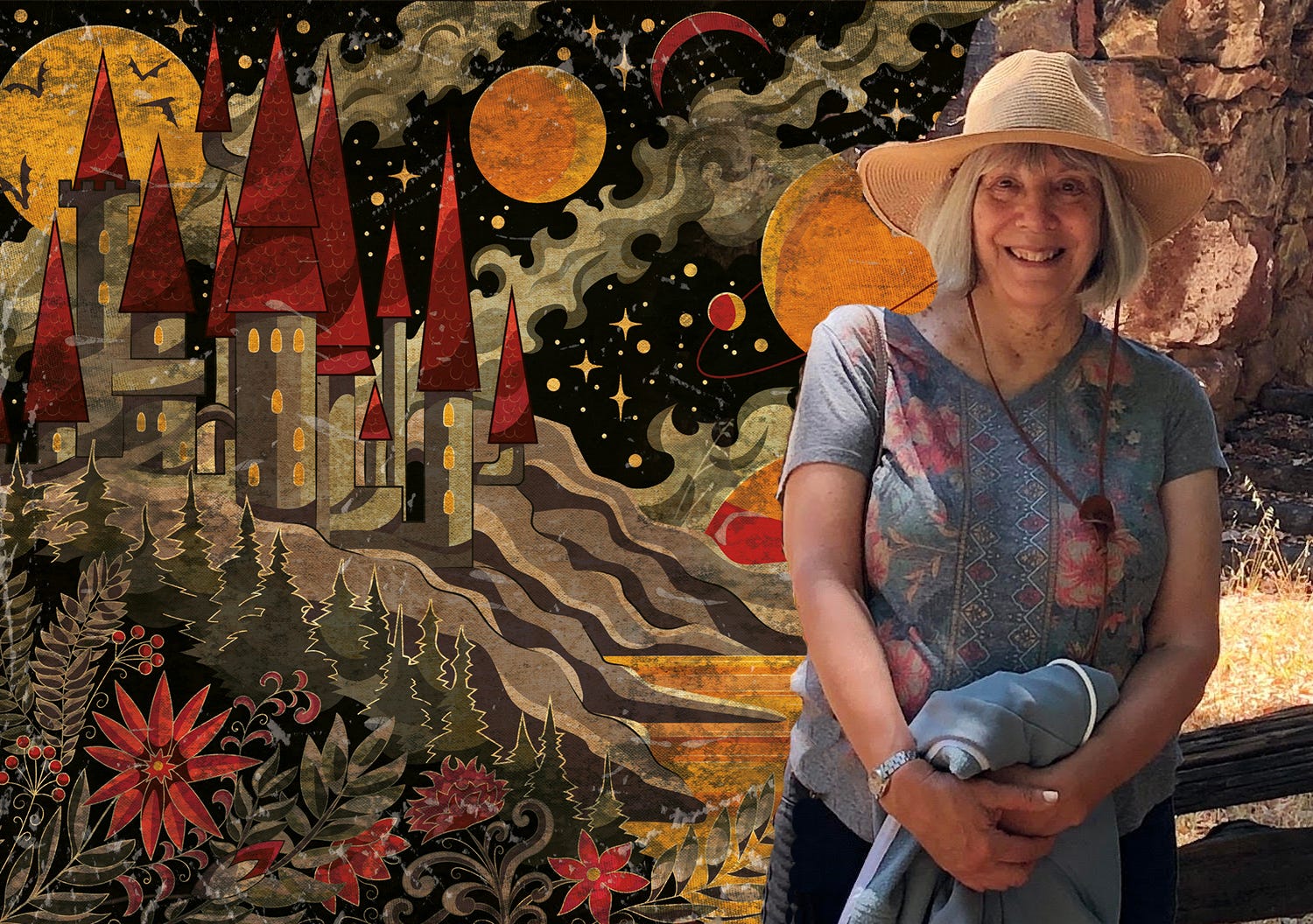
Everyone loves a good story, and thanks to the internet, they’re easy to find online. “This American Life” and “The Moth” are two of my favorites. But what if you want to hear (and tell) stories in real time closer to home? The answer to that question is Do Tell Story Swap, a Sonoma County-based storytelling group that meets on Zoom on the second Tuesday of the month.
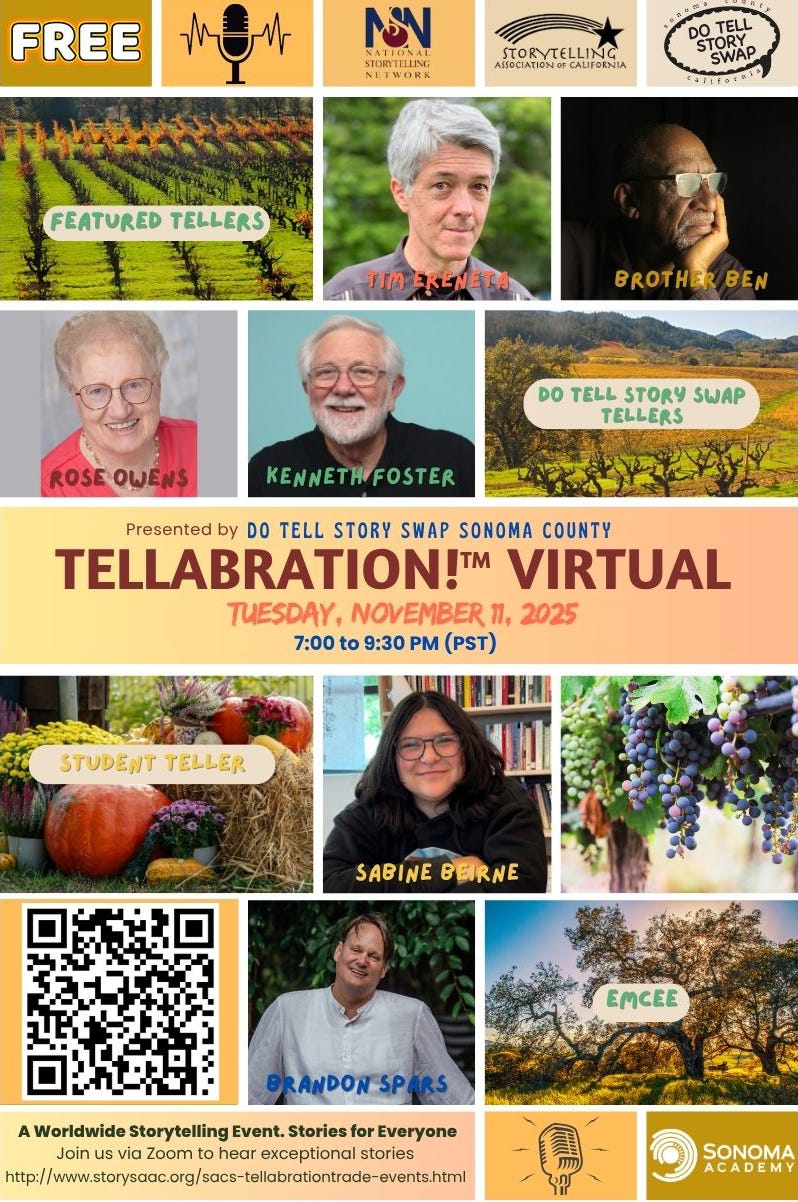
I learned about Do Tell Story Swap from Beth Wakelee, who’s lived in Sebastopol for 50 years. She dropped by the Sebastopol Times office last week to tell me about an upcoming international storytelling event called “Tellebration” that Do Tell Story Swap will be hosting on Nov. 11. (See the flyer at the end of this article.)
Wakelee, who was a pre-school teacher before she retired, has always loved telling stories. She specializes in fairy tales and folk tales and has been involved in Do Tell Story Swap for several years.
Do Tell Story Swap was founded in 2010 by Kenneth Foster and Elaine Stanley in Santa Rosa. It’s now run by Brandon Spars, a humanities teacher at Sonoma Academy. The group met in person until COVID hit, and then it moved to Zoom, but unlike so many other groups that went back to meeting in person as soon as they could, Do Tell decided to keep meeting online.
The meetings start at 7 pm with 45 minutes of storytelling, then there’s a short break where people give a brief answer to the prompt for the evening, like “‘What’s your best memory from second grade? Or what’s your favorite thing about Halloween?’ Whatever is timely,” Wakelee said. After that, there’s another 40 minutes of storytelling.
You sign up for a storytelling slot when you enter the Zoom. Most stories are five to seven minutes long.
“It’s the kind of thing where you’re just held spellbound,” Wakelee said. “If you’ve ever listened to good storytellers, you know that it’s really a treat.”
Wakelee said there are several Sebastopol and West County members of Do Tell, including Vicky Ness, who Wakelee said is renowned for her storytelling skills.
Ness, a former advertising writer, first got involved in storytelling back in the 1980s.
“I went to the Bay Area Storytelling Festival, and I was just struck by it, and I thought, ‘I can do that,’” she said. “So I started doing storytelling, and that’s when I joined an improv storytelling group. I did storytelling on the radio—I had a little radio show for a while—and I taught storytelling in the Financial District.”
Eventually, as careers do, her job in advertising took up more and more of her time, and storytelling less and less. “It sort of disappeared for me for about 25 years,” she said. She didn’t start doing storytelling again until 2020.
Ness creates and performs her own stories (which she calls “fairy tales for adults”), but she said people do all different kinds of storytelling in story swaps.
“There are genres such as personal stories and spooky stories. There’s tall tales, there’s fairy tales and myths, which are two different things.” Myths, she said, have a sacred connection. “There’s creative stories that you create on your own. There’s a group that I tell with in Montreal, and there are people there who sing ballads—ballads are stories. And so you get a real gamut of people telling different kinds of stories.”
She’s also involved in story swap groups in Santa Fe and Contra Costa County.
I asked Ness why Sonoma County’s Do Tell Story Swap continued to meet on Zoom rather than in person. It turns out that since the group began meeting on Zoom, they’ve been joined by talented storytellers from all over the world.
“If we had to just meet in person, I’d lose all these people from Kansas and Spain and Greece—all these people who I know—and so we don’t want to do that.”
She notes that there’s a difference between storytelling and dramatic reading from a text.
“Most story swaps ask that you tell the story, not read it,” she said. “They’re very different: the written word and the spoken word. They’re different art forms.” She said storytelling is more flexible and fluid, whereas with reading you tend to stick with what’s on the page.
Ness said most Do Tell storytellers hone and practice their stories before they perform them, just as an actor might.
Do Tell Story Swap even offers something called Drop-in Office Hours on the first Tuesday of the month where you can get advice on how to improve your storytelling skills.
“As far as learning to do your own storytelling, the first thing you need to do is listen to the story that wants to be told,” Ness said. “If you are creating a story, you’re listening to what comes from in here,” she touched her chest, “and it comes out of your mouth. It’s just allowing something to come out, and it’s as natural as remembering.”
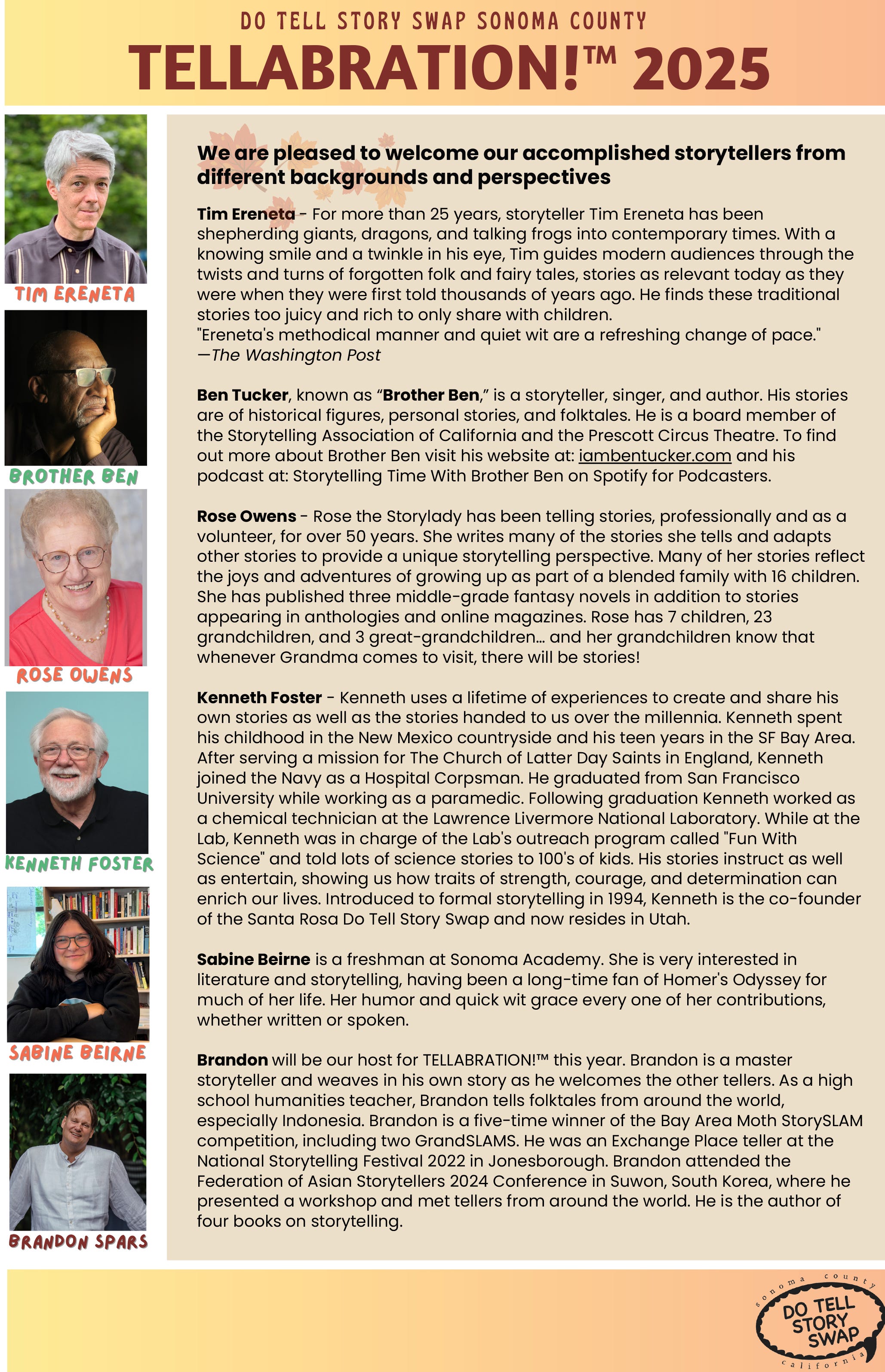
To hear some master storytellers, tune in to the free Do Tell Tellabration on Nov. 11, from 7 pm to 9 pm. On the Do Tell Story Swap website, you can watch last month’s story swap, where Sebastopol’s Vicky Ness tells a personal story for the first time. For a deeper dive into the world of storytelling, see the Storytelling Association of California (SAC). Also, see the first comment below about an in person storytelling group at Occidental Center for the Arts.
Excited to learn about this storytelling opportunity and want to share thatWe have another West County storytelling venue. on the second Fridays of almost every month at the OCCIDENTAL center for the arts. It’s called seven minutes max and it’s an in person evening that starts at 7 PM and goes for about one hourand this month it is Friday, November 14. People who want to tell a story can throw their name in the hat and they are supposed to tell their story without notes and they have seven minutes max to tell the story. It’s five dollars for members of OCA and $10 for the non-members that you pay at the door and the topic for November is holidays.! It’s very cozy and low-key and in person.!