

If you graduated high school before 2005, it’s safe to say that you never had the experience of navigating the school day while preoccupied with the cellphone in your hand. Today that’s the everyday experience of teens in school, and school administrators say that cellphones are causing problems such as “increased distraction and disengagement,” along with “escalation of conflict via social media during the school day” and other harms.
“They have a highly addictive device in their hands all day,” said Chuck Wade, Analy’s principal. Now was a critical moment to take action. Teacher Jason Carpenter urged the board: “School may be the only opportunity for them to have a phone-free, safe space for five or six hours a day.” A bell-to-bell cellphone ban would not only improve student learning but increase the opportunities for in-person interactions with other students and staff.
Administrators, faculty and board trustees were in full agreement at Wednesday’s West Sonoma County Union High School Board meeting that cellphones should be banned for the whole school day starting next year. That means students will give up their cellphones upon entering school and pick them up upon leaving.
State Assembly Bill 3216, the Phone-Free School Act, which goes into effect July 1, 2026, requires school districts and individual schools to restrict the use of cellphones in schools. Superintendent Chris Meredith said the law allows districts to choose a partial ban or a full ban. The administration is choosing a full ban for the entire school day. Efforts at banning cellphones in individual classrooms over the last year have proven ineffective, and the enforcement was uneven. There will be exceptions to the ban for students with a medical necessity or on an individualized education program (IEP) that requires use of a cellphone.
Making the case for a full ban
Two principals gave presentations about why banning cellphones is needed and how they expected it to have important benefits for students. Greg Alexander, principal at both Laguna High School and AIA, showed an infographic from Common Sense Media on cellphone use in schools. He pointed out that if students are spending 43 minutes a day at school on cellphones, that’s almost a full period of the school day.
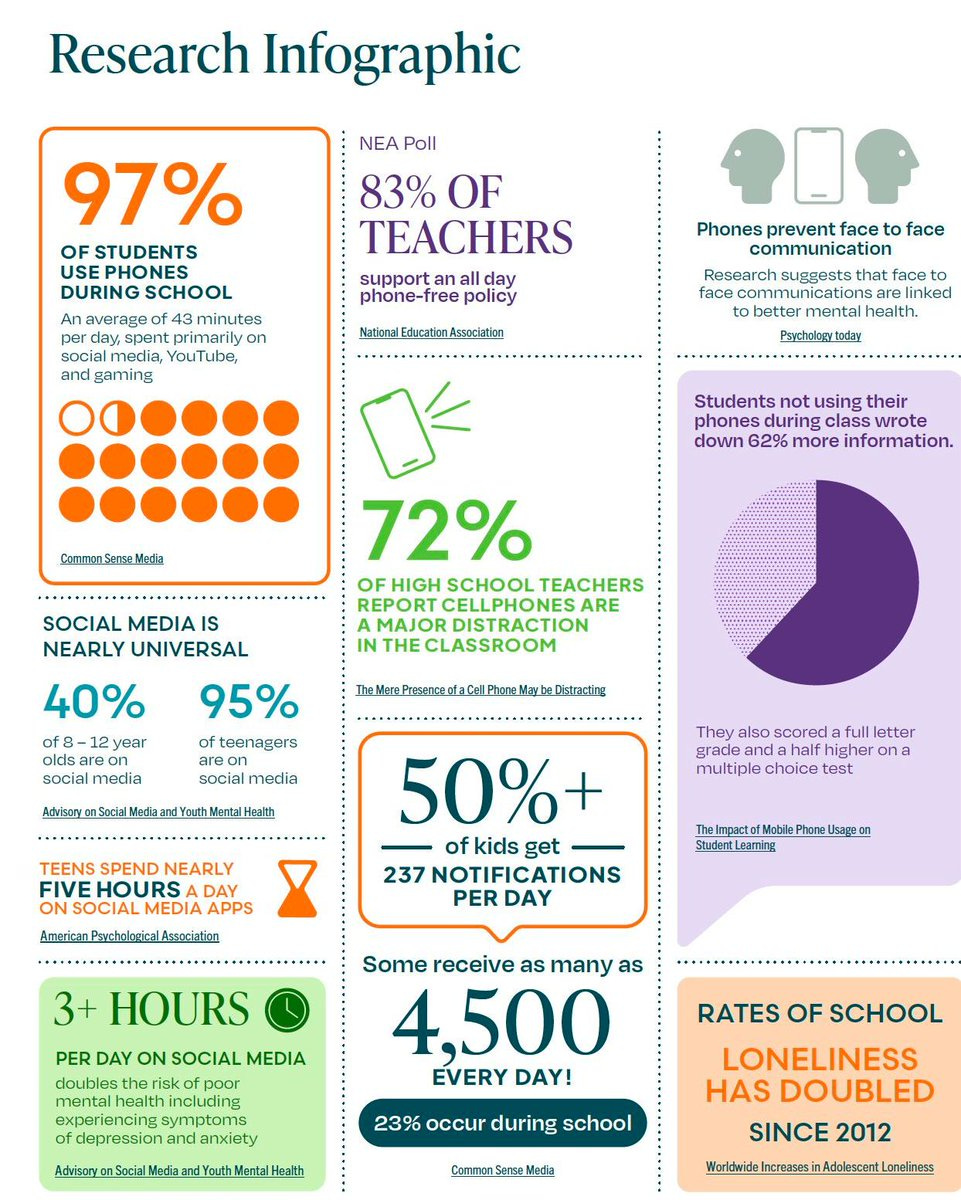
Common Sense Media research highlights that 72% of high school teachers consider cell phone distraction a major classroom issue, with 97% of students (ages 11–17) using phones during the school day. Research indicates 43% of 8- to 12-year-olds own a smartphone.
Analy principal Chuck Wade said that “there is broad faculty support for a bell-to-bell, phone-free campus.”
This is viewed as beneficial for student focus and learning, mental health and wellbeing, classroom culture and engagement. They feel success depends on consistency, clarity and administrative enforcement.
He added that “Staff is not asking whether this is worth doing. They’re asking us to do it well.”
“Students come to us with real attention and mental health challenges and with increasingly wide differences in academic preparation,” Wade said. “Then that’s layered onto what’s already arguably one of the hardest jobs a human being can do, which is teaching. A ‘bell to bell’ phone free campus gives us a rare opportunity to remove a major barrier and to do that work better.”
Wade discussed whether students would have their phones in case of an emergency, an example that some parents use to discourage cellphone bans. He said that law enforcement officials now recommend that students not have cellphones in an emergency; he said that if a student is in hiding, a ringing cellphone can give them away, as happened in one school shooting in Texas. Also, the State law was modified to make clear that phones could be banned for emergencies if it is part of a school's comprehensive school safety plan.
The “how” has yet to be figured out, and the board discussed the formation of a committee that would look at the implementation of the cellphone ban. The district expects to hold some community forums for parents and students in the coming months.
Jason Carpenter: “All students deserve phone free schools”
Wade introduced Jason Carpenter, a social studies teacher at Analy. Carpenter's stirring oratory (something never said before about anything at a school board meeting!) was utterly persuasive.
You can listen to it here or read the edited transcript that follows.
Wow, things are rocking here on a Wednesday night at the board meeting. Democracy in action, I love it!
Part of the reason I’m standing here tonight is that I have been in conversation with Chuck over the last two school years about the possibility of embarking on this important project.
I have been a student of Jonathan Haidt for almost 20 years now, long before he wrote The Anxious Generation, which is often cited as the bible, if you will, on this particular issue. Jonathan is leading the charge on this issue, not just in the United States, but all over the world.
Several nations now have full bans on phones in school. In the United States, we have more than 26 states that have instituted full bans already. At this moment, you said we’re at an inflection point; I believe that we are past the inflection point. We’ve been there for a while.
While I am not speaking formally on behalf of teachers, I talk to teachers every day. So I hear what they have to say, and I feel confident that what I’m saying, most teachers would be on board with. And every teacher on this campus, and I would imagine on the El Molino campus as well, knows, first of all, that they love their students. We love our kids. We know how lucky we are to be here. We have great kids. We have a great community.
This is not a “sky is falling” moment. We are recognizing fixable issues. And if we address those issues and have the courage to address those issues head-on, then we can make the teaching experience and the learning experience for students—things that are already strong here—we can make those even better.
As Chuck said, it is a challenge, but we have an opportunity to set a trend here — very few schools in Sonoma County have jumped out on this issue. I think they’re behind the curve. They eventually will follow, and it behooves us to move ahead.
Jonathan Haidt argues that if you are a school district and you claim to care about the mental health of your students, but you’re not willing to ban phones, that you are standing on the back of a whale and fishing for minnows. Now, he didn’t invent this metaphor. He borrowed this from the Polynesian culture. The quick interpretation of “you’re fishing for minnows, but you’re standing on this whale” is that it is sometimes better to do the big thing than to do a thousand little things. And that’s really what it is that we’re proposing to do here—to do this big thing, which is, in fact, quite doable.
It is doable even in the face of the cynicism and fatalism that exists in our society. And it trickles down to students. “These problems are just too big. The world’s problems are too vast. An individual person or organization can’t change things.” I know my colleagues encourage our students every day to fight against that cynicism and that fatalism and to believe that participating, that engaging, that organizing, is a way to actually affect change in not only their lives but the lives of people around them. Jonathan Haidt talks about the four foundational harms. Now the phones didn’t create these four foundational harms. They just exacerbate them.
Social deprivation
Sleep deprivation
Attention fragmentation
Addiction.
All of these things are absolutely detrimental to the health of our students. Phones—and all of the applications that go along with those phones—they make these four problems worse. The other day, Chuck told our staff—and I agree with him wholeheartedly—that schools are in a unique position in society to affect this kind of change.
Where else can you create a safe space where phones aren’t there at the ready for five or six hours? School is really the only place where you can do that. I think that we should take advantage of the sanctuary that the school environment can offer.
We live in a world that is divided. We don’t talk to each other. We don’t listen to each other, partly because of social media, right? But in those four walls of our classrooms, we have the opportunity to change the rules. You go outside and almost can’t avoid the cultural and political strife that keeps us sad and separate...But inside of these hallways and inside of our classrooms, we can engage in civil discourse.
In a classroom without phones, without the constant distraction that they offer, we can talk to each other; we can listen to each other. As they talk to each other, students can recognize that there are people in the world who think about things differently than they do, and don’t have to see them as the enemy. Having phones out of the way really makes that process much easier.
I think it’s important to note that banning phones, or at least limiting phones, is one of the only truly bipartisan issues there is in the United States. It does not matter if you’re a Republican or a Democrat. This is not a left or right issue. You can see that in the halls of Congress, they’re not exactly lining up to write bills, but when they talk about this issue, the issue of banning phones in schools, they don’t fight along partisan lines. That is really to our benefit. We don’t have to take on the social and cultural divisions that are so clear everywhere else on this particular issue.
I’ll finish with Mr. Haidt again. He argues that all students deserve schools that help them learn, that help them to cultivate meaningful and deep relationships and to grow into mentally healthy young adults. If that is our mission, then all students deserve phone-free schools. Thank you.
The board and small audience applauded Carpenter. Board President Jeanne Fernandes said she wholeheartedly supported the ban. Trustee Linda Helton became emotional recalling the tragic experience of a student she knew that was related to cellphone use and social media. Trustee Lewis Buchner said that his daughter is a twelfth-grader at Analy. “I can only wish that we had this ban in place three years ago,” he said.
Adults can recall what the school day was like before cellphones. No messages. No notifications. No streaming. For students today, that will be an entirely new experience.
Here is a PDF of the presentation on the new cellphone policy.

A great step too long in coming. Now the Middle schools need to follow the lead
FANTASTIC!!! it's about time. I wish it was in effect for my daughter's time at Analy as she is clearly addicted. I wish I knew what I know now but we're in the rabbit hole now and need to deal with it logically.
It's a subtle but powerfu parasite.
Im telling her to turn it off at night, keep it away from her head directly, and turn the wifi off at night (sleep) or get faraday bags but she won't listen and thinks Im overreacting. What can a parent do? Recently I said, "you wont listen to me but when your friends and mainstream says the same thing you will finally listen." Im so glad mainstream is waking up and taking action! More needs to be done but it's the right step and urgently needed.
THANK YOU FOR TAKING ACTION AND GOD BLESS OUR CHILDREN AND FAMILIES!