
By Phil Lawrence
Mid-October 1976. I had lingered in Germany too long, ping-ponging back and forth from Munich to Cologne, hitchhiking in the cold under gray skies and chilling winds. Lost. My friends were beginning to question my sanity, and my clothes were wearing out. Trying to play street music under adverse weather conditions proved futile. A flu nearly wiped me out when I was in Munich. Only the kindness of two friends saved me—they allowed me to stay in their flat while I recovered. After that I had no direction.
I returned to Cologne, ostensibly to catch a ride to India in a Volkswagen bus with four friends, but when I arrived back in Cologne, the bus had mysteriously caught fire, and the trip was off. I was dumbfounded. My travel companions took me to see the burnt-out husk of the vehicle so I could see it with my own eyes, Doubting Thomas that I was. I took this as a sign. India was not meant to be, and in my similarly burnt-out condition, I probably never would have made it anyway.
Another plan was needed: Greece. Okay. Winter in Greece. Mild weather, sunny days, aquamarine waters, hospitable people. What could be better than Greece? Not as far as India. Still in the realm of Western Europe. All roads led to Rome, and from Rome one could make it to the east coast of the boot and catch a ferry to Patras on the west coast of Greece. Piece of devil's food cake, right? So on an overcast autumn day, I stood upon an entrance ramp to the nearest autobahn in Cologne and began my trek to Greece.
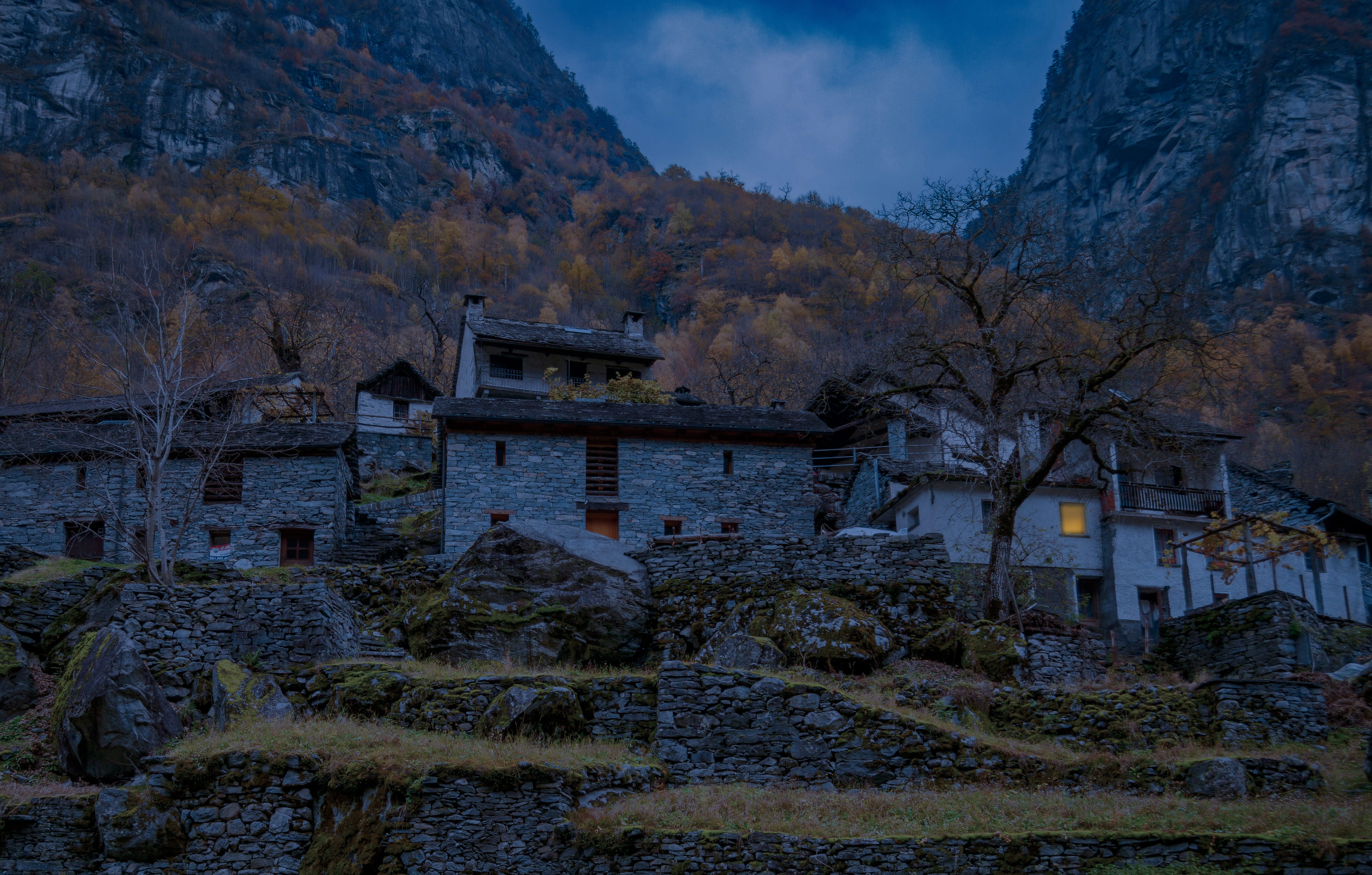
Many hours later—I have no idea how many hours—I had made it to the frontier of Switzerland. Yes, mid-October in the foothills of the Alps. Pretty cold, but I persevered. No turning back now. I caught a few short rides further into Switzerland, and before too long, I found myself in the Italian region of the country. But by now it was nighttime. Very cold and very dark. The road was no longer an autobahn: it had become a two-lane highway that ran through villages until it reached the Italian border. But now I was somewhere in the high mountains, standing in the dark on a frigid road in a small Italian-Alpine village. Very few vehicles passed by, and no one showed any inclination to stop and give me a ride.
As the cold crept into my bones, I began to fall into the Slough of Despond. What was I to do? I could not afford to sleep in an inn. After all, this was Switzerland, and Switzerland is one of the most expensive countries in Europe. The temperature was surely below freezing. I could see my breath. I had a pretty good sleeping bag and a small pup tent, but neither would be adequate for these temperatures. So, I did the only thing I knew how to do to cheer myself up.
It was too cold to play the guitar. My fingers would have frozen. Instead, I reached inside my guitar case for a blues harmonica. I began to play a simple, long, slow blues, wailing from deep inside. I explored this moaning sound until I felt my lungs expand and my body begin to warm. Then I found a slow rhythm and started to imitate the sound of a train leaving the station. I increased the tempo until I had a galloping beat. I danced as I played to stay warm, and I held my thumb out as an occasional pair of headlights wound past me. By this time, I was completely immersed in the blues. I felt a sense of hope rise within. I would survive. I was sure. I could breathe fire into the night. I may have been homeless and without purpose or direction, but I was married to my music, and she would somehow see me through this.
All this time, I had been standing before a two-story home in the roadside village. I heard a shout from a window above and behind me. An old woman beckoned to me. She leaned her head out the window and told me to come closer. She spoke Italian, but I could understand, having been to Italy some years before and having learned enough of the language to converse on an elementary level. She urged me to stay in the inn down the street. And she used hand signals to emphasize her point. Then she threw down a small bundle of paper. I went to pick it up. It was money. She said, “Take it. Stay in the inn.”
I counted the bills. It was close to $60 in American money. So I thanked her and walked down the village street to the inn she had mentioned. I knocked on the door and inquired the price of a room. The old woman had given me the exact amount necessary to spend a night in this bed and breakfast. So I paid. I was shown to a small room with a single bed. The bed had a thick feather blanket and thick feather pillows. The innkeeper gave me a hot water bottle to warm my feet. I curled under the covers and slept more deeply than I had ever slept before. And in the morning, I had a hot breakfast with coffee.
I left the inn and began to hitch again. In less than 10 minutes, with the help of daylight and a fresh attitude, I had a ride all the way to Italy.
But I shall never forget the kindness of the old Swiss Italian woman. I can’t say for sure if she was paying me to get out of her hair or out of pity or because she admired my music. Perhaps it was a bit of all three. But I’d like to think she liked the way I played the blues.
That's the way it is in the real world, small saving favors from local people, unexpected welcome and temporary friendships in international travel, not the wars and rumors of wars that other media feast upon. And days of hitchhiking without real plans, a luxury even at the bottom of the economic spectrum...May your winter days now be merry and bright.
Great story, Phil, no doubt she liked your music and music always saves the day. Glad you made it back to Sebastopol. You are one of our musical treasures.