

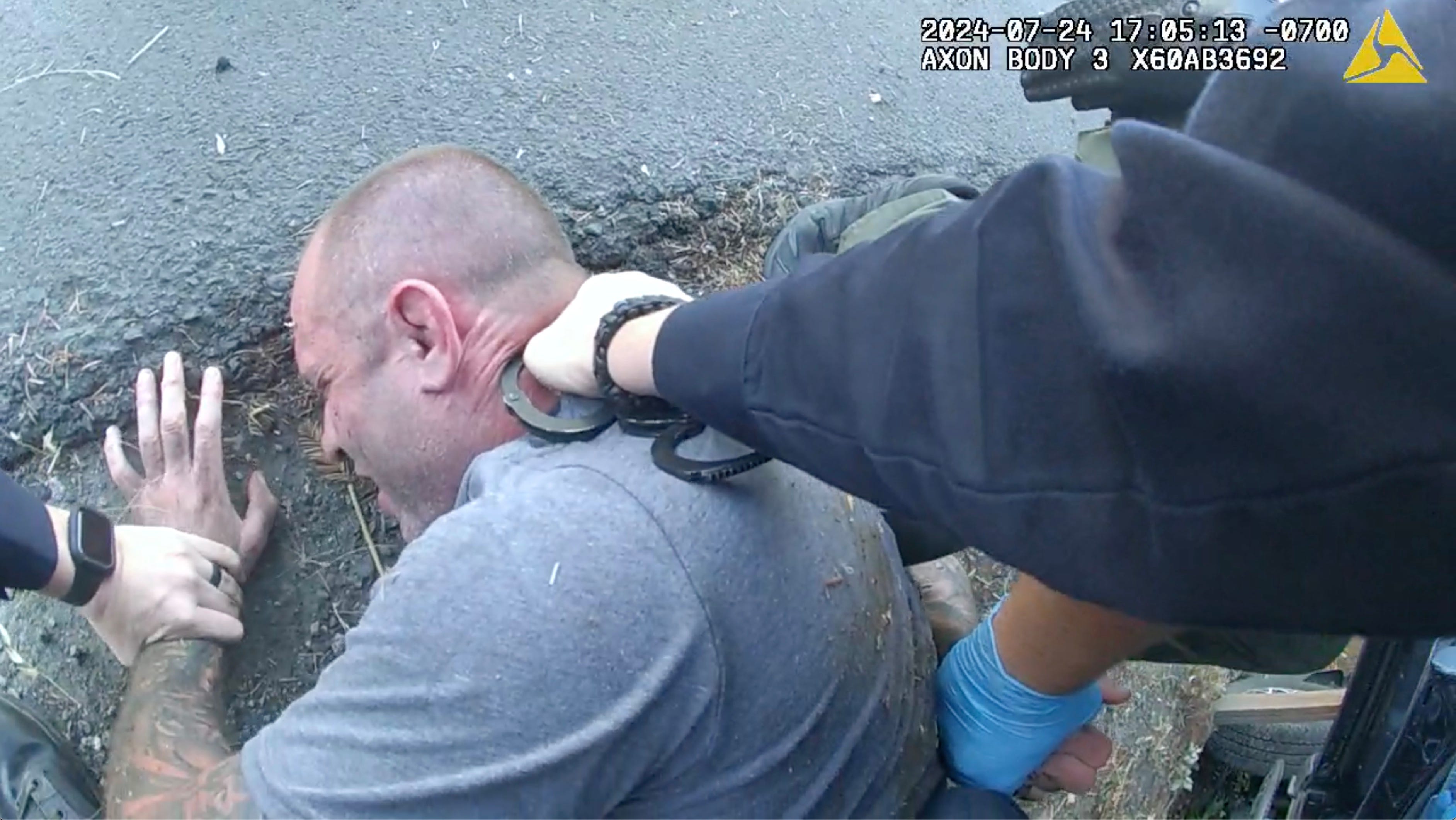
The City of Sebastopol announced yesterday that it has entered into a settlement agreement with Jeffrey Callaghan and his minor daughter, Susana, resolving the pending litigation (Callaghan et al. v. City of Sebastopol et al.) between the parties. The city awarded plaintiffs $1.95 million for a 2024 tasing and false imprisonment incident involving the Sebastopol Police.
According to a statement released by the city of Sebastopol yesterday evening:
Based on the advice of the City’s risk pool and insurance carrier, the determination was made that resolution of the matter by the City represented an appropriate economic decision and served the best interests of the community.”
The City entered into this settlement to avoid costly attorney’s fees.
For those concerned about the settlement's effect on the city’s already difficult budget situation, Sebastopol City Manager Mary Gourley told the Sebastopol Times, “The City’s share of the settlement is $10,000, and the rest is covered by insurance.”
To recap what is likely one of the worst moments in recent Sebastopol Police history, the case involved the tasing and arrest of a man with Type 1 diabetes, who was suffering from insulin shock, a condition that often mimics drunkenness. Officers thought they were dealing with an uncooperative drunk, when in fact they were dealing with a man suffering a life-threatening medical crisis.
The following description comes from the Sebastopol Times August 1, 2025, article on the lawsuit filed by Callaghan’s attorney Izaak Schwaiger. (Many of the details described below were confirmed by body camera footage made available to the Press Democrat.)
On July 24, 2024, 4:49 p.m., the Sebastopol police got a call reporting that a black Ford pickup was swerving all over the road and was currently stopped at a traffic light on Main Street. Officer Whitehall responded to the call, pulled up behind the truck, and switched on his emergency lights. The truck didn’t stop. It continued weaving through town at between 20 to 40 mph, unable to keep to its lane, until it drifted off the roadway outside of town and crashed into a ditch.
Officer Whitehall, assuming he was dealing with a drunk driver, exited his vehicle, drew his gun and demanded that the driver turn off the car. Inside the car, a child screamed. When the officer approached the car, demanding that the driver step out of the car, Callaghan was slow to respond. When he finally moved slowly out of the car, the officer ordered him to lie on his stomach on the ground and warned him that if he didn’t do so, he would get tazed. Instead, Callaghan raised his hands. Officer Whitehall tazed him three times—the first tasing knocked him to the ground, where he was tased a second and third time for refusing to obey and stay on his stomach.
At this point, a sheriff’s deputy arrived and helped officer Whitehall handcuff Callaghan, during which Callaghan’s arm was broken. The legal filing describes this incident like so: “The sheriff’s sergeant knelt on Jeffrey’s shoulder and forced his right arm behind his back with enough force to break Jeffrey’s arm.” At this point Callaghan is mumbling, “Please, Lord Jesus. Please, Lord God.”
Handcuffed, Callaghan is placed in back of the Sebastopol patrol car, while his daughter is placed in the back of the sheriff’s patrol car.
Captain James Hickey and Sgt. Cameron Fenske from the Sebastopol Police arrive on the scene, along with medical units from a neighboring fire department. The medical unit from the fire department determined that Callaghan was having a diabetic emergency, treated him with glucose (at which point he became lucid), and released him back to the police, informing him that Callaghan had had a diabetic episode. (Police training manuals detail how diabetic episodes can mimic intoxication, with patients exhibiting confusion, slurred speech, clumsiness, disorientation, blurred or double vision, loss of consciousness, and more.)
Despite this, Hickey, Fenske and Whitehall have a discussion about what they could charge Callaghan with. Fenske by then had reached out to the child’s mother and learned from her that Callaghan was a diabetic. The three discuss possible charges: child endangerment, resisting arrest, a DUI charge.
At this point, father and daughter are transported to two different hospitals, where Callaghan is given both a breathalyzer and a blood test for alcohol intoxication. Both come back negative.
According to the legal filing, a nurse at the hospital asked the officer, “Why are you doing this? He’s a Type 1 diabetic.”
Officer Whitehall took Mr. Callaghan to the county jail where he was booked on charges of felony vehicular evading in violation of California Vehicle Code Sec. 2800.2, felony child endangerment in violation of California Penal Code Sec. 273a(a) and resisting arrest in violation of California Penal Code Sec. 148(a)(1). Officer Whitehall further requested the Sonoma County District Attorney consider charges of DUI once the results of Callaghan’s blood test were returned. Sergeant Fenske submitted a Suspected Child Abuse Report to Child Protective Services.
According to the legal filing, Callaghan drained his savings account to pay his bail.
Six months later, on February 10, 2025, the Sonoma County District Attorney rejected all requests for charges against Mr. Callaghan.
At that point, attorney Izaak Schwaiger, who Callaghan had contacted soon after the incident, was able to get access to the police body cam footage. The case was filed in federal court on July 24, 2025.
The lawsuit filed by Schwaiger named the city of Sebastopol and three of its current and former police officers—Officer Forrest Whitehall, Sgt. Cameron Fenske, and Captain James Hickey—accusing them of the following crimes: 1) Excessive force (Whitehall); 2) Unlawful detention (Whitehall, Fenske and Hickey); 3) False arrest (Whitehall, Fenske and Hickey); 4) Conspiracy to violate civil rights (Whitehall, Fenske and Hickey); 5) False imprisonment (Whitehall, Fenske and Hickey); 6) Deprivation of familial association (Whitehall, Fenske and Hickey); 7) Supervisory liability (Fenske and Hickey); 8) Bane act (a California law that forbids people from interfering with a person's constitutional rights by force or threat of violence) (City of Sebastopol, Whitehall, Fenske and Hickey); 9) Negligence (City of Sebastopol, Whitehall, Fenske and Hickey).
In the aftermath of this incident, Captain Hickey and Officer Whitehall left the Sebastopol Police Department in March of 2025. Sgt. Fenske is still employed there. Forrest Whitehall is currently a police officer for the city of Petaluma.
According to yesterday’s announcement of the settlement, “The City of Sebastopol, the Sebastopol Police Department, and the named officers expressly deny admission of liability in connection with the settlement.”
According to the Settlement itself, “Liability for said incident is disputed, and this release is a compromise and shall not be construed as an admission of liability. Releasee denies liability in this action. Payment of the settlement funds pursuant to this settlement shall not be deemed or construed to be, at any time or place, an admission of any liability, negligence, fault, or wrongdoing.”
The settlement releases the city and the officers from “any and all actions, claims, and demands of any kind or nature whatsoever…including any and all known and unknown injuries, disabilities, pain and suffering, mental anguish, emotional distress, medical and health care expenses, deaths, income loss, and properfy damage or loss, arising out of or in any way connected with or resulting from the incident.”
The $1,950,000 will be split as follows: $1,462,500 to Jeffrey Callaghan and $487,500 for his daughter Susana. (Schwaiger gets a 40% cut of the total.)
Both parties—the plaintiffs and city of Sebastopol—will bear their own legal fees.
When we asked how much this lawsuit had cost the city in legal fees, Gourley wrote, “CIRA [the city’s risk pool] will cover defense costs and settlement, above Sebastopol’s deductible.” Gourley didn’t have an accounting of City Attorney Alex Mog’s fees, but said, “I believe there were a low amount of City Attorney hours from Alex, as CIRA’s attorneys handled and defended the case.”
The city ended its announcement of the settlement like so: “The City is constantly evaluating and updating the policies and training for the Police Department and continues to strive to be a model of excellence.”
I think any awards for police misbehavior should come, in significant degree at least, from their retirement fund- or from insurance each officer is required to carry.
The former would give all other officers a reason to self-police less disciplined officers and the latter would soon make insurance rates so high an officer with self-control issues would soon be unemployable because he/she couldn't afford the premiums on liability insurance.
Why should citizens pay for misbehavior by employees over whom they have absolutely no control?
So the officers and department get away without admitting any wrongdoing? Costing taxpayer time and money to ultimately come to a large settlement and they just…go on business as usual? One of these guys still works in our city, which is highly disturbing. If they did nothing wrong, then why was there a $1.95m payout? It’s extremely disappointing how little community outreach (or soul searching…) the department has done in the wake of this violent assault on an innocent member of our community. There are many unanswered questions about this, not least of which is “when will this happen again?”