

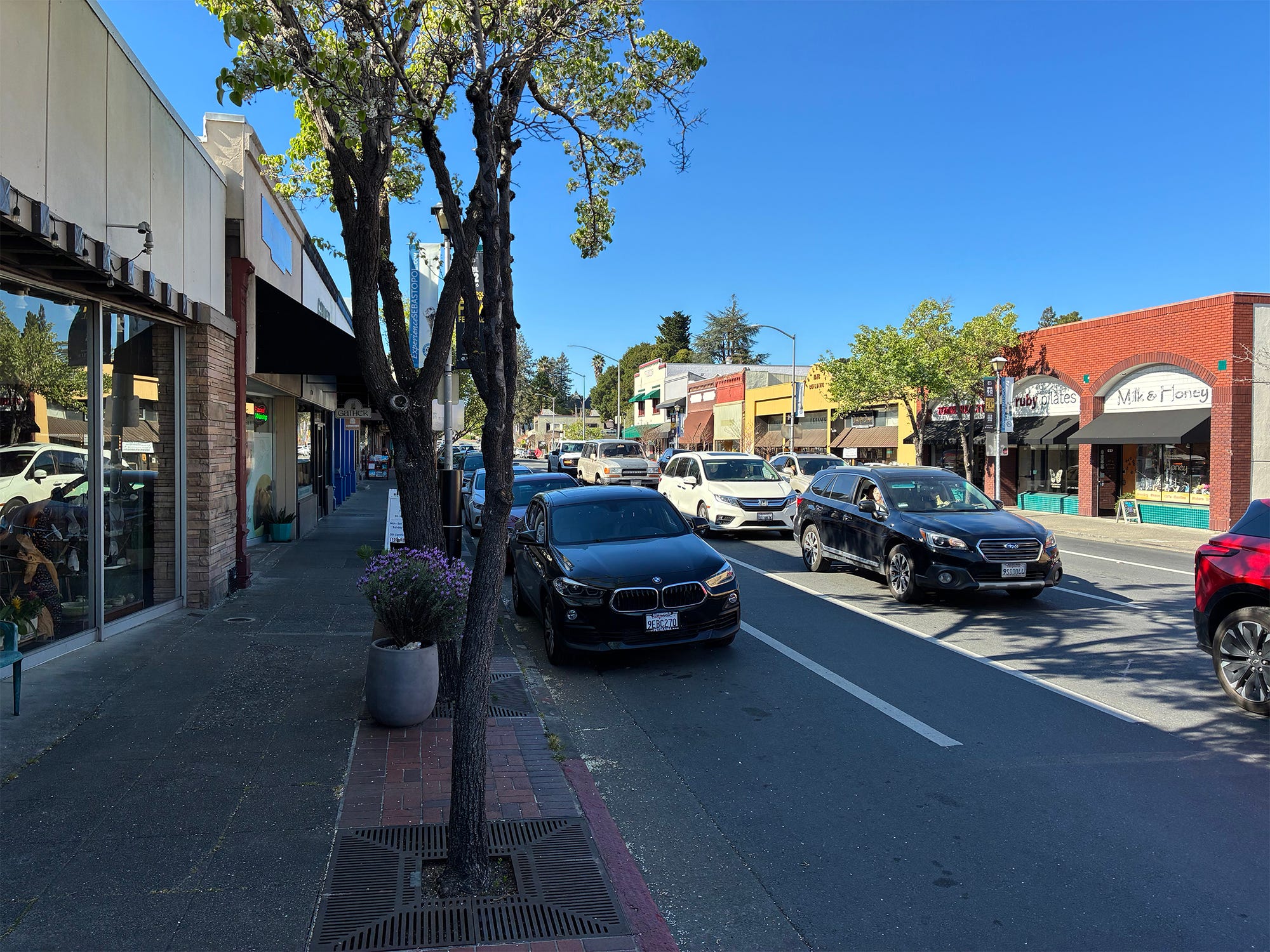
Remember all those articles we wrote over the last three years about how the Sebastopol Downtown Association and the Sebastopol Chamber of Commerce were finally going to merge their efforts?
Yeah, well, that’s not happening.
On Tuesday, in response to a letter from Sebastopol Chamber Director Myriah Volk, the Sebastopol City Council voted 5-0 to have the city once again become the fiscal sponsor for the Sebastopol Downtown Business Improvement District.
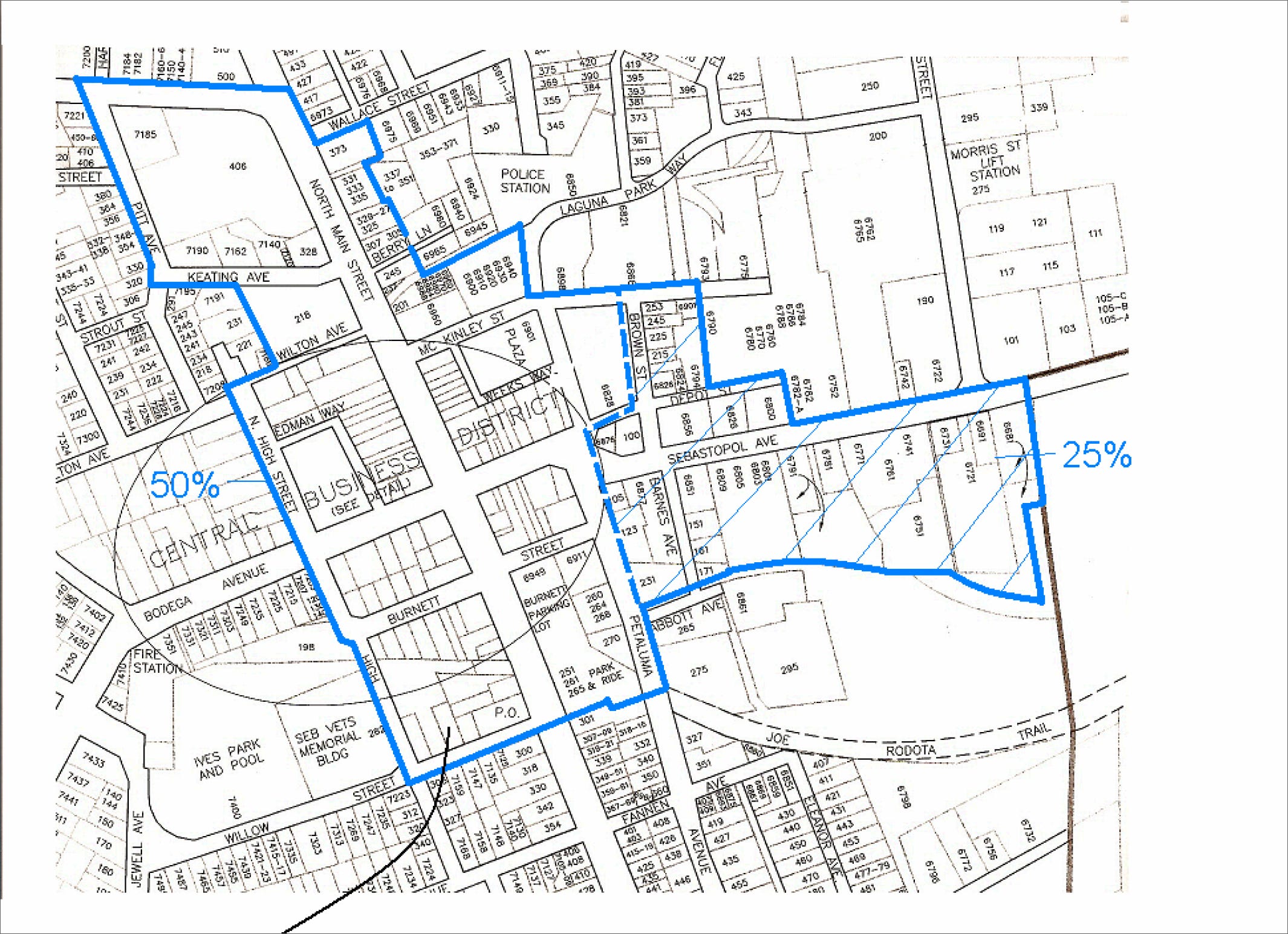
The Sebastopol Downtown Business Improvement District was created by the Sebastopol City Council in 1976. Businesses within the district pay a business-district tax based on the cost of their business license. For some businesses, the tax is equal to 50% of the cost of their business license; for others, it’s based on 25%. Either way, it’s capped at $125 a year, and most businesses pay much less than that. Combined, the business improvement district fees generate around $8,000 to $10,000 a year. This money has traditionally been spent on things like radio ads, social media buys and events that draw attention to Sebastopol’s downtown.
Who decides how to spend that money has shifted over the years. For a while, the city council did it; then, in 1987, the council created the Sebastopol Downtown Association (SDA), a membership group made up of local business people, to give the council advice on how business district funds should be spent. In the late aughts, the SDA disbanded and turned its duties over to the Chamber of Commerce. After a few years, the SDA re-formed and regained control of business improvement district’s funds. In 2023, after the SDA’s dedicated and longtime volunteer director Rei Blaser resigned, the SDA and the Chamber began an effort to combine the two organizations.
It seemed on the surface to make so much sense. Both organizations are committed to supporting local businesses, and merging them seemed to provide a solution to two problems: It would give the Chamber some additional money to spend to promote the town (specifically the downtown). It would also solve a problem with which the SDA had always struggled: because the business improvement district tax raises less than $10,000 a year, the SDA can’t afford to hire anyone to make marketing plans and strategically carry them out. The idea behind merging with the Chamber was that Chamber Director Myriah Volk, with the help of a committee of downtown business owners, would be able to do that.
But somehow that didn’t work out. So little money has been spent on anything for the Sebastopol Downtown Business District over last few years that there’s now a war chest of $17,000 just waiting for someone to tell the city how to spend it.
In her letter to the council, explaining why the Chamber was bowing out, Volk mentioned that the projected budget from the committee of downtown business owners lacked detail and had a deficit of several thousand dollars.
She wrote, “The Chamber stepped into this role with the intention of strengthening downtown efforts and supporting responsible stewardship of public funds. However, continuing under the current circumstances places the Chamber in a position that could negatively impact its credibility and reputation.”
Volk said it was nothing personal. There was no big break-up or interpersonal sturm und drang.
“Things had just changed so much. It was different people. It was a different vision, and it almost felt like we’re back to square one. After two and a half years of working on trying to make this happen, at some point, you just have to go ‘When something’s not working, it’s not working.’ I need to focus on my job, take care of the Chamber, and stay in my lane,” Volk said.
Andrea Caron of Silk Moon and Erin Hillmer of Gather, who were both on the committee of downtown business owners advising the Chamber, said there was a lack of clarity about how much money was available and who would make the spending decisions. Hillmer said they didn’t even have an up-to-date email list of business owners in the Business Improvement District, which made communication with members iffy.
Where to now?
The council explored several options for dealing with the business improvement district funds. Councilmember Neysa Hinton suggested creating a council committee.
“I have a long history with this,” she said. “I helped put it together in 1990…I’m supporting having the city take it on, and I’m willing, as a council member, to be the liaison for this.”
Mayor Jill McLewis wanted to dissolve the business improvement district altogether.
“I don’t want to see all kinds of committees because, to be honest with you, I don’t see how it moves the needle anymore,” she said. “This was formed quite a long time ago, before social media and many different ways for businesses to advertise. So I struggle with—just because we’ve had something for so long, does that mean it needs to remain? Or can we think outside the box, like ‘What can we do?’ Does it [the business district] work? Doesn’t it work? Does it need to continue?” She gave a long and passionate speech arguing that it did not.
Councilmember Phill Carter suggested making the dispersal of business district funds the purview of the council's Budget Committee, of which he is a member. Councilmember Maurer, who is also on the budget committee, liked that idea. There was some discussion about how to do this. Maurer suggested that the budget committee could devote one or two budget meetings a year to hearing proposals from any business owner in the business improvement district who wanted to submit a proposal.
In the end, the council voted 5-0 to have the Sebastopol Downtown Business Improvement District members present funding proposals to the Budget Committee.
Those proposals would presumably have to benefit the whole district (as opposed to a single business) and fit into one of the spending priorities laid out in the original business improvement district resolution. These include the maintenance of parking facilities, public decorations, public events (including music), and general business promotion within the business improvement district.
Gather’s Erin Hillmer appreciated the council’s solution. “I think this gives us something concrete to work with—like to reach out to the businesses and say, ‘The Chamber is now no longer the middleman. We’re working directly with the city. We can present ideas to them at these two meetings.”
Although any individual business owner in the business improvement district can now present a proposal to the city’s Budget Committee, Retrograde Coffee co-owner Danielle Connor said she’s skeptical about whether this individual approach will work.
“The issue that has always existed—that I’ve seen exists with the SDA—is that it’s made up of small business owners who are so busy running their businesses and trying to stay afloat that they’re feeling like they don’t have time to plan and execute an event or whatever it is that we want to happen downtown,” she said.
She noted that the Barlow has a whole team of people who plan and execute their events.
Conner is still open to the possibilities, however. “I have spoken with Erin, who owns Gather, and she really wants to see things happening right in downtown also, and she was talking about coordinating something. I told her I would be on board for whatever she wants to do if she wants to coordinate something. Because, yeah, I think we’re all hungry for something to happen, but no one has the time or energy to make it happen.”
Hillmer and her business partner Jen Koelemeijer say they’re still interested in moving things forward.
“I think it makes the most sense for us all to get together and come up with an idea that we all think we can pull off together,” Hillmer said. “Like, say, ‘We’re having a general meeting on this at Gather. Come on over. This is how we’re going to get involved.’ Now, at least there’s something that we can tell people about, like “This is now how it’s going to work.’ Before no one even knew what was happening, right? So, I think it’ll be good. I think it’s a good solution.”
Who collects the business license fees? How hard is it to collect current contact information including email addresses? Asked at the meeting no one on city staff knew how many businesses were in the district or how to contact them? Odd.