
By Samantha MacKenzie
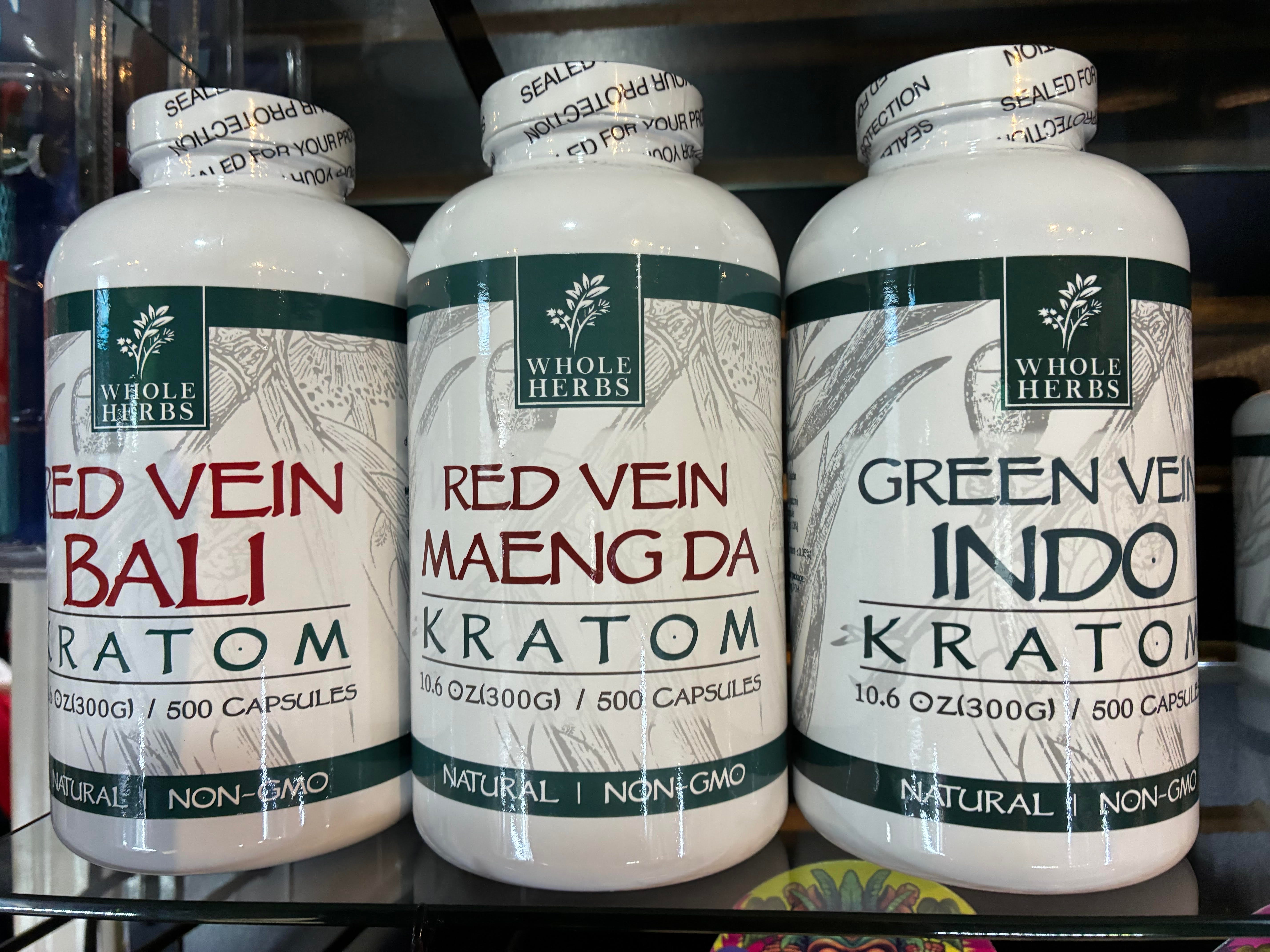
Kratom, an herbal product made from the leaves of the Southeast Asian tree Mitragyna speciosa, commonly sold in smoke shops and marketed as an herbal supplement, is being embargoed and removed from store shelves across Sonoma County as state agencies increase enforcement.
On Jan. 9, the California Department of Public Health (CDPH) sent a letter to retailers, letting them know “that the retail and online sale of kratom and 7-hydroxymitragynine (aka 7- OH) products in any form for consumption is unlawful per California Health and Safety Code (HSC) 110555 because these products are not approved and may cause harmful effects.”
Kratom has been used historically as a mild stimulant or pain reliever. In the United States, some users report that it helps with chronic pain, anxiety or opioid withdrawal. Public health officials say the more potent kratom products that are now driving concern differ significantly from traditional uses.
The CDPH has begun confiscating kratom products from retailers after determining they are being sold without approval as a food, dietary supplement or drug. Enforcement actions, including embargoes, destruction of inventory and potential criminal citations have already occurred at Sonoma County retail locations, according to Terese Voge, a health program manager with the county’s Public Health Division.
“We’re seeing an explosion of these products in smoke shops,” Voge said. “Public health concern increased significantly once concentrated forms, known as 7-OH, began appearing because they act on the body like an opioid.”
The chemical compound 7-hydroxymitragynine, commonly called 7-OH, is a synthetic concentrate derivative of kratom that acts on the body like a potent opioid. Research suggests it can be at least ten times stronger than morphine, producing intense pain relief and euphoria.
Public health officials warn that 7-OH carries a higher risk of addiction and overdose, particularly when mixed with other substances. Naloxone, the same medication used to reverse fentanyl or heroin overdoses, can counteract a 7-OH overdose.
But unlike fentanyl or heroin, kratom is not federally illegal yet. In August 2024, HHS Secretary Robert F. Kennedy, Jr. and regulators at the FDA announced their intention to schedule 7-OH as a Schedule I substance. Other Schedule I drugs include heroin, LSD, and ecstasy which are all illegal to manufacture, distribute and dispense. The FDA indicated they will exempt kratom products which naturally contain minimal amounts of 7-OH from scheduling.
California law does not prohibit possession or personal use, and the substance is not scheduled as a controlled drug yet. However, its sale is considered unlawful because the product is unregulated and lacks verified testing or manufacturing standards.
At a smoke shop in Sebastopol, the shop’s manager, who asked not to be identified, said kratom has been part of his store’s inventory for years and that most customers seek it as an alternative to caffeine, prescription pain medication or as a safer alternative to opioids. He said the sale of kratom products account for about 20% of the shop’s sales.
He described the plant-based product as “a very gentle plant” with a long history of traditional use in Southeast Asia, adding that, in his experience, regular kratom products such as powders and capsules have helped people manage or move away from more harmful substances.
“It’s helped a lot of people, especially folks who are trying to get off opioids,” he said. While acknowledging growing concern around the highly concentrated products, he argued that those formulations are fundamentally different from traditional kratom. “Seven-hydroxy is not the same thing,” he said. “That’s where the danger is, and that’s what’s getting everything lumped together.”
Advocates for regulation rather than prohibition argue that banning kratom could push it into illicit markets, increasing the risk of contamination and misuse. Groups including the American Kratom Association have called for regulation similar to cannabis or dietary supplements, including age restrictions, labeling requirements, potency limits and contaminant testing.
A bill that would provide these very regulatory guardrails for kratom was introduced in the California Assembly last year by Dr. Jasmeet Bains (D-Delano). According to a press release from her office, “Dr. Bains introduced AB 1088 to prohibit the sale of kratom products to children, require the use of child resistant packaging, ban the use of marketing that appeals to children, and prohibit the sale of high potency 7-OH products.”
According to Bain’s Legislative Director Adam Capper, Bains’ bill is still very much alive. “It is currently in the Senate Health Committee. She is planning to advance it this year.”
The concentration game
Treatment and recovery organizations in Sonoma County report an increase in kratom dependency, particularly among young adults. Some providers, including Pura Vida Recovery in Santa Rosa, now offer kratom-specific detox guidance.
“When it first appeared, kratom was marketed as a harm-reduction tool,” said Jason Reed, president of Santa Rosa Junior College’s Students for Recovery club. “People used it as tea or capsules, and it seemed manageable.”
That shifted with the introduction of concentrated extracts, Reed said. “That’s when people started struggling to get off it. For some, kratom became the new dependency.”
Easy access has compounded the problem. “It’s sold at gas stations, liquor stores and vape shops,” he said. “As tolerance rises, so does cost. We’ve seen people spending hundreds of dollars a month.”
“Anytime you extract and concentrate a substance, you increase the risk of dependence,” Reed said. “That’s true for cannabis, opioids and kratom.”
Concerns about youth access have accelerated enforcement efforts. Voge said county officials received complaints from families, including a report from a woman whose teenage sister developed withdrawal symptoms after using high-potency kratom purchased at a local shop.
“Youth see it on shelves and assume it must be safe,” Voge said. “Removing it from normalized retail environments helps protect them while the legal and public health questions are addressed.”
Emergency responders in Los Angeles and other California cities have documented overdoses linked to concentrated kratom products. Los Angeles County has reported six deaths this year in which 7-OH, was detected. In some cases, minors were involved.
The shop manager in Sebastopol said that none of these deaths have been caused by 7-OH itself but by a combination of substances. “Every single one of those people who have passed have had other drugs in their system,” he said. “It’s like taking a regular medication your doctor prescribed and forgetting that you can’t have grapefruit, right? Or drinking alcohol and taking a prescription medication. It’s the same deal. Mixing stuff together can end poorly.”
No deaths in Sonoma County have been publicly linked to kratom or 7-OH.
Sonoma County interim public health officer Dr. Michael Stacey said kratom presents a growing public health concern because of its opioid-like effects and inconsistent potency. “There is a perception that because it’s plant-based, it’s safe,” Stacey said. “But kratom can be addictive, and concentrated products increase the likelihood of harm.”
The Sebastopol shop manager we spoke with said he sees in this crackdown the same kind of heavy-handed enforcement that once plagued the cannabis industry before it was legalized and regulated. Behind the villainization of kratom, he sees the long arm of Big Pharma getting rid of competitors.
“Once it’s banned, then the FDA will approve 7-hydroxy to be used as a pharmaceutical drug,” he said.
Sonoma County has not finalized a ban or regulatory ordinance, but enforcement against retailers is underway alongside education and treatment outreach.
Stacey emphasizes that users are not the focus. “We want to prevent harm, but we also need public awareness, treatment access and community education,” he said.
Officials expect discussions on age limits, licensing requirements or sales bans to continue throughout the year, with concentrated kratom products remaining the primary concern.
I believe Sebastopol banned Kratom in 2020.