

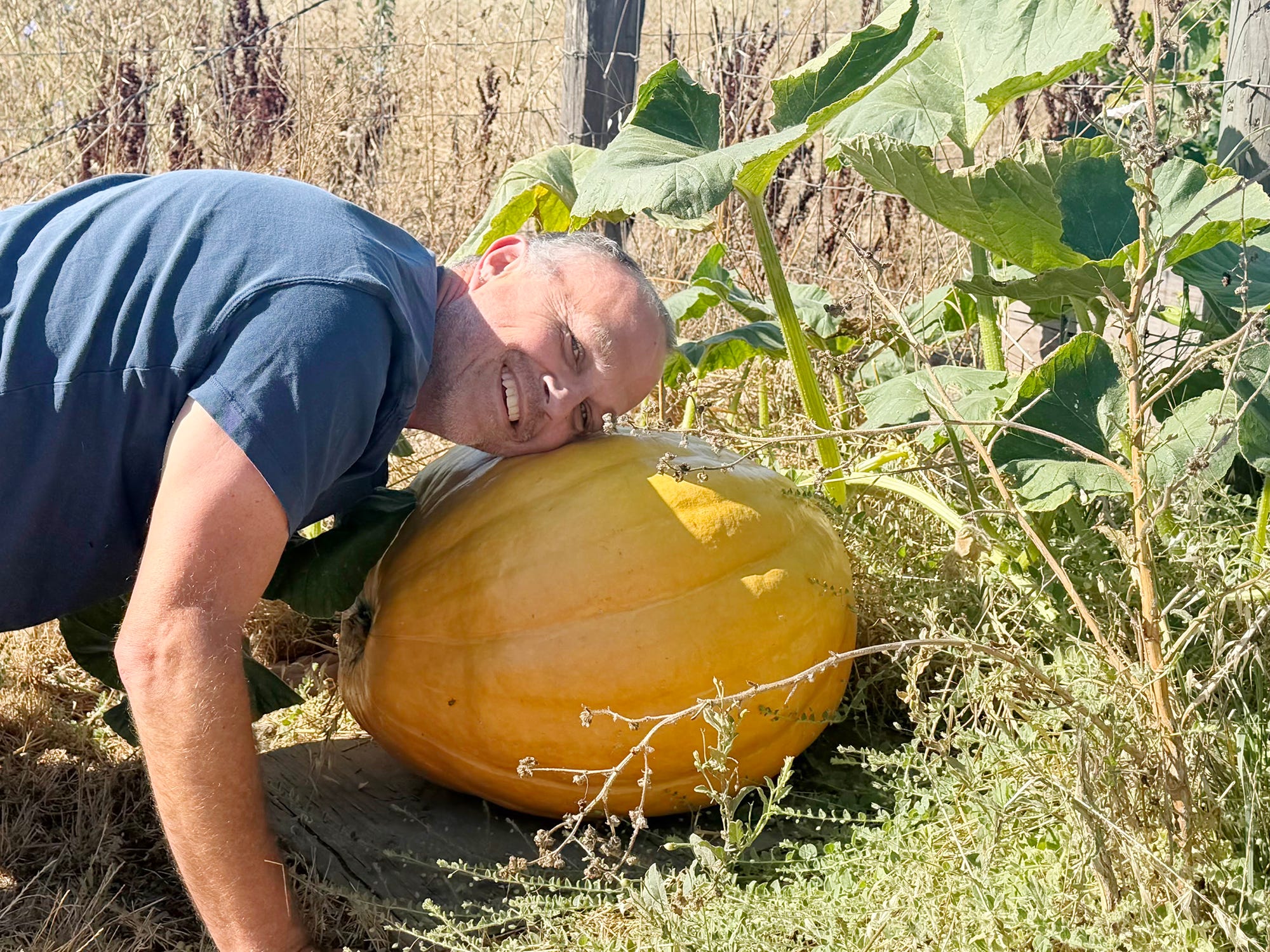
You may know Craig Litwin as the youngest-ever member of the Sebastopol City
Council—he was 24 when he was elected in 2000 and served two terms, retiring from the council in 2008. Or you might know him as one of the co-founders (with Craig Boblitt) of the Sebastopol West 100 Giving Circle in 2025. In between, he’s been a cannabis consultant, a municipal vitality consultant, and a member of the Sebastopol Grange and the Kiwanis Club—for which he’s always coming up with new projects.
Litwin was born in 1976 in Santa Rosa and raised on a four-acre farm way out on Bloomfield Road “with chickens, pigs, cows, and sheep. A big vegetable garden. My parents built our ranch house when I was a baby,” he said.
He grew up with a love of gardening, and it’s been a constant in his life. In the late 1990s, when he was in his 20s, he was part of a local, youth-led movement called Planting Earth Activation, which helped turn more than 200 yards in Sebastopol and West County into food gardens. Litwin replicated that effort on a smaller scale over the last two years with a Kiwanis project to build free garden beds for people’s yards.
His newest project, which is just getting off the ground, is the Farming Club Coalition, which he started with Jason Bradford, a farmer from Corvallis, Oregon. Bradford is an affiliate of the Post Carbon Institute, which started in Sebastopol but has since moved up to Corvallis. Bradford now stewards about 100 acres, which includes a farm.
Litwin heard Bradford talking about farming clubs on two favorite podcasts: The Great Simplification and Crazy Town, which is Bradford’s own podcast.
How does a farming club work? Here’s Bradford’s explanation in an article for resilience.org.
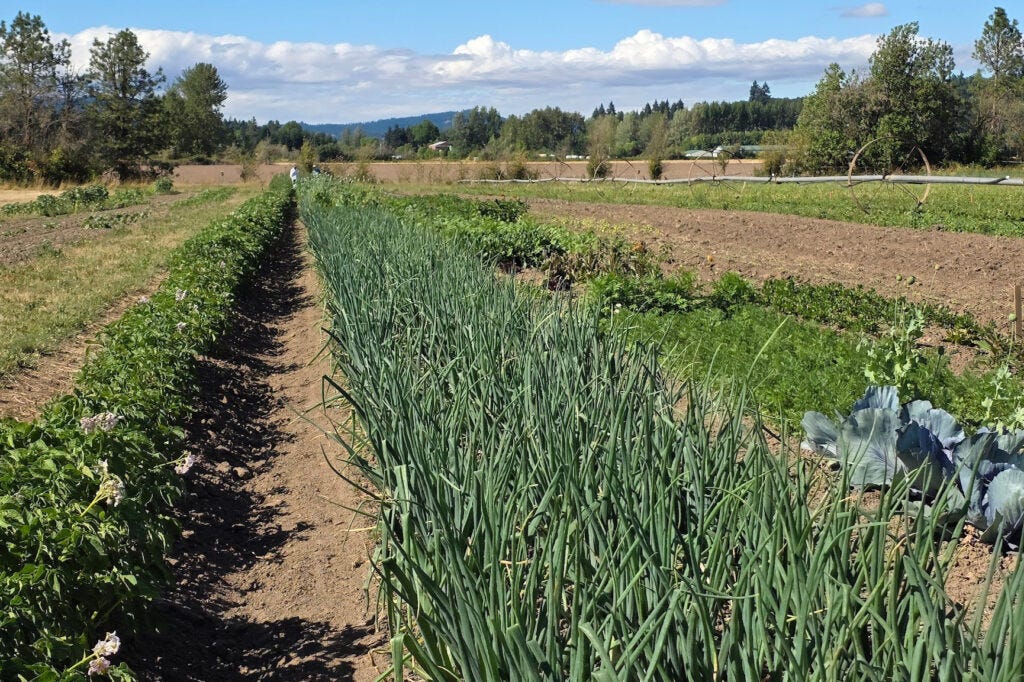
“In the farming club model, a plot of land is farmed together, and the harvest is divided among members. This distinguishes it from gardening clubs or community gardens, where people tend to have individual plots … This is also a non-commercial way to farm, which distinguishes it from a Community Supported Agriculture model, where people pay a farmer directly to grow their food … In a farming club, you eat what you help the club grow, and a professional-grade farmer is on hand to coach you.”
Bradford hit on the idea of a farming club out of necessity. After he was injured cutting up some downed tree limbs after a storm, some friends came over to help him on the farm. They enjoyed it—the exercise, the fresh air, the amazing produce they got in exchange—and he enjoyed the company and the help. When he was better, he invited some more people to participate. Now he uses the farming club model on his own farm.
Litwin was instantly inspired by Bradford’s idea.
“It just hit me where I’m like, this is very novel. This is a good idea. This could take place everywhere,” Litwin said. “Churches can do it. Schools can do it. Service clubs can do it. Individuals can do it. And so I reached out to the Post Carbon Institute and connected with Jason, and we started talking and thought, you know what, we can really build this thing up. Let’s do this. So we formed the Farming Club Coalition, got the fiscal sponsorship of the Post Carbon Institute, and launched our first webinar in September.”
Litwin said people from across the country and the world—New Zealand, France—joined the webinar to learn more about this concept.
“People are joining as coalition members to create and incubate their own farming clubs in their own communities,” he said. “The idea is that we share information to help spread the concept of farming clubs elsewhere.”
Litwin envisions the cost of a farming club membership somewhere around $50 a month.
“Fifty bucks a month to get enough vegetables for one’s needs for the year is pretty incredible,” he said.
Litwin said that, for the participants, belonging to a farming club is “not a full-time job in any way.” In Bradford’s farming club, for example, each Sunday, farming club members help weed, plant and harvest in exchange for a potluck meal and the fruits of their labor: organic produce to take home.
“And, to be clear, a farmer cannot, as I understand it, take food grown in this way and sell it on market because then the club participants would essentially be employees, and then it’s a taxable event for those individuals,” Litwin said. “So this isn’t a farmer finding a way to grow more food to bring it to market. It’s a farmer finding a way to get paid as a coach to work on a small portion of their land—it could be half an acre, one acre—where they’re supplementing their income, building community, bringing people in who can help fund that farmer in part.”
Bradford thinks Litwin is a good match for this project.
“I was taken by his enthusiasm and realized if I was going to spread the farming club model I needed a partner like him. Yes, I have the experience of running a farming club, but he has all kinds of other life experience that complements mine really well. He is very big on the power of clubs to multi-solve some pressing problems we have in our society,” Bradford said. “He is a great people person who likes to get on the phone and talk to folks—such as those who want to start their own club.”
Litwin is now searching for some land to work that could be the basis for Sebastopol’s first farming club. “The ideal place for me would be about an acre,” he said. “It doesn’t have to be much bigger than that.” The land could be a part of an existing farm or just an unused section of a private or public property.
He does have a few requirements: “Having sufficient water is important, having sufficient fencing for deer protection. Garden boxes would be wonderful because gophers are another very tenacious animal in Sonoma County.”
If you’d like to be a part of a Sebastopol or West County farming club—as a participant or as a farming coach—or if you have some land you’d like to have the farming club work, reach out to Litwin at cnlitwin@gmail.com.
Find out more about farming clubs at farmingclubs.org. You can also join a free webinar on how to launch your own farming club at 11 am today, Tuesday, Nov. 10.