
This article was a communal effort. The first draft was written by Analy High School students Isabelle Eichenseher and Soleil Vanden Heuvel, who did the primary reporting, with editing from Lawson Gaylord and Laura Hagar Rush.
Carbon Conversations at the Sebastopol Grange is an ongoing series of discussions and lectures to explore community efforts to adapt to and mitigate the effects of climate change. Organized by the Rahus Institute and its founder, Tor Allen, the series has been ongoing since 2019. The latest Carbon Conversation, which happened in mid-October, tackled the question of how to reduce food waste, a necessary step in mitigating climate change.
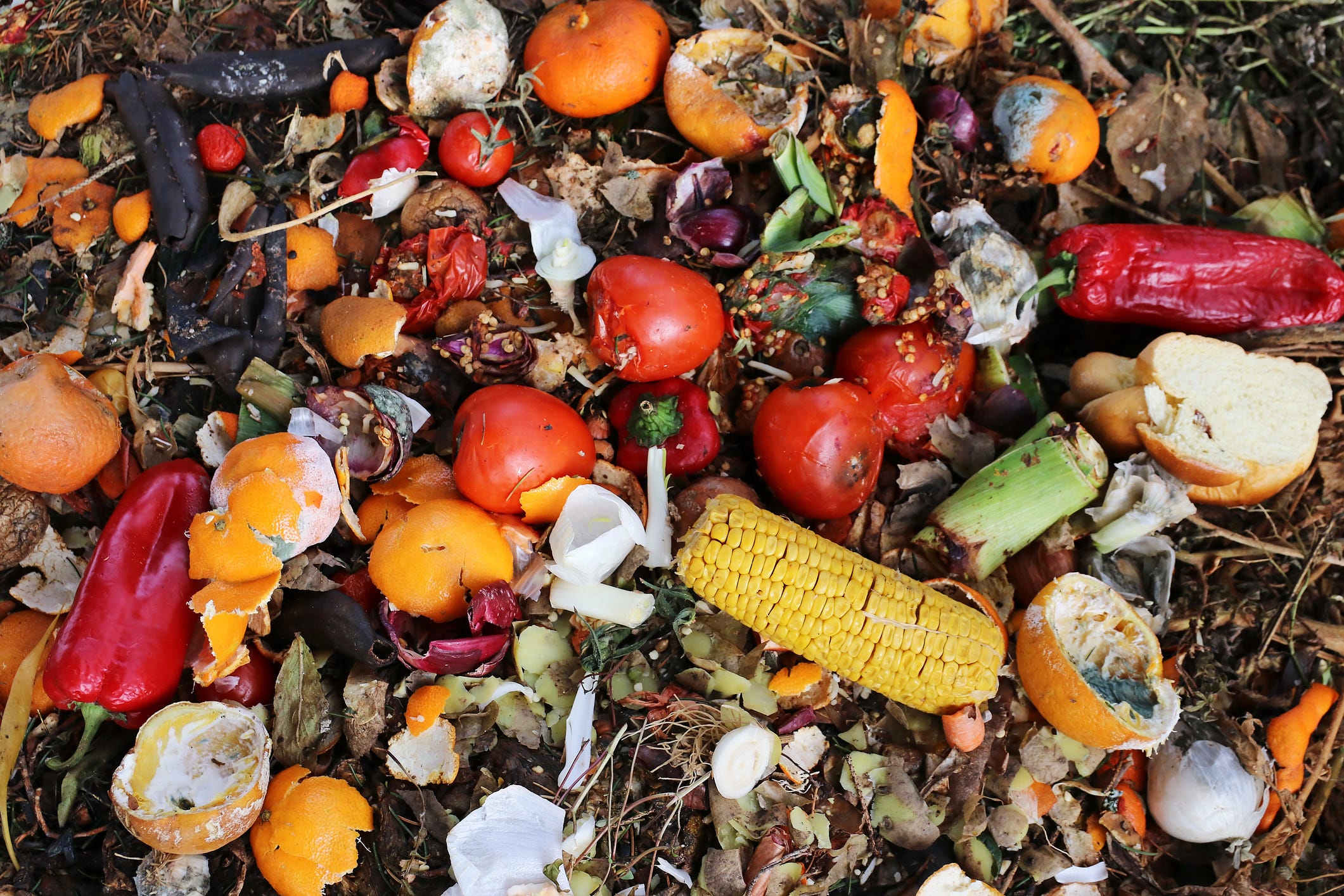
The connection between food waste and climate change isn’t immediately obvious, but in his introduction to the evening, Allen noted that rotting food waste creates methane, a major climate pollutant.
Methane is a short-lived climate pollutant (SLCP). Though SLCPs, which are more powerful than carbon dioxide, remain in the atmosphere for a relatively short period of time, the California Air Resources Board estimates that they are “responsible for about 40% of current net climate forcing.”
After a short introduction, Allen turned the evening over to a lineup of local food waste experts, including representatives from Zero Waste Sonoma; Sonoma County Resource Recovery; Farm To Pantry; the Sebastopol Senior Center, and the Grange Produce Exchange.
What is SB 1383?
First up was Kristen Sales, program coordinator for Zero Waste Sonoma, discussing SB 1383, a statewide law passed in 2016, designed to cut emissions of short-lived climate pollutants, primarily methane gas generated by organic waste in landfills. It did this, in part, by outlining a plan for reducing food waste statewide.
Kristen Sales is the program coordinator for Zero Waste Sonoma, the county organization responsible for diverting as much waste as possible from the landfill.
“The context is, one in five Californians are food insecure,” Sales said. “We have a huge amount of food waste in our landfill stream…52% of all the material that is in the landfill statewide is organic material. Of that 52%, 13% is food waste.”
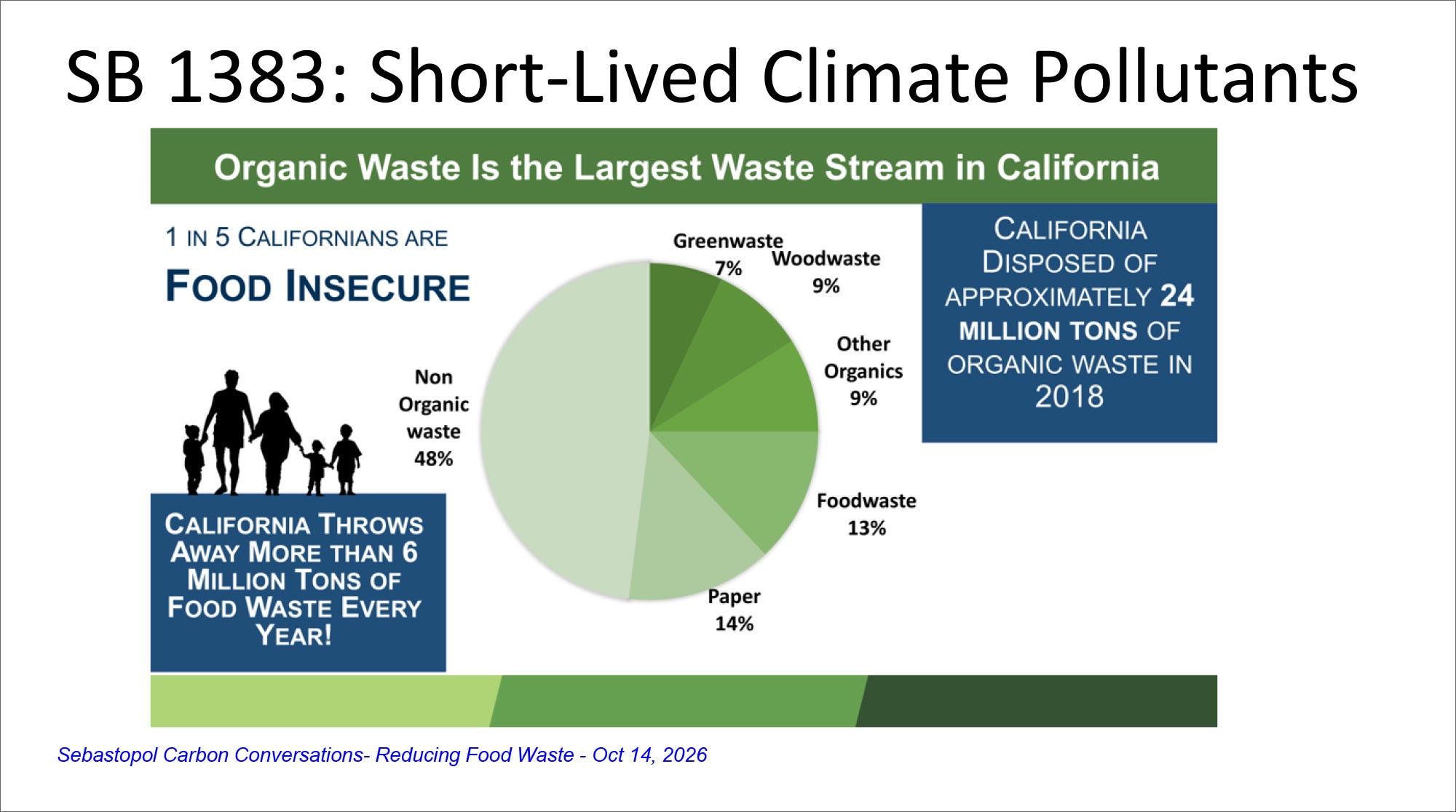
SB1383 set some ambitious goals, like a 75% reduction in landfilled organic waste by 2025. To meet these goals, all residents and businesses are required to separate compost from waste and certain types of large food-generating businesses—grocery stores, restaurants, hotels and event venues—are required to donate unused, still edible food to feed people.
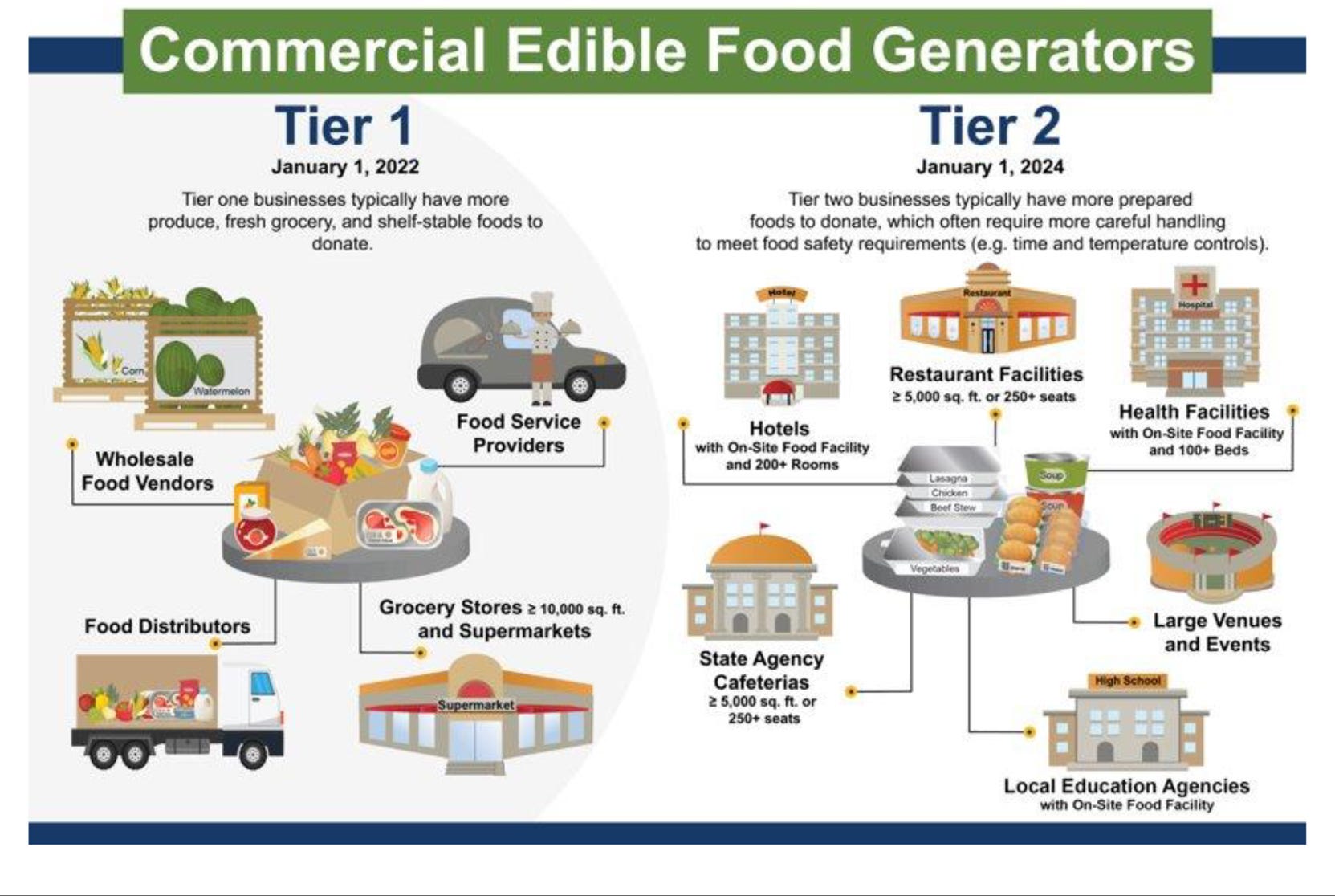
The bad news, according to Sales, is that Sonoma County (and the rest of the state) failed to hit many of the targets set by SB 1383; we are far from that 75% reduction in organic waste, for example. The good news is we’re close to hitting one of SB 1383’s more modest goals: nearly 20% of edible food that would previously have been thrown out has now been recovered for human consumption. This goal was met mainly by working with large food-generating organizations, such as restaurants, supermarkets, school cafeterias, and then partnering them with organizations that get edible food back into the community, such as Redwood Empire Food Bank.
“We want to get that [edible food] not to the compost bin, but to people who are hungry, who can use it for its best and highest use,” Sales said. “By 2025, we hit about between 80 to 85 percent of that 20 percent goal. So we’re really almost there.”
Sonoma County was awarded a $ 300,000 grant in 2023 to do edible food recovery. “Since then, Zero Waste Sonoma has invested over $600,000 in CalRecycle grant funds—that’s the same grant funds that are funding this event tonight—to strengthen edible food recovery infrastructure, build countywide capacity to recover more food,” Sales said.
She noted that the state of California expects to meet its target of a 20% reduction in edible food waste by the end of this year.
Reducing food waste in Sebastopol: The Grange Produce Exchange, the Senior Center’s Harvest Cafe and Analy High School
Dena Allen and Carol Henderson run the Grange Produce Exchange, which has been ongoing and open to the public two days a month, May through October, since 2019. The Produce Exchange helps cut down food waste from home gardens.
“We mainly started because we knew a lot of people like us grew more in our gardens than we needed for our friends and family and ourselves, and we didn’t grow everything,” Dena said. “So why not put it all together and trade?”
“We’ve grown tremendously,” she said, noting that 20 to 40 people show up to each exchange. “We get new people every time, and we have regulars that come back time after time.”
Two Master Food Preservers also have a table at the Produce Exchange, where they answer questions about food preservation techniques—canning, freezing, etc.—and provide recipes.
Any food left over at the end of the event is donated to a local food pantry. Sometimes, a leftover squash will be spirited away for use at the next Grange event, as in the case of the 17-pound banana squash that was used in the soup for the meeting that night.
One of the most inspiring talks that evening came from Clint Gandy, Harvest Cafe Manager at the Sebastopol Area Senior Center. The brainchild of Senior Center Director Katie Davis, the Harvest Cafe was started during the pandemic.
“One of our biggest goals was to get seniors out of isolation and back to a place they could meet their friends for lunch, feel safe in the environment they’re in, and get a good, solid meal,” Gandy said.
As the popularity of the cafe grew, Gandy said it took some creativity “to keep our prices at a $10 meal price a year, so that everybody could come and enjoy this community kitchen that we put together.”
The first person he reached out to was Barbara Hom of the Sebastopol Farmers Market. Gandy had noticed that there was a lot of food left over at the end of the farmers market, some of which was being picked up by other organizations.
“So I talked to Barbara and set up this thing where I could come down and pick up the leftover produce so that we could use it in our soups and our meals.”
The Harvest Cafe also gets donations from local farms like Mycopia and Webber Family Farms, as well as Farm to Pantry. Even backyard growers can contribute. Gandy shared that “just last week we met this gentleman…who had more eggs than [he] knew what to do with.” He brought over “20 plus dozen in one week” to the cafe, which has started collecting its food scraps to send to his chickens.
Gandy said that seniors who have large home gardens or fruit trees in their yard also donate produce to the Harvest Cafe. The answer to the question of “Do you want some?” is always yes, he joked.
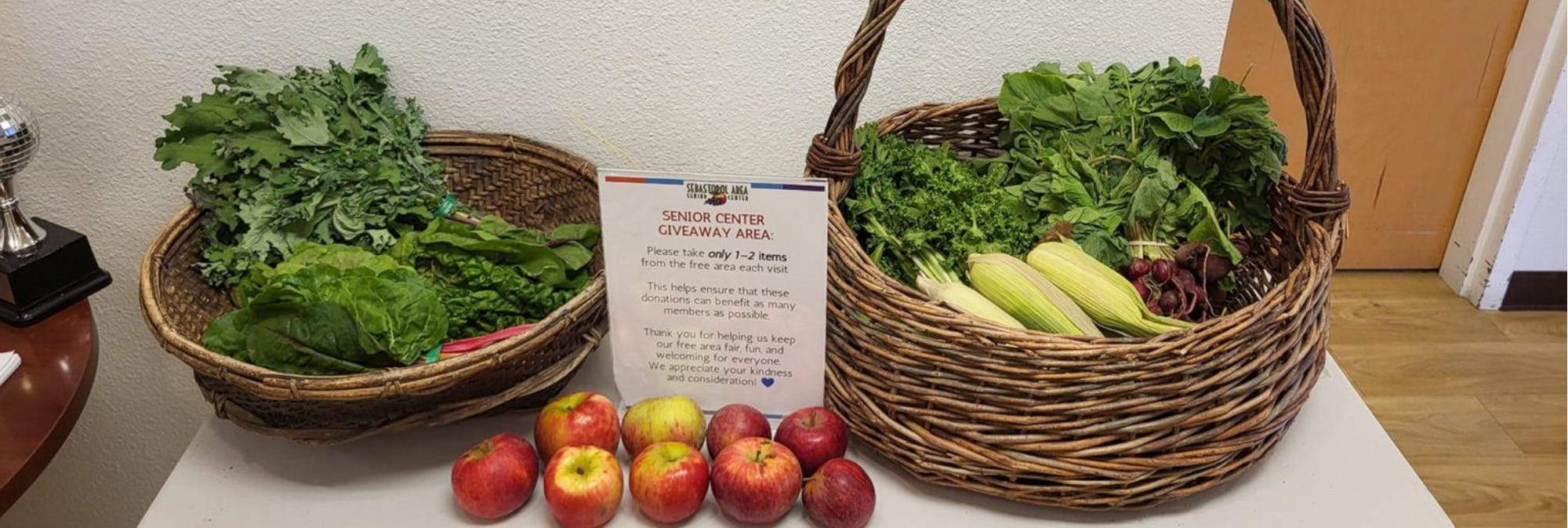
“The beautiful part is that whatever we can’t use in the cafe, we put on a free table for our seniors,” Gandy said. “So no matter what, all the food that gets donated is going to a senior. It’s feeding seniors.”
Tor Allen also gave a brief update on what Analy High School cafeteria is doing to reduce food waste: “If the student doesn’t want the food, they can put it in the share bin, and then others can take it. That usually gets utilized pretty fully during the day, which was nice to hear.”
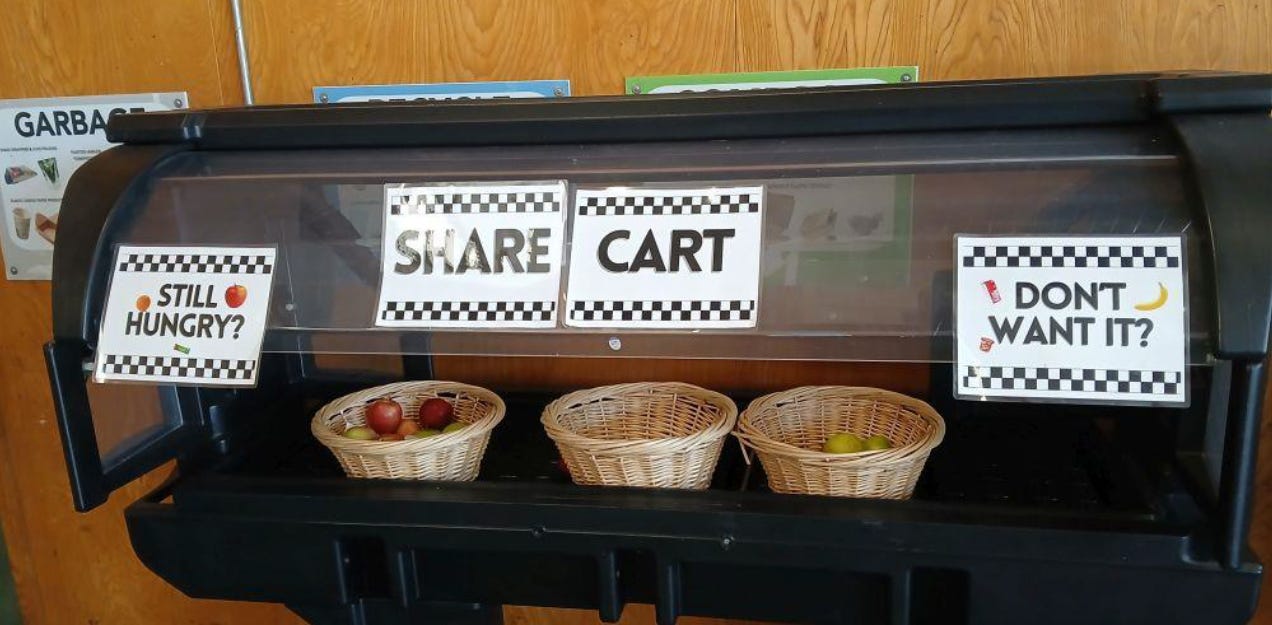
“Another thing I learned was there’s sort of this principle of “offering versus serving” strategy in the cafeteria,” he said, “so you, as a student, make choices rather than just be given what you’re told you’re going to get, which just increases the odds you’re going to actually eat it.”
He also said that when the cafeteria has an excess of food—like milk—that’s close to the expiration date, they’ll donate it to Redwood Gospel Mission in Santa Rosa.
However, there is still significant room for improvement, as Analy suffers from a constant litter issue and proper sorting of organic waste continues to be an issue.
Farm to Pantry: Gleaning and beyond
Claudia de la Pena is the Equity Gardens Manager at Farm To Pantry, a nonprofit in Healdsburg that works to solve the problem of food insecurity by gleaning food that would otherwise be wasted from home gardens and local farms. The group’s founder, Melita Love, was inspired to create the organization when, walking around Healdsburg, she would notice the amount of fruit that was falling to the ground and going to waste. They donate their gleaned food to the Redwood Food Bank and dozens of other organizations.
Last month, we harvested 8,730 pounds of fresh food,” de la Pena said. “So 8,730 pounds of food is equivalent to the removal of, as far as greenhouse gas emissions are concerned, 6.3 average cars driven for one year and 9.6 tons of food waste that has now been kept out of the landfill.”
“Our main goal is to help fill the gap when it comes to food insecurity in our community,” she said. “But it’s really cool to know that we’re also helping to cut down on gas emissions in the environment. We collect from farms as well as private homes, so people will either email us or they will call us and let us know that they have apples, fruits, other fruits and vegetables.”
In her presentation, De la Pena emphasized how vital community is, a theme with many of the night’s speakers. De la Pena explained that “People find it very difficult to know how to get started when it comes to figuring out food waste, when it comes to food justice. So I think if you do it in collaboration with like-minded people, it makes it a lot easier. And while you’re collaborating, you’re also building community.”
How’s Sebastopol doing citywide?
Amanda Rivers is the education outreach coordinator for Sonoma County Resource Recovery (SCRR), the garbage collection company that serves Sebastopol. She discussed what happens to the organic waste you put in your compost bin every week.
“So the majority of it ends up at a compost facility,” she said. “We actually haul it to Guerneville Transfer Station, and then they haul it to a number of different compost facilities, and it is processed into compost.” An audience member noted that all of these composting facilities are outside of Sonoma County.
River said that SCRR also just started a program hauling material from “commercial generators that are really good at sorting” to a local pig farm.
Some food waste is also used to produce energy.
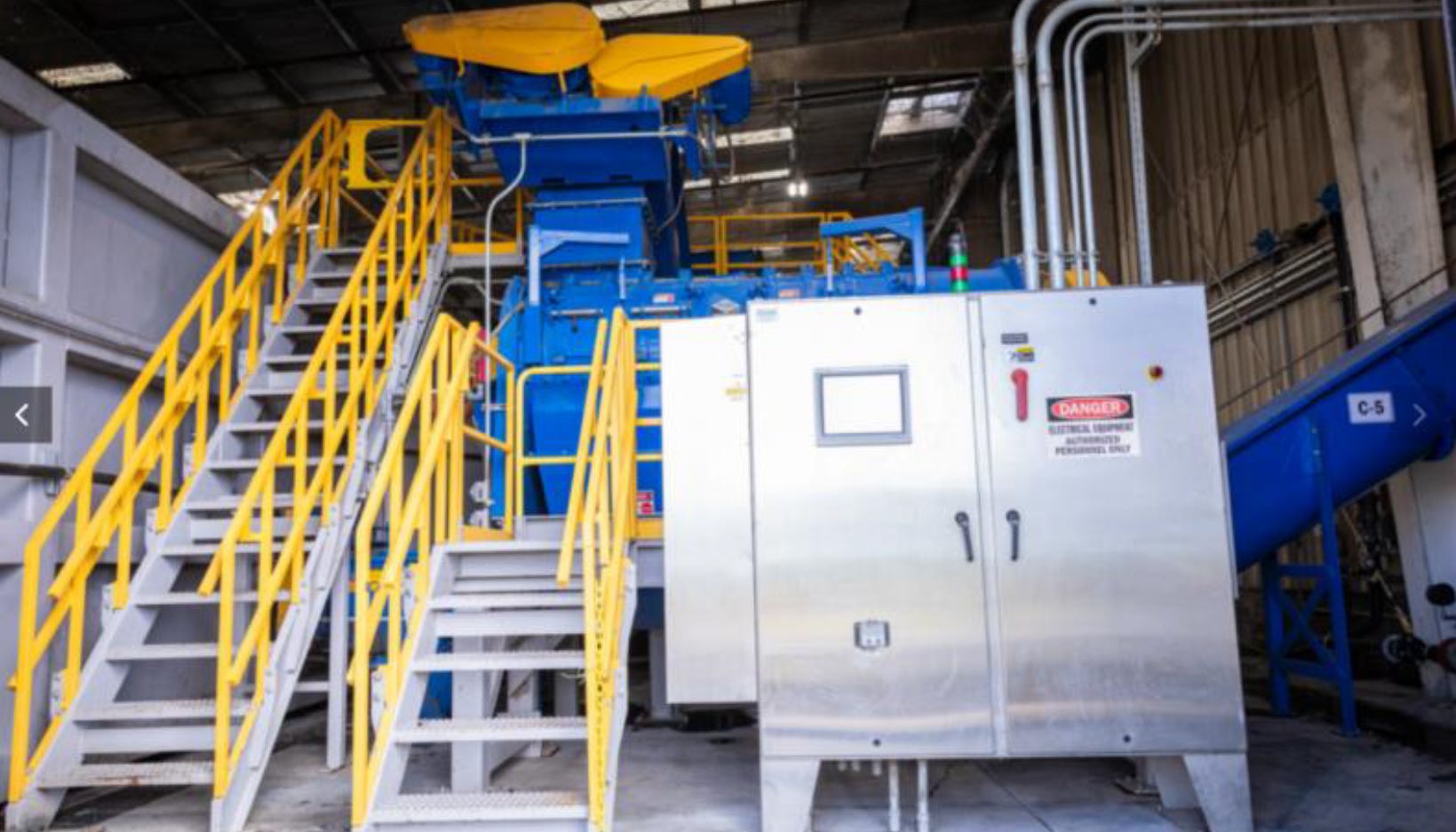
“We also take some food waste to a depackager at the central landfill in Petaluma,” she said. “Essentially, this is a machine that separates food and organic waste from any sort of contaminants, like a plastic bag or packaging, and then that material is sent to an anaerobic digester and turned into biogas and used as a renewable energy source.”
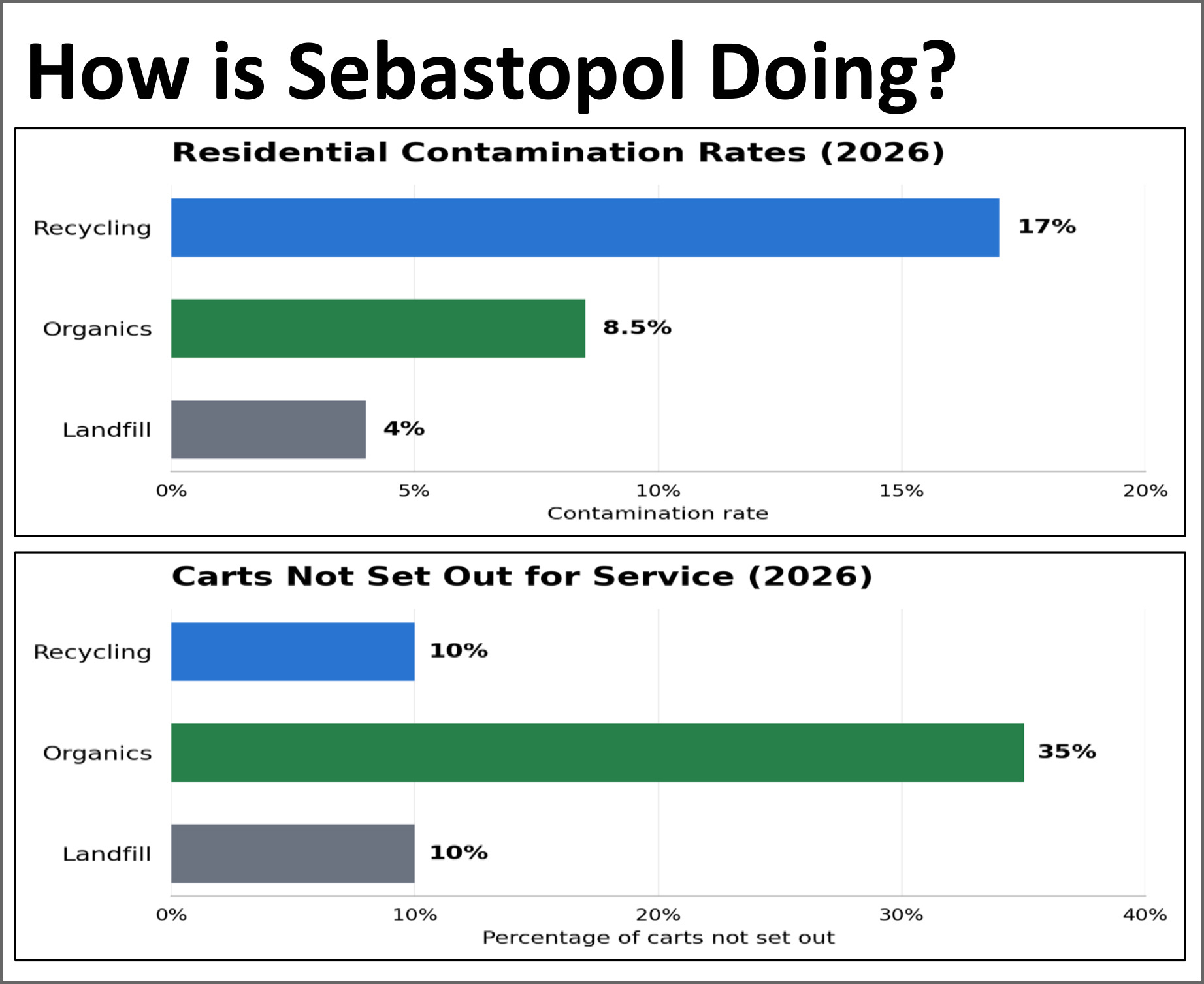
Despite these efforts, Rivers said that there’s still a lot of food waste and recycling making it into the landfill, in part because of contamination issues beginning with your compost bin. SCRR did a survey of 100 random accounts and found that 17% had some level of contamination. Most of that contamination was caused by so-called compostable plastic bags, plates, cups and utensils — which aren’t really compostable under normal circumstances.
“We don’t want any compostable plastic [in your compost bin],” she said. “That’s bags, that’s utensils, anything that looks like it’s plastic should not go in the compost.”
She also said there is a significant number of Sebastopol residents—about 35%—who don’t compost at all,
Rivers also gave a shoutout to Handline, a local restaurant that is “diverting approximately 90% of their waste from the landfill.”
Rivers had three suggestions to improve Sebastopol’s recycling performance
For businesses, she said, “Make sorting easy: Have all three containers right next to each other, all color-coded and with clear signage … If you need help with that, feel free to reach out to me.” She said she can make “quite specific signage” for different events.
Volunteer at a local event. “I’ve noticed there’s definitely a need in Sebastopol for volunteers to man the waste stations at events and actually help attendees sort. Events generate a lot of materials—there’s a lot of impact there—and there are definitely not enough people volunteering.”
Speak up. “If you frequent a business and you notice they’re not doing the right thing—they don’t have the containers, they don’t have signs, they’re using a lot of single-use [packaging]—let them know that you don’t like that. You are one of their customers. They want to make you happy.”
Make compost at home
The final speaker of the evening was Grange member Lawrence Jaffe, who jokingly calls himself a “professional home composter.” (Turns out he actually worked teaching home composting for the county of Alameda back in the day.) He shared his recipe for a perfect compost—60% brown (leaves, shredded mail) and 40% green (fruits or vegetables, as well as fresh-cut lawn or flower trimmings), well-mixed. He also urged people to create a small, simple worm bin made out of a 15-gallon plastic planter. Jaffe said he only feeds his worms, which he called “1,200 very quiet pets,” three things: junk mail, coffee grounds and coffee filters, and overgrown squash.
Looking forward
Tor Allen wrapped things up by noting that Sonoma County is set to open a long-awaited composting facility within the next five to ten years. The previous facility shut down in 2015, and he said the community is hard at work to create a new one. The design stage is around 30% finished, and the completion of the whole project, though years out, presents an opportunity to keep composting local, further reducing carbon impact by not having to truck organic waste out of county to be processed.
Throughout this conversation, the message was clear. Sonoma County and Sebastopol as a community can take small steps to make an impact and create a greener world. Reducing food waste and feeding our neighbors is an integral part of the process.
Analy High School students Newen Eliscu Saraza and Gabriela White also contributed to the reporting of this article.
Thanks again for another excellent article. How can I contact / learn more from Lawrence Jaffe about worm farming / composting?
We’ve composted since 1992. It becomes easy when integrated into your daily routine. Same with recycling.
Maybe we should teach this even more forcefully in school hoping to duplicate the success of the seat belt transition as time passes.