

The Apple Blossom Parade this weekend was a nice distraction from the news and the state of things in general. I walked with the Sebastopol Community Choir, singing together with the ukulele group that plays at the Senior Center.
Now that that’s over, however, I’m back to worrying about that miserable forever war that’s droning (no pun intended) on in the Middle East. The war consumes me. It’s not just the quagmire that is Iran and the Straight of Hormuz standoff, and the massive destruction that has occurred, and what we’re threatening to unleash again… or the other war in South Lebanon between Israel and Hezbollah, or the ongoing disaster that is the confrontation between Israel and Hamas in Gaza, or the increased violence aimed at Palestinians in the West Bank perpetrated by marauding Jewish settlers with a wink and a nod from the Israeli army. I could go on.—
As someone who feels an intense connection to Israel and the Middle East, I often find myself in the most Middle Eastern restaurant here in Sebastopol, King Falafel. The humus, falafel and Turkish coffee are as authentic and delicious as they come. The place and the food, the Quran being chanted from the screen in the corner—the whole vibe—makes me feel like I’m back in a small Jerusalem cafe and very at home. I’m not alone. Among many other regulars, I frequently see West County Israelis there as well.
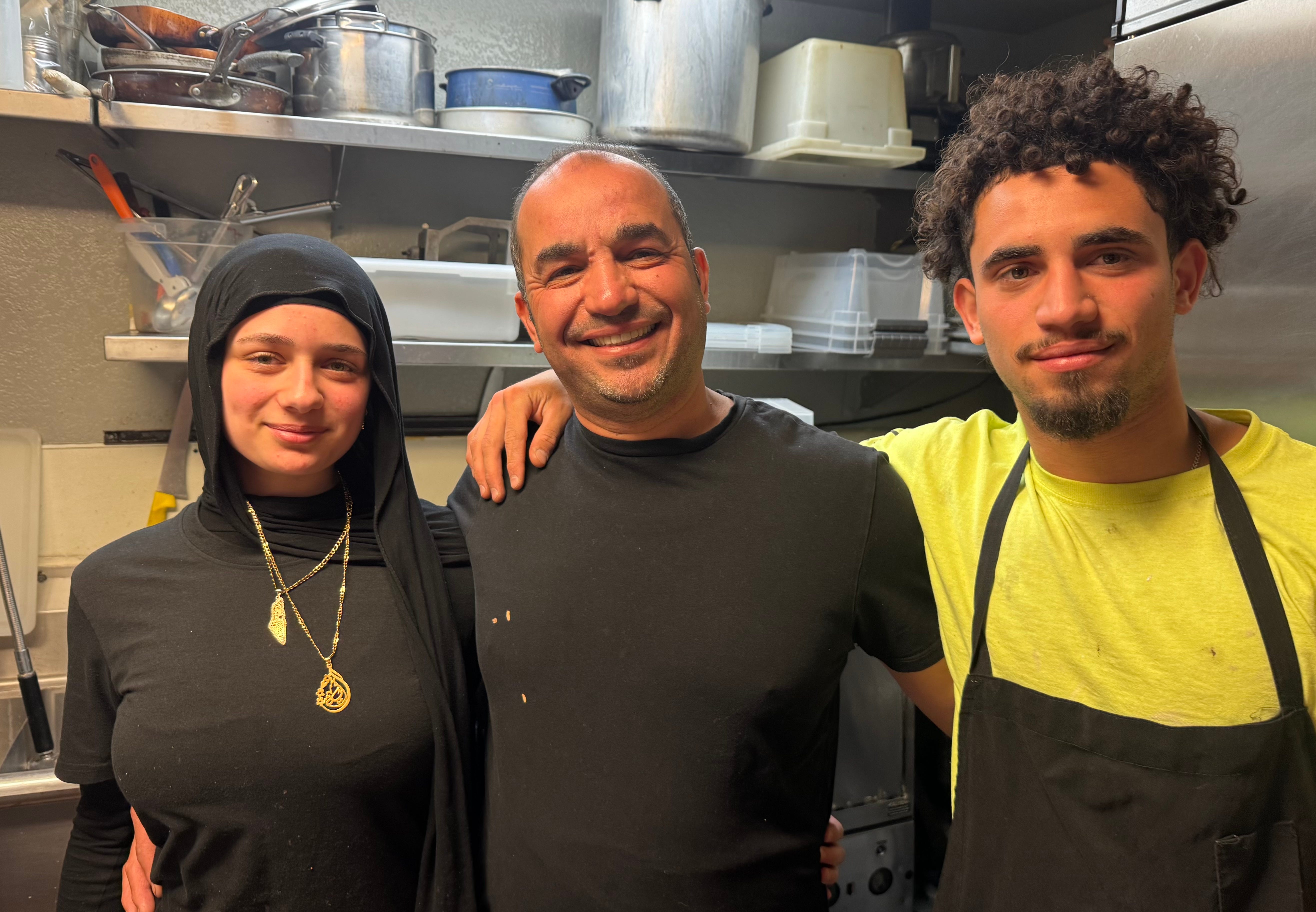
But what makes King Falafel especially comfortable is its owner, Rafat, and his whole family, whom I’ve gotten to know over the years.
I thought I’d talk with Rafat about the whole Middle Eastern thing and get his take, but what emerged from our conversation was more a portrait of the American immigrant experience.
Rafat is a warm and energetic guy, soft spoken, quick to smile, and passionate about both the food he serves up and the homeland he still holds close.
Here he is.
Rafat, where and when were you born?
Zarka, Jordan, in 1977. I’m 49.
That’s funny. You don’t look 49.
I have a good wife!
Who is in your family?
I have so many family [members], but there is my wife, Fatima, and two boys, and two girls.
They all work here with me. They all started with bussing and washing dishes, and then slowly, step by step, they learn it all. I’m very proud of them all.
And maybe most importantly, I have my parents here with me.
When did you get to the States and how?
I came in 2015. Just 11 years ago. Renad, my older sister, came here first, and she brought the rest of us. She brought my parents first. I came later, with Fatima and three of our four children. The fourth was born here.
You were born in Jordan, but where were your parents from?
They are Palestinian. My father was from Tulkarm, and my mother was from Qulqiliya. They left their homes in the West Bank during the war of ’67 when Israel took control of the West Bank. They moved to Amman.
What did you do in Jordan for work?
I worked for a large meat processing company. I was a supervisor there for 17 years.
Education?
I had two years of college in Jordan.
How did you meet your wife?
She was a distant relative. My parents helped arrange for us to meet. After I met Fatima, I asked my mother and sister what they thought. They thought that God determines what will happen. So I asked God if she was good for me. She (Fatima) also went to pray. God gave us a positive answer. Alhamdulillah!
(Alhamdulillah (الحمد لله) is an Arabic phrase meaning “all praise and gratitude are due to Allah (God)”. It is used by Muslims to express gratitude in good times, acceptance during hardships, and as a general acknowledgement of God’s blessings in daily life. It is commonly used after meals, sneezing, or when asked about one’s well-being.)
I was 27 and she was 18. We’ve been married 22 years!
If I can say so, she has a beautiful smile.
And eyes!
I mean she seems to have a beautiful spirit.
I know. Yes, she does.
She’s also very religious, and that helps the family and the kids. That’s very important to me.
As long as we’re talking about your wife, I have a question for you from my wife. She wants to know your secret to your amazing baba ghanoush.
The secret is that I love my job! So I make it special. I make it myself. Let’s just say that fresh lemon helps.
Well, that helps, but I thought you’d reveal a little more than that.
Three of your four kids were born in Jordan, but do they now identify as Americans?
I think they identify as Palestinians. But let’s ask.
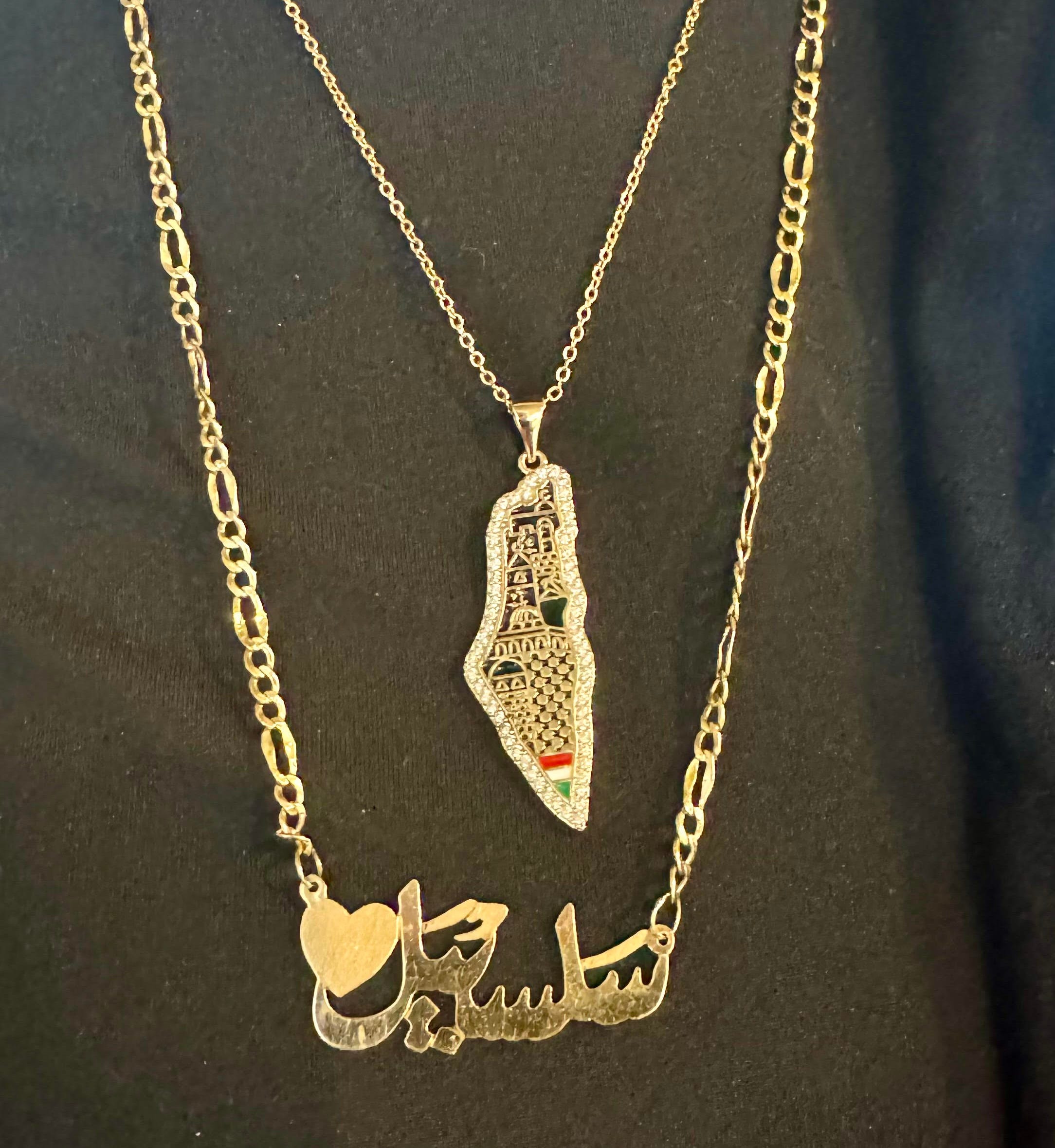
(Rafat calls for his oldest daughter, who has been working behind the counter. I ask her myself about her identity, and she quickly confirms that her identity is connected to Palestine. It was a somewhat rhetorical question. She wears a gold necklace with the map of Palestine around her neck.)
You now own King Falafel, but you started out here as an employee, no?
Yes. When I first came to this country, I worked three jobs at once. I worked here at King Falafel, on the night shift at Walmart, and as an Uber driver. I’d get 4-5 hours of sleep. Sometimes, no sleep.
Once I was able to buy the restaurant, I worked every day, 16 hours a day, for three years. Now I’m good. Just this year, I decided to take a day off every week. We’re now closed on Mondays.
I bought our house, with a big backyard.
What I like most about life in America is that my parents live with me. They have their own unit in our house, but we eat together and do everything together.
Your kids are lucky to have you as an example of a loving son.
Alhamdulillah.
COVID must have been a huge challenge to your business.
Yes, of course it was, but the hardest thing about it was that my wife was stuck in Jordan and couldn’t come back. She had been visiting at the time everything shut down. The hardest part was that she cares so beautifully for my parents, and they really missed her and needed her. That was the biggest challenge about COVID.
I know that you and your family are observant Muslims.
Yes. I pray five times a day. The whole family does. Even our nine-year-old.
If you can, tell me what you think are the three most important things about Islam.
One, is that the Quran hasn’t changed in 1,400 years, and we follow what the Quran says. It says that no one can take the Al-Aqsa mosque from us. (The Al-Aqsa mosque is in East Jerusalem, an area occupied by Israel since 1967. It is the third holiest site for Muslims.) The Quran is central to our belief.
Two, there is only one God. We all have the same God.
Three, my parents come after my God. They are the most important.
You are Sunni, correct?
Yes.
And Iranians are generally Shia, correct?
Yes.
What’s the difference?
It’s the same religion, but like with Christians or Jews, there are many different kinds. So it’s the same with us.
(Shia and Sunni the two main branches of Islam, split in 632 AD over who should succeed Prophet Muhammad. Sunnis (approx. 85-90%) believe in elected leadership (Caliphs), while Shias (approx. 10-13%) believe leadership was divinely destined for Ali ibn Abi Talib and his descendants. They share core beliefs but differ in traditions, legal interpretations, and reverence for holy figures.)
I’m glad to hear you say that. I always thought that the Sunni/Shia rift was a more serious one than that.
I wanted to speak with you about this American/Israeli/Iranian/Hamas/Hezbollah war that has been going on, and seems to have at least calmed down in recent days, but it’s too much for this space.
The whole thing is a game.
(We had to stop our conversation at this point. Customers were backing up at the counter, and Rafat went back to work. I returned a few days later and found his sister, Renad, minding the store. She was featured in this column a number of years ago, back in 2020, and was willing to answer a few more questions.)
Renad, I know from Rafat that your family back in Gaza and the West Bank/Palestine have suffered badly in the last few years of war. I would come in every few days and hear from him of more and more family members of yours who had died.
Yes. We’ve lost close to 60 family members in Gaza and the West Bank. They weren’t all close family, but they were all family.
Just ten days ago, we lost another one. My father’s cousin, a woman in her 60s suffered a head injury when she was pushed by Israeli troops who came into her house. Let me show you her picture.
I’m so sorry, Renad. How do you think this will all end?
(Renad shakes her head, and then tells me something she didn’t want me to print, but her response held out little promise for peace in our day.)
I wanted to ask Rafat about his other interests and hobbies. What can you tell us?
Well, back in Jordan, he used to go to the gym or swim. He also loved to play soccer. Here, he only works in the restaurant. And of course, he’s very devoted to his family.
One last question, Renad. Have you experienced any racism or anti-Arab/Muslim words here at the restaurant?
I work at the county jail (as a nurse). I get it there from the prisoners. But nothing here in Sebastopol. Alhamdulillah!
Alhamdulillah indeed!

Einstein is a community treasure
Still working on perfecting my baba ganouj… 💖