

The Academy of Innovative Arts, which opened last August on the El Molino Campus, has 24 students in its first freshman class. It is a public “choice” school in the West Sonoma County Union High School District. I asked Cole Smith, the founding teacher of AIA, to write about the first semester.
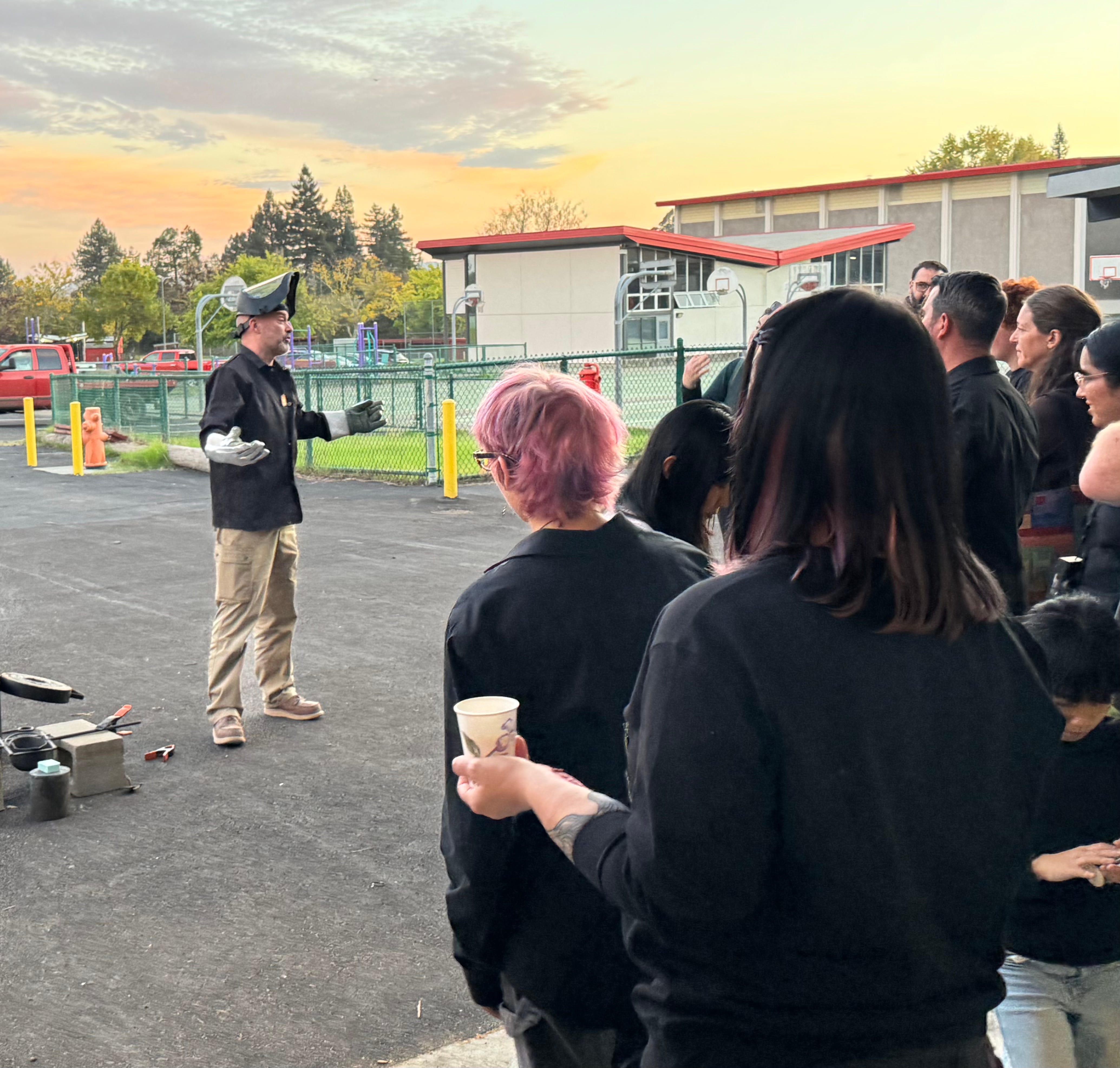
At the Academy of Innovative Arts, the school’s first semester has been all about forging our new identity, community engagement, and revitalizing campus life. Students are not only learning in their core academic classes—they are building, designing, and solving real-world problems through an interdisciplinary model that blends traditional academics with hands-on work in the school’s new Makerspace.
Teachers and mentors have collaborated to connect classroom concepts with authentic projects. The inaugural ninth grade class has been busy studying English, science, and math, regularly extending their lessons into the Makerspace, where they use tools such as laser cutters, 3D printers, CNC mills, and woodworking equipment to prototype solutions, craft models, and create products that demonstrate their learning. These projects are collected in each student’s competency-based portfolio, a growing record of practical skills, academic mastery, and amazing products.
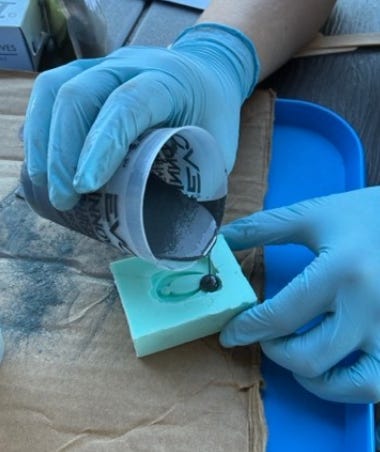
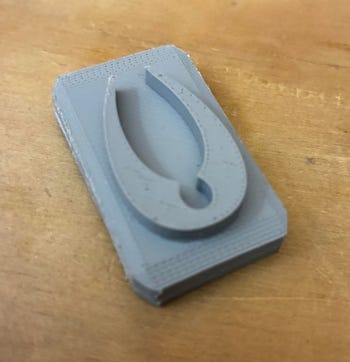
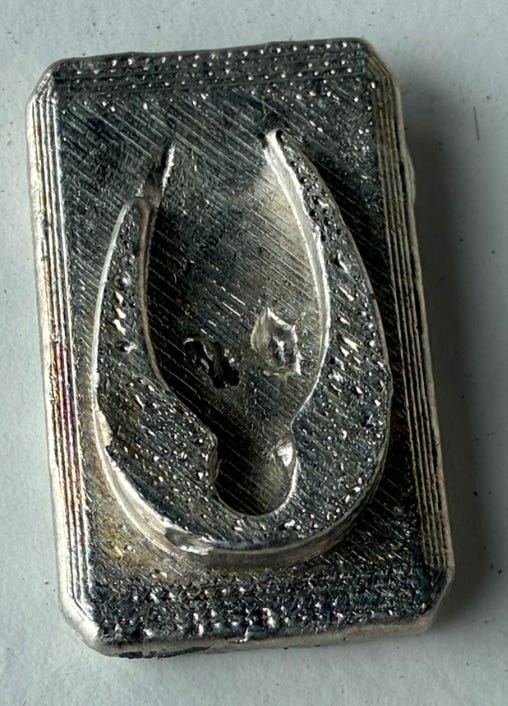
One standout project comes from a student who arrived at the Academy with an entire fictional world already living in their imagination. Determined to bring a piece of that world into reality, the student set out to create the unique currency used in their stories. What began as a hand-drawn sketch quickly evolved into a sophisticated fabrication journey: they built a detailed 3D CAD model, produced initial prototypes on a 3D printer, and then used these prints to craft a silicone mold. From there, they experimented with cold-cast epoxy before ultimately moving to bismuth metal casting—a technique that connected their high-tech workflow back to one of humanity’s oldest forms of making. The result was a beautifully executed piece of world-building that demonstrated creativity, technical skill, and remarkable dedication.
The goal is to have the school’s core values of “Exploration, Community, and Empowerment” move students far beyond the classroom. Students have already completed a series of service projects, including a river cleanup with the Russian Riverkeepers, volunteer shifts at the Food for Thought food pantry, and early design work on new food lockers for Bullfrog Pond Campground in Armstrong Woods. These experiences reinforce the school’s belief that learning should have a meaningful impact both on students and on their surrounding community.
The continued revitalization of the El Molino Campus has also played an important role in shaping the school’s culture. The newly established Makerspace buzzes daily with student activity; the athletic field now hosts a full roster of physical education classes; the theater has become a hub for presentations and student showcases; and the library and surrounding classrooms have been brought back to life as places of study, collaboration, and exploration.
As the Academy of Innovative Arts continues to grow, one thing is clear: students here aren’t just attending school—they’re building it, shaping it, and crafting a personalized education that will serve them well in an ever-evolving world.
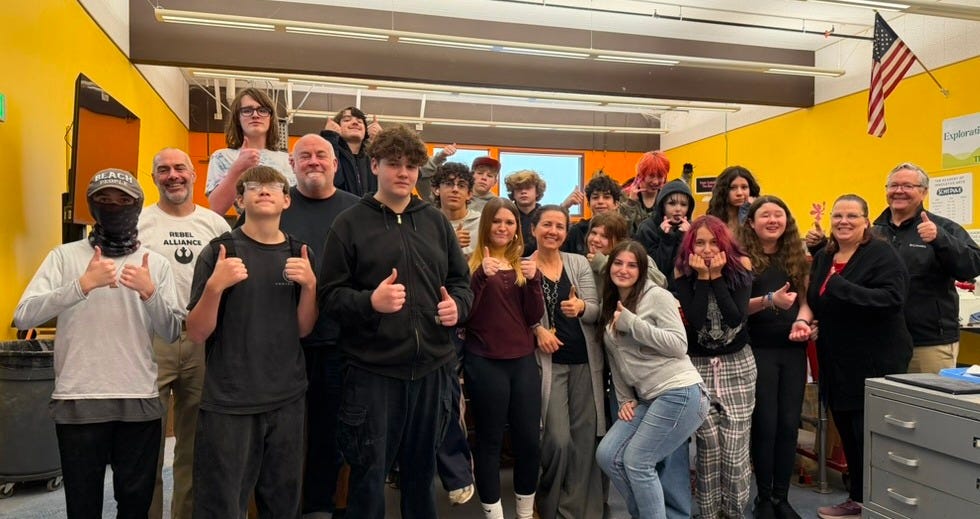
Recruiting for next year’s class
On Monday, Cole Smith visited eighth graders at Guerneville Elementary School with several AIA students. They created a pop-up makerspace to engage students in hands-on making activities such as hammering, 3D printing, using a drill press and creating circuits. This is the first of many visits that Smith and students will be doing as outreach to middle schools in Sebastopol and West County to let students know about the AIA program.
Jessica Albavera from the District created the following Instagram reel.
AIA Field Trip
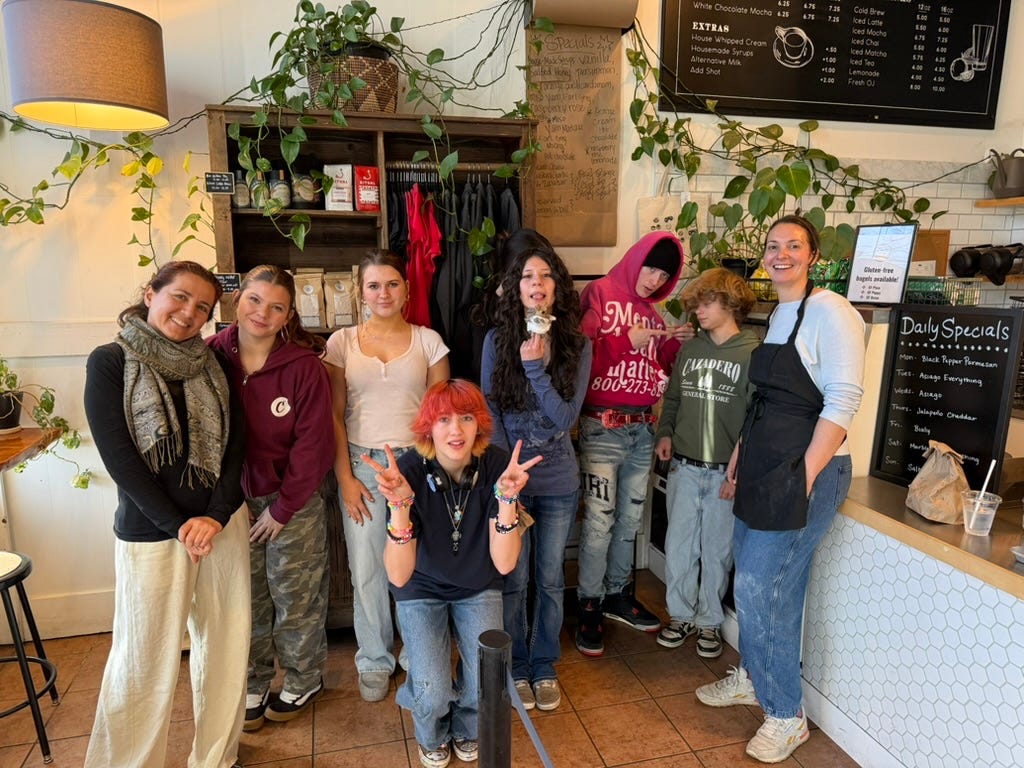
This week, a group of seven students and their teacher, Liqa Moin, visited the Bagel Mill in Petaluma to learn how bagels are made as part of a unit on fermentation. Glenda Manning (Dale’s daughter) showed them how she mills whole-wheat flour and makes the sourdough levain for the bagels and shapes them using a specialized machine. Glenda loves baking but she said that starting her own business required learning a lot more about how to run the business than just baking. The students all enjoyed their own bagel.
In the interest of transparency: Dale Dougherty, the co-owner of the Sebastopol Times, is a donor and volunteer at the Academy of Innovative Arts.
Would they accept an 81year old woman into their next class? Please?
Fabulous impelmentation of a life long passion Dale! Great to see and hear about it.