

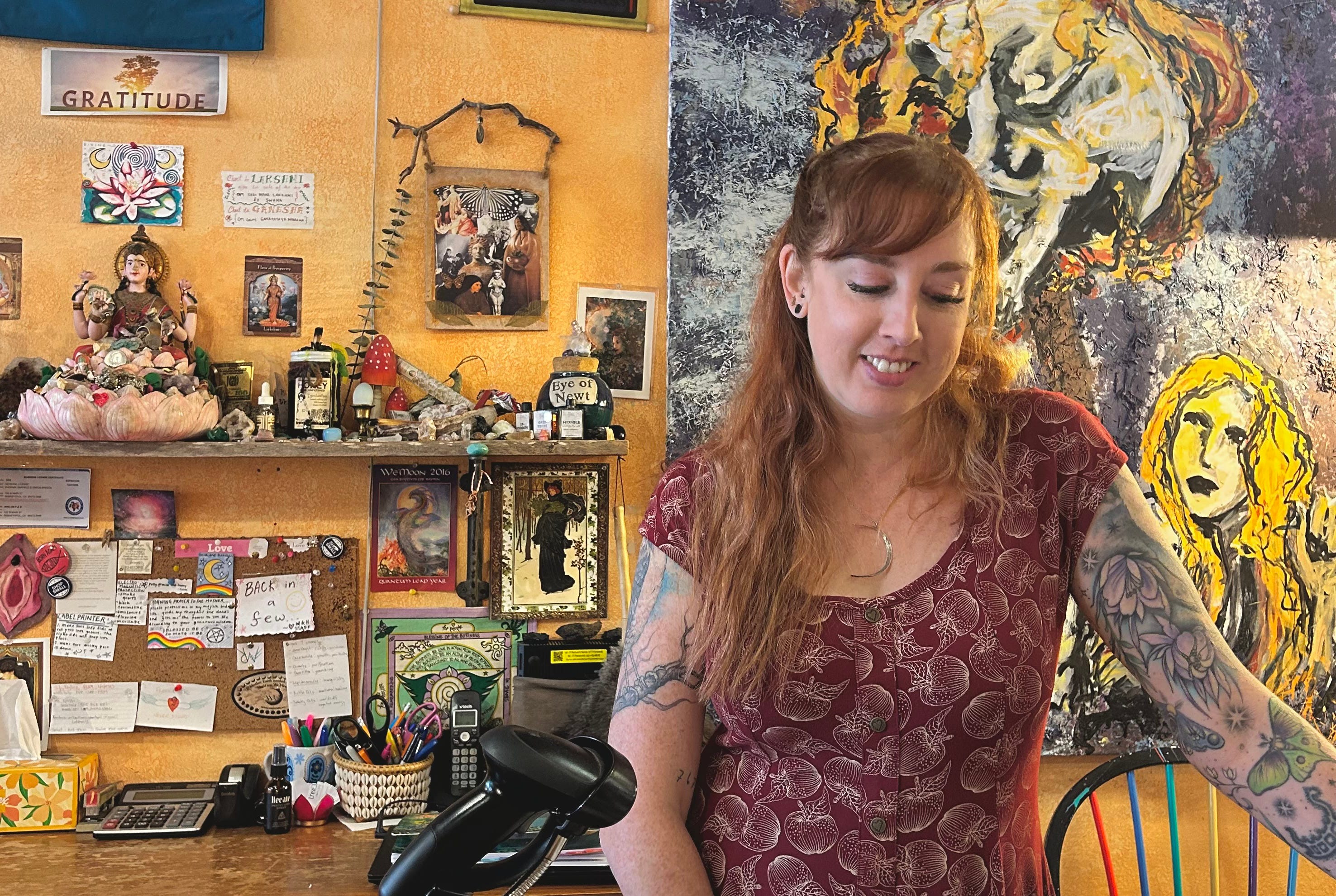
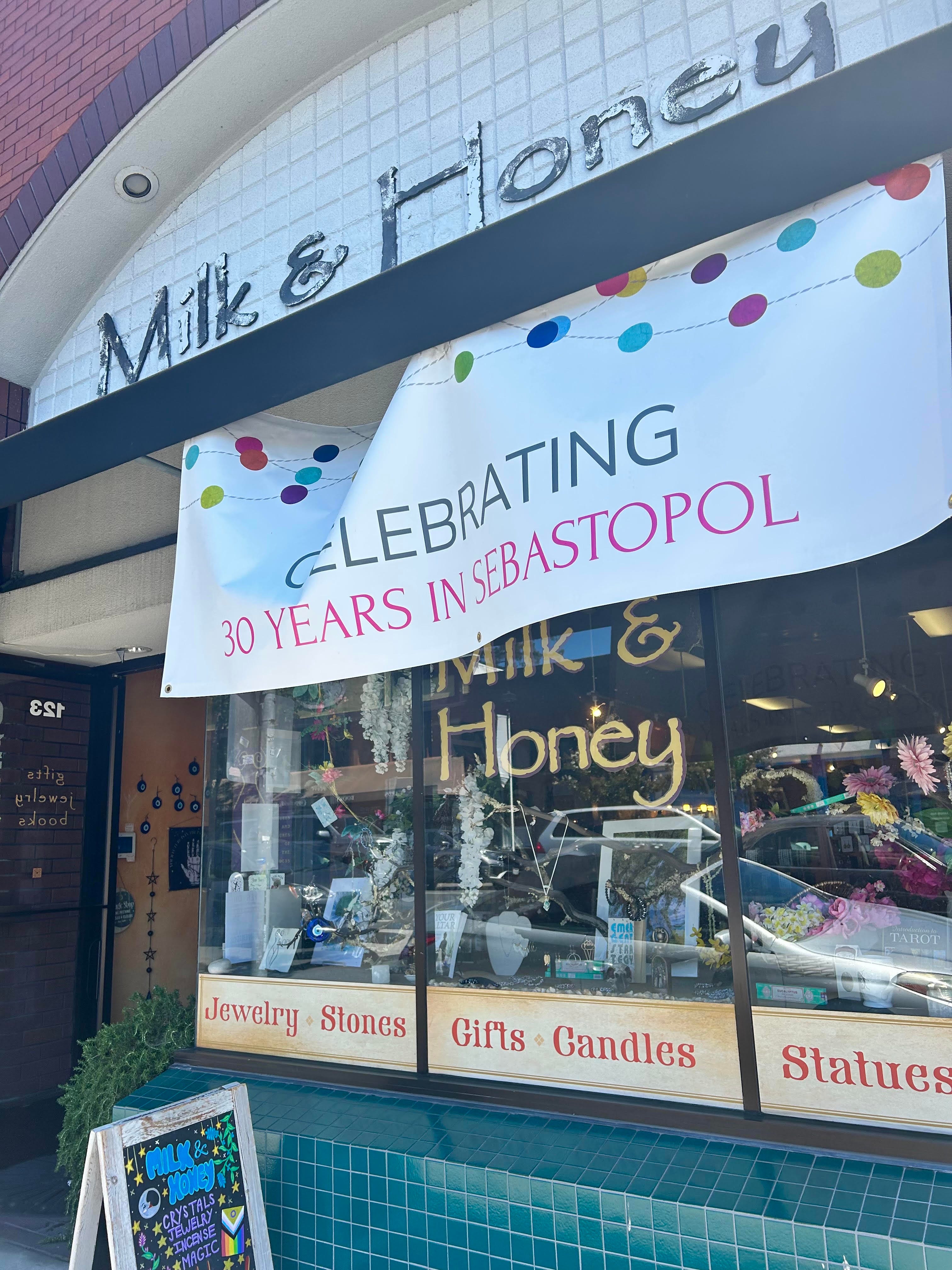
Thirty years ago, Sebastopol’s most magical shop was born. Milk & Honey serves multiple traditions of occult practice, but witchcraft is its core focus. The store is filled with candles, tarot decks, crystals, potions, spell books and all kinds of paraphernalia designed to suit the needs of a diverse, spiritually adventurous community.
Milk & Honey grew out of the Goddess Crafts Faire, an annual Sebastopol event which features women artists, artisans, creators and performers. One of the organizers, Jill Leslie, decided that the Goddess—often envisioned as a multi-faceted, feminine deity that is a spiritual representation of the Earth itself—needed a more consistent presence in town. She opened Milk & Honey in 1996. Ten years later, she passed it on to Candra Anaya and Alyssa Morrow, who, 10 years later, passed it on to Phoenix LeFae, under whose care Milk & Honey celebrates its 30th anniversary this year.
LeFae has taken the store in a decidedly witchy direction.
What is witchcraft?
LeFae gave a brief history of modern witchcraft: “So in England, it was illegal to practice witchcraft. In 1951, England repealed the Witchcraft law, so then all of these people came out of the woodwork like ‘I’m a witch,’ ‘Read my book,’ ‘Take my class,’ ‘Put me in the news.’”
LeFae was keen to dispel myths that most of modern witchcraft predates Christianity. “There definitely was paganism, small groups of people worshiping multiple gods and being connected to the Earth. So, there is some pre-Christian information, but most of that is just what was written down by monks, so a lot of it is lost or influenced by Christianity.”
In the late 70s, witchcraft experienced a feminist transformation, with many shifting from the dualistic construction of God/Goddess to a singular focus on the Goddess.
LeFae said the writer T. Thorn Coyle compares the Goddess to a disco ball; each avatar (Kali, Kwan Yin, Aphrodite, Brigid, etc.) is an individual mirror channeling a larger light.
Since then, the modern witchcraft community has maintained an identity that celebrates marginality, personal authority and the immanent divinity of nature.
The witchcraft community is large and diverse, LeFae stressed. “If you ask five witches what witchcraft is, you’ll get eight different answers. So, in my opinion, witchcraft is a spirituality that connects us back to the Earth.”
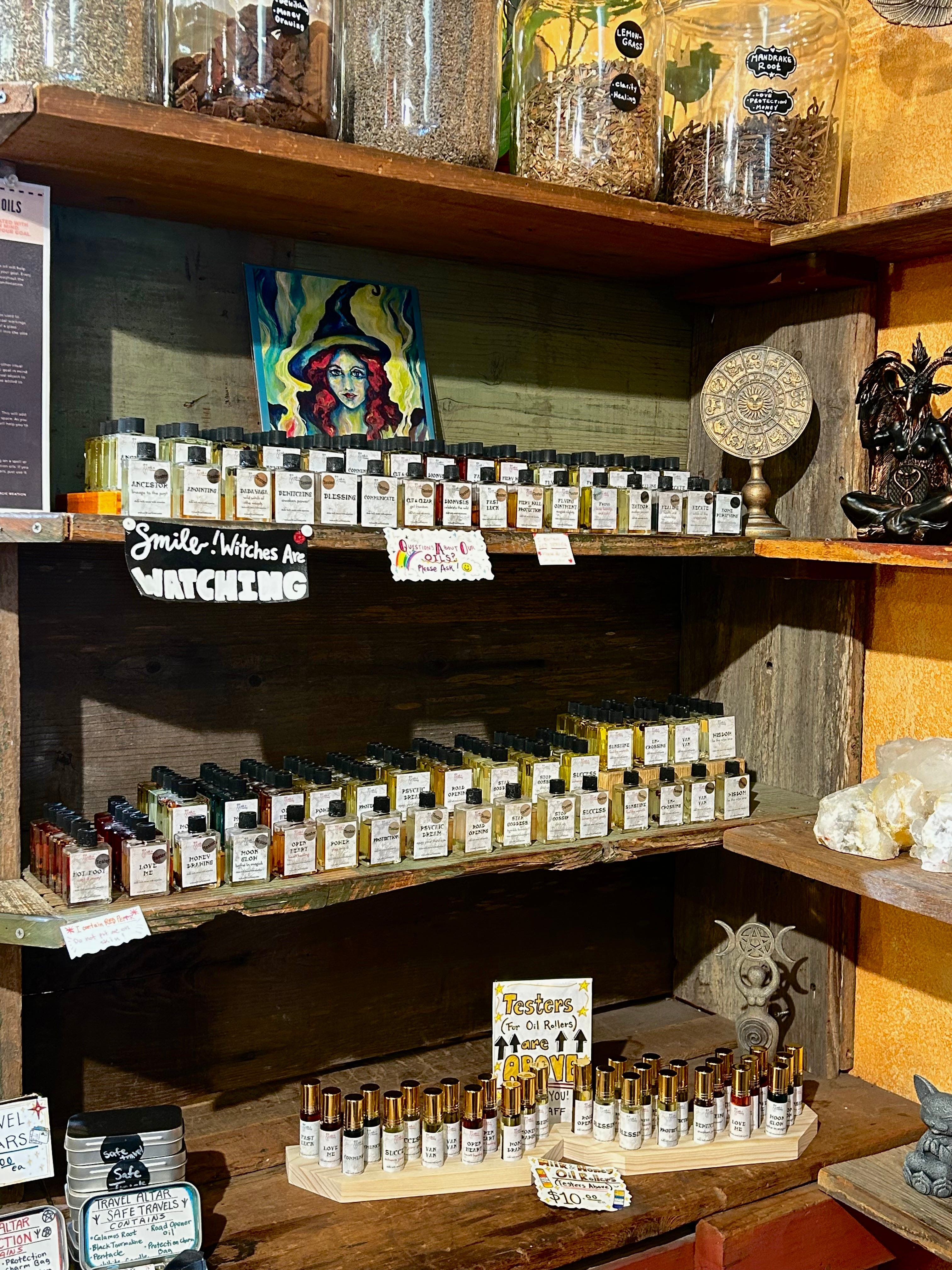
Looking for a path
As a teenager raised without any specific religious upbringing, Phoenix LeFae explored Hinduism, Buddhism, Judaism—“all the isms,” as she put it, but nothing spoke to her. “This was in the mid-90s, so there was a little peak of interest in Wicca and witchcraft at that time, and I found a book about witchcraft, and it talked about Earth worship and a Goddess and taking care of the Earth and all this stuff. It sounded like what I already believed in, so I just dove in.”
In West County, LeFae discovered a group called the Reclaiming tradition of witchcraft, founded by Starhawk, whose book, “The Spiral Dance” (1979), breathed new life into the modern Goddess movement.
LeFae went to a public Reclaiming ritual at the age of 17 and never looked back.
Now, she runs Milk & Honey, reads tarot, performs spells for people (candle magick is a speciality), and offers classes on magick and witchcraft.
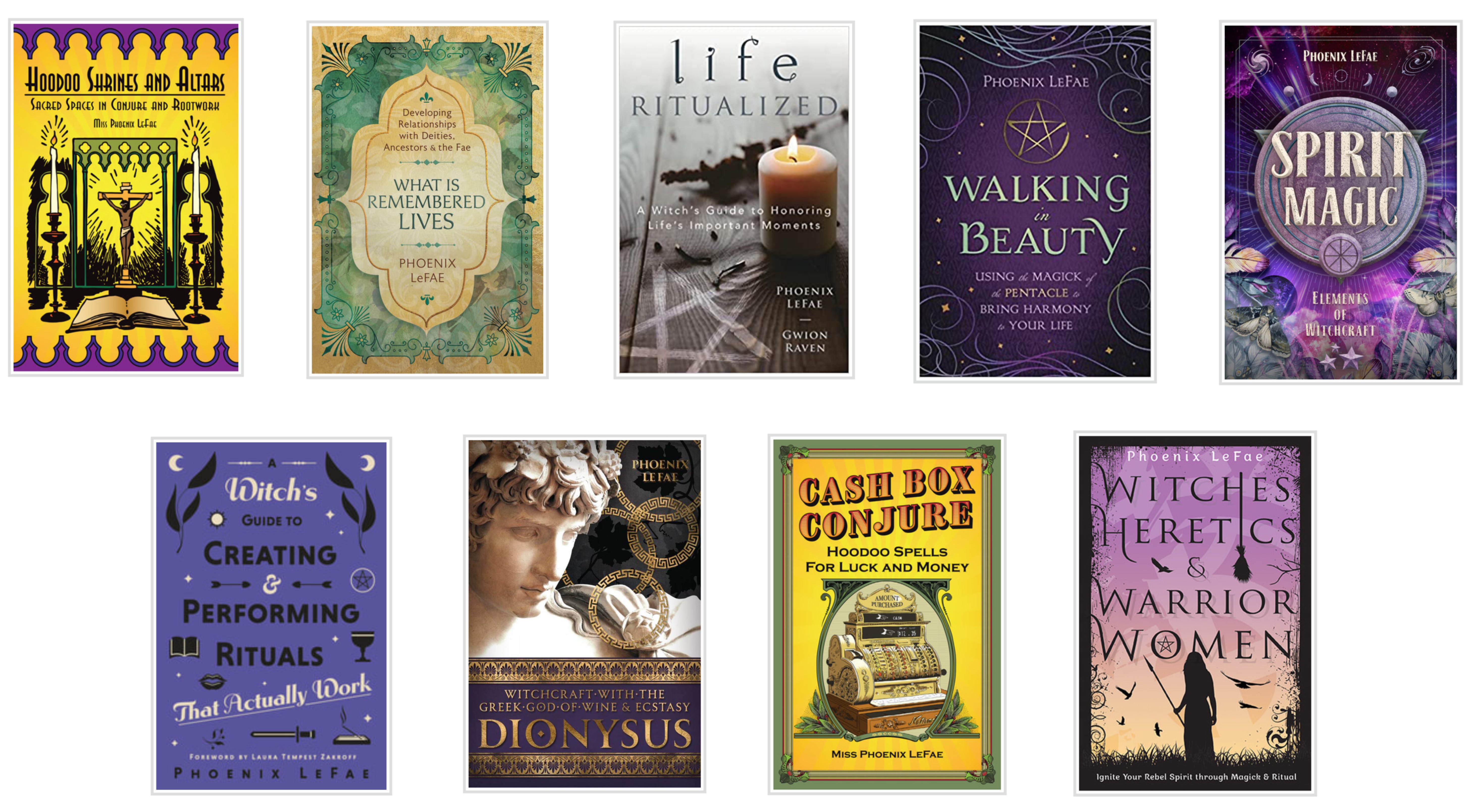
She is also a prolific author with nine published books on magical subjects:
Her magical path to becoming a Sebastopol store owner
LeFae came into possession of the store while working for a different magical shop in Forestville called Lucky Mojo. In 2015, Milk & Honey’s previous owners decided to sell the business and sent out the news via a customer newsletter. Several of her friends forwarded the message to her, suggesting that she buy Milk & Honey.
It seemed like an impossibility: “I was like, ‘Yeah, because I have no money, bad credit, and I’ve never run a business before. That sounds like a great plan.’”
But LeFae couldn’t stop thinking about the opportunity. “I always had this fantasy back in the day—a million years ago, when you had to look in a paper for a job—of opening a newspaper and it saying ‘For Hire: Priestess.’”
Around that time, LeFae was hired to teach at a retreat in Australia. Before the retreat started, she found herself at a dinner with a group of Americans, with whom she shared her seemingly crazy dream of buying Milk & Honey. One of the dinner guests took off her ring and offered it to LeFae, explaining that she bought the ring at Milk & Honey, was best friends with the owners at the time and wanted to aid LeFae in acquiring the shop. “So I put it on, and it fit, of course,” LeFae said.
When LeFae returned to California, she sent an email to the owners asking if the store was still for sale, and they informed her that they were in the process of a deal, which fell through that very day.
“I emailed literally everyone I knew, and I was like, ‘Hey, you want to be my business partner, you want to give me a loan, how can we make this happen?’ And a bunch of people responded that they would give me a loan or whatever, and then I started to freak out about owing that much money to people. And then there was one person from my community who I had no idea had money, and she reached out and said, ‘Hey, I can give you all the money, and I’ll give you a very low interest rate, and we’ll make it easy, here you go.’”
So with spiritual, emotional, and financial support from her community, LeFae took over Milk & Honey.
Milk & Honey, a cultural history
Under LeFae’s stewardship, the culture of the shop has evolved. She explains, “When Milk & Honey started, it was in the 90s, so it was this idea of ‘Let’s make the Goddess accessible.’ I think at some point maybe there was a little shift to recognizing that the folks who shopped here are the Goddess, so there were clothes and jewelry and things very femme…I think I’ve changed the vibe a little bit. I’m also a queer woman, but that’s not my focus. My focus is witchcraft.”
LeFae recognizes the social significance of Milk & Honey as a sanctuary for queer women and has sought to expand from an emphasis on femininity to empowerment in general. “I want people to come here seeking Goddess as power, not Goddess as feminine divine,” she said.
LeFae also pays close attention to the ethical responsibilities that come with a tendency common in modern witchcraft: drawing from different cultures. She explained the problematic history of witchcraft and cultural appropriation: “Through that window of the 50s to 90s, people just sort of stole practices from indigenous communities, because—I’m speaking very much from a white perspective right now—white European settlers and colonizers, we’ve lost our connection to the Earth. We lost our connection to pre-Christian roots, so there is this hunger to find that again, and mistakenly by stealing from other cultures.”
To LeFae, however, it is important that Milk & Honey is a resource for people of all different backgrounds and practices. “We have Lakshmi statues, and we pray to Lakshmi and chant to Lakshmi every day. I also have a Brigid statue, who’s an Irish goddess, that we give offerings to. I have a Baba Yaga statue, or altar space, who’s a Slavic goddess, that we give offerings to. So we are pretty pan-cultural in the shop…but I’m not afraid to tell a white girl, no, that’s not for you.”
And it’s not all goddesses. “There is definitely masculine divinity represented here and all the in-betweens,” she said.
“I am a big proponent of knowing where things came from,” LeFae said, not only of the mythology she draws from, but of her inventory. “We support fair trade companies, making sure people are getting paid wages. We carry a lot of crystals, and a lot of crystals are causing harm to the Earth and to humans, so I try really hard to know where things are coming from.”
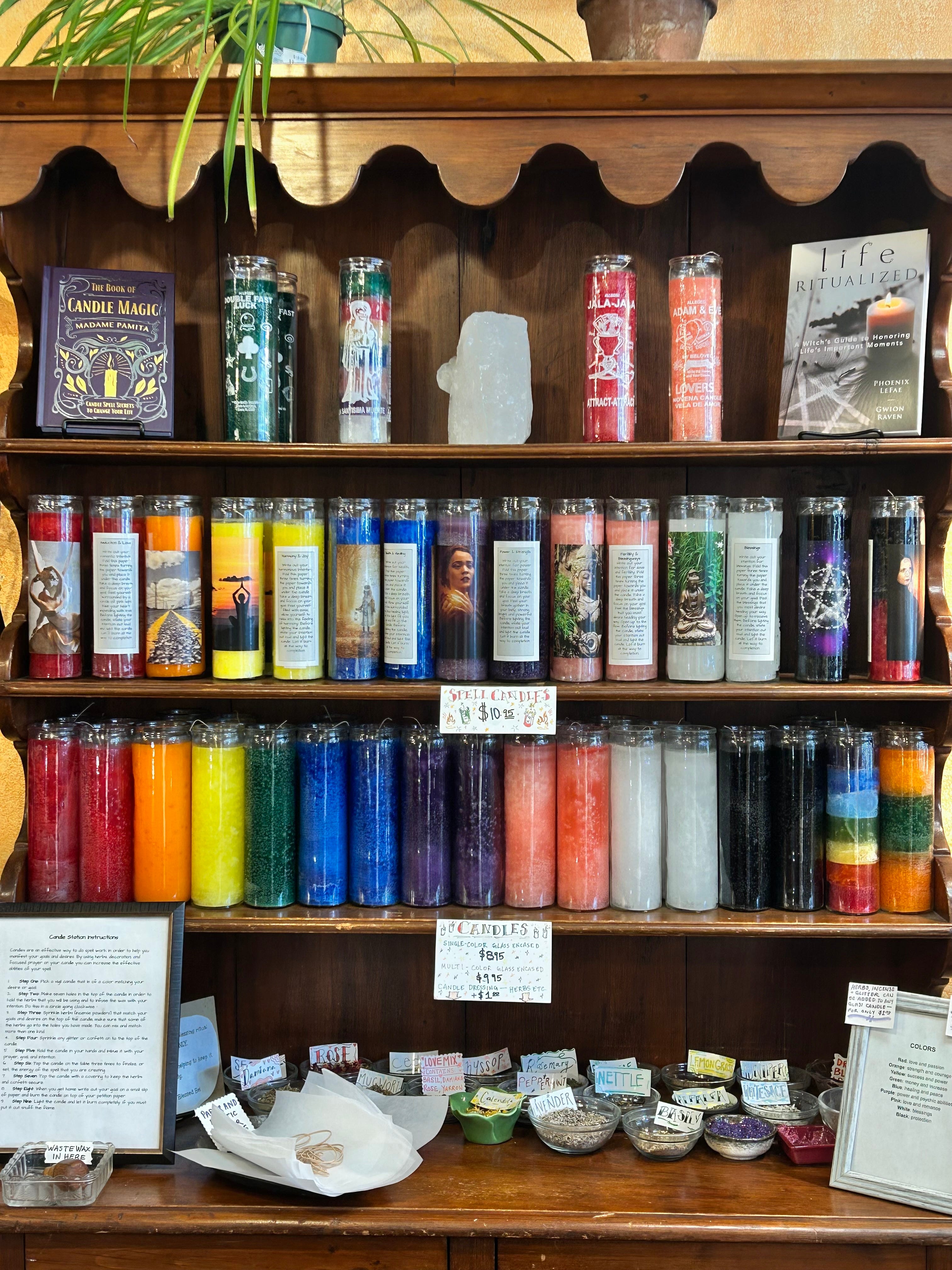
Although Milk & Honey changed over the years—growing to suit a wider demographic, surviving fires, floods and a pandemic—LeFae said that the things people seek from witchcraft have stayed the same: “Humans are gonna human. Wanting a lover or wanting more money or wanting health—those are never going to change.”
A bigger mission
While some people use magick to manifest lovers, money and health, many practitioners of witchcraft view themselves as healers and protectors of their larger communities.
“In their Reclaiming tradition we have a saying: you are your own spiritual authority rooted in community. So, yeah, I could do whatever the hell I want, but how is that impacting my community?”
LeFae also feels that witchcraft is inextricable from causes for social justice: “Witchcraft is inherently political because witchcraft was practiced by people on the margins… So I feel like witchcraft should be helping. We should be using it to help the oppressed, we should be using it to help marginalized communities, we should be using it as a force of good, because there’s so much that is working to keep people subjugated and down and oppressed, and we need all that we can to fight against that wave.”
LeFae referenced capitalism, white supremacy and patriarchy as oppressive structures that use a top-down logic of power.
She implored, “If we recognize every human being and everything, every tree, every frog is inherently worthy of value. I see the power in you, therefore you see the power in me—then I shouldn’t try to subjugate you, because we’re equal… That’s matriarchy. That’s not what people think matriarchy is, but it is. It’s collaborative. It’s working together.”
This sense of interdependence, equality and empathy inform her practice as a witch, even when she has doubts about the faith piece. “I don’t know if any of it’s true. Every day I’m like, oh, this is all bullshit, or like, oh, when we die, we just are dead, and it’s over. I don’t know, but I just know that there is something that makes me feel like you matter, the planet matters. The bird I saw this morning, who was injured, matters.”
But again, LeFae reminded me, that she is not the sole authority on what witchcraft means. “We have a bulletin board for community events, and it’s good to know multiple voices, not just one, because then that’s a cult, and we don’t want cults.”
Even within Milk & Honey, Lefae is not the only tarot reader. Pollyanna Costa, Elvyra Love and Luna all offer their own intuition in readings at the shop.
30th anniversary party next week
Milk & Honey will celebrate their 30 years in business next Friday, July 17, starting at 6 pm. There will be champagne, snacks, giveaways, musical performances, drag performances and a bingo game. LeFae added, “As it starts to winnow down…I’ll put on my Pitbull station [playlist], and we’ll have a little dance party while we clean up. All are welcome.”

Great article, and the shop is a great asset to the community, hosting classes and gatherings as well as gifts & magical supplies. Part of what makes Main St in Sebastopol unique from every other downtown area… yay for 30 years!!!
Really interesting article. I am curious if they acknowledge the Roma origins of tarot and how it has been coopted by many Europeans and their relationship to practicing it so actively, considering the particularly vulnerable state of many Roma communities and the women who practice it in them? It was not mentioned in the pan-cultural paragraph