
Welcome to another Saturday Towns column, this one from our Forestville correspondent, Lucy Hardcastle. Lucy made Forestville her home in 1989. She has served the Forestville community in many capacities—from writing the “Forestville” column for the Gazette to volunteering on the Chamber of Commerce Board, spearheading fundraising efforts for the Oaks Preserve, supporting Town Hall initiatives, and serving as a Municipal Advisory Council member to Sonoma County’s 5th District.
I can think of no better example of taking things for granted than turning on the tap and having water flow. We assume it will always be there to drink, to cook, to bathe, to water the garden or wash the dog. We don’t give it a second thought.
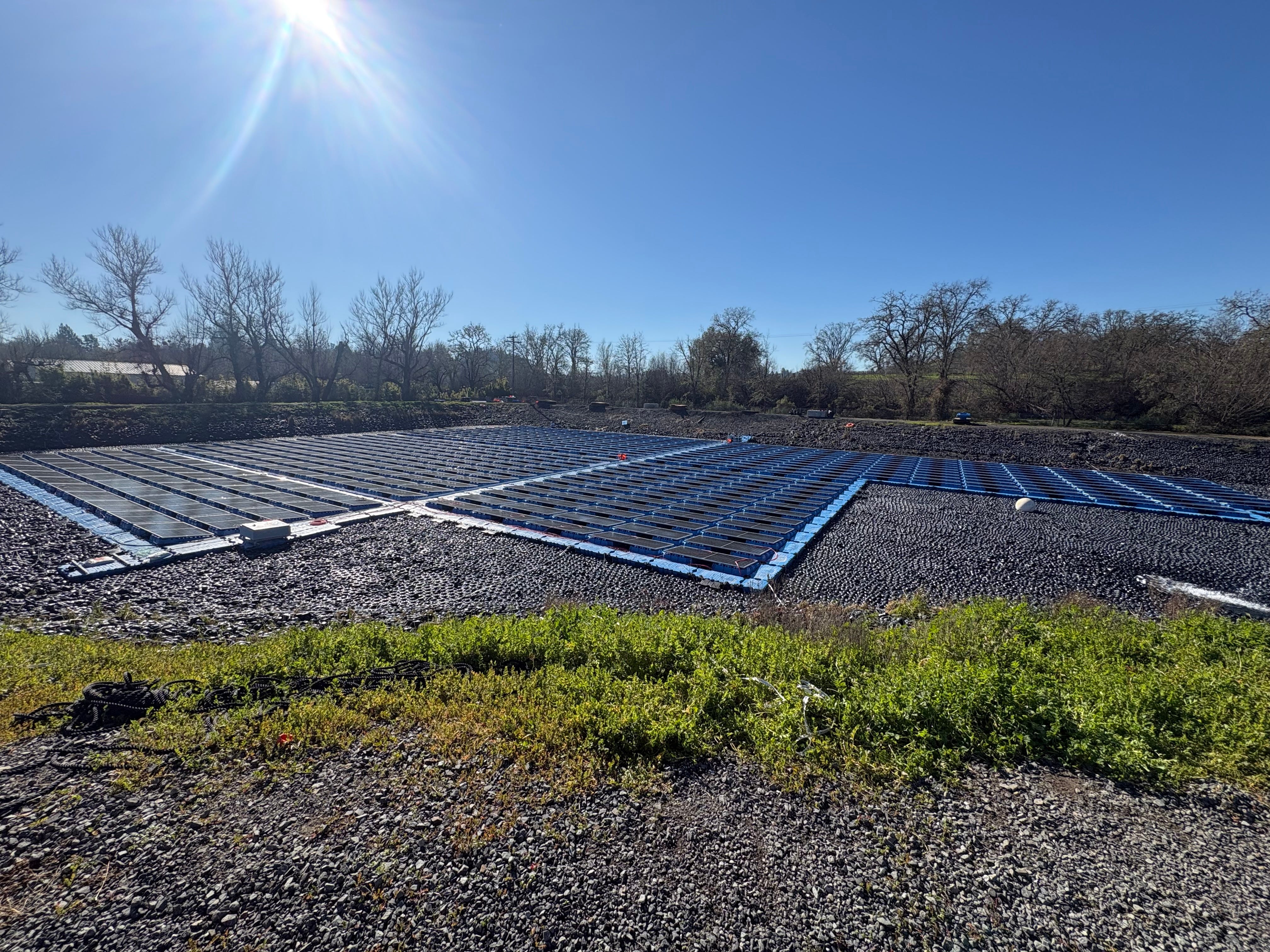
But thankfully, in Forestville, we have a Water District Board and staff that think of our water flow all the time. They are the ones who brilliantly transformed the wastewater pond near the West County Trail by installing floating solar panels that power the community’s wastewater treatment and recycled water operation.
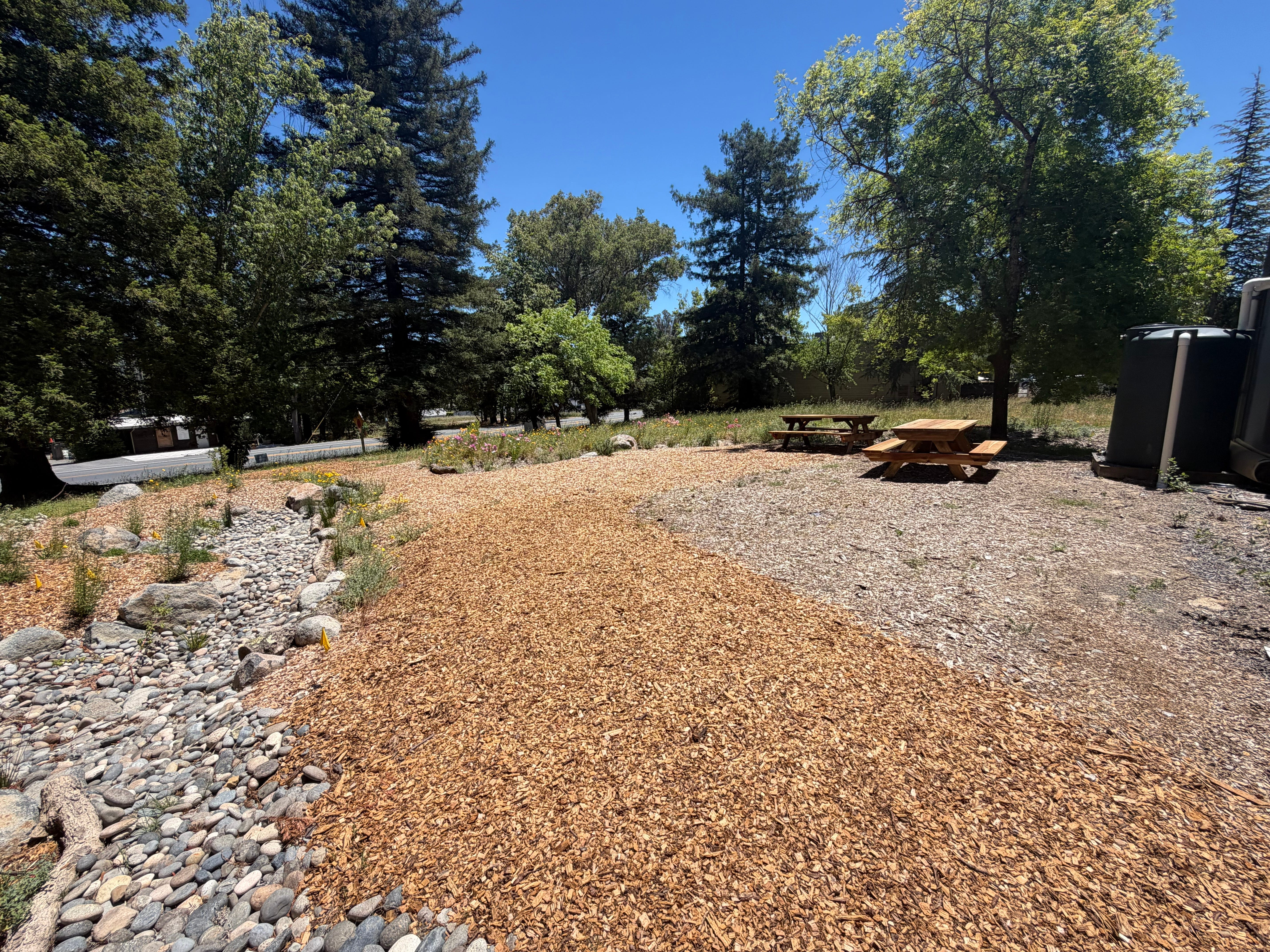
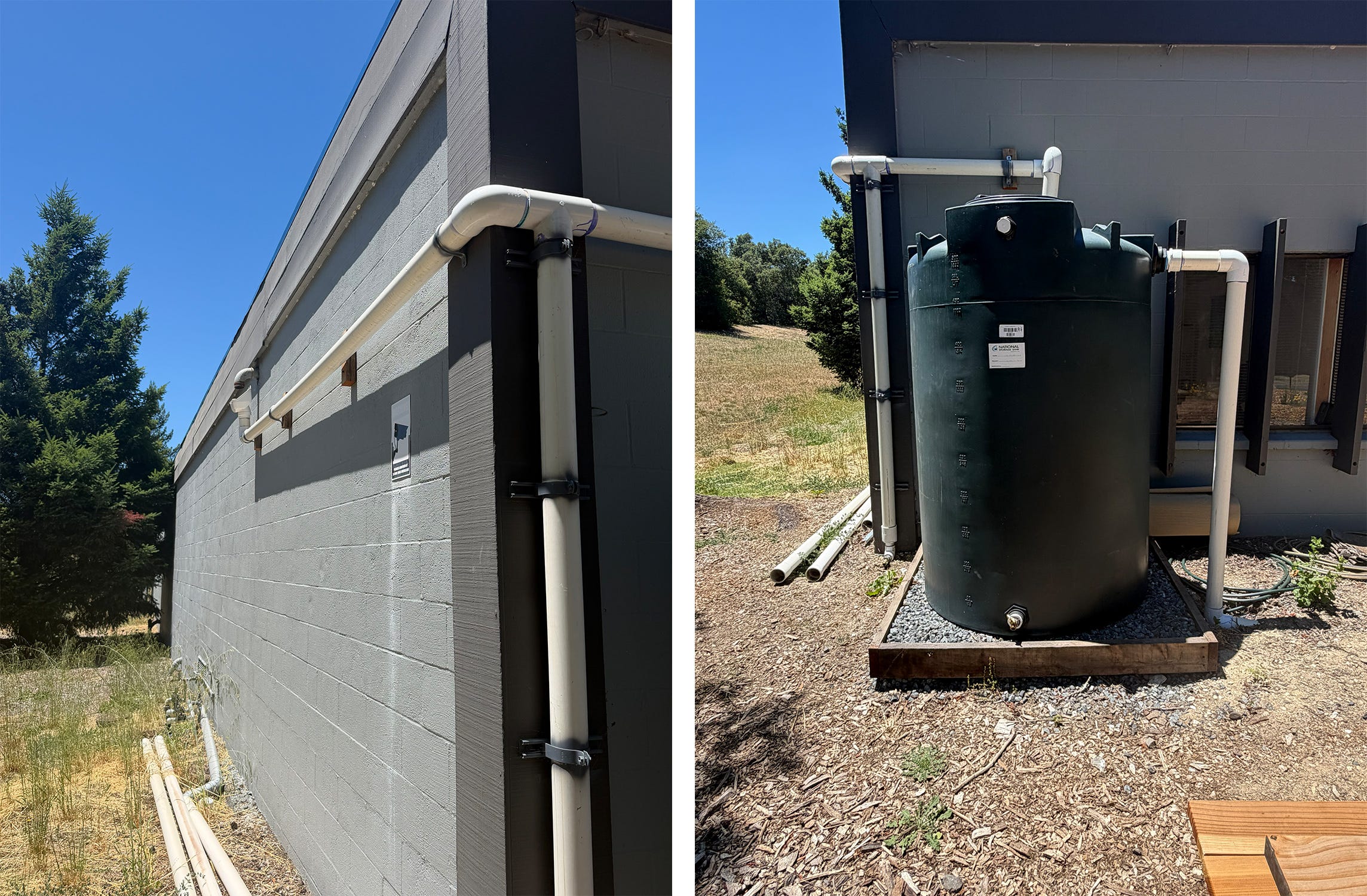
This year, with the help of an $8,000 grant from District 5, they also installed a rain garden demonstration project at their office in Forestville.
And that’s not all the Forestville Water District is up to.
If you talk to Chad Davisson, who is both a management consultant for the Forestville Water District and interim general manager for the Graton Community Services District, you’d get a whole new appreciation for where our water comes from, where it ends up and more importantly, how we can do a better job protecting and reusing this precious resource.
Davisson is a small-town guy with a built-in sense of community. He’s been involved in “water projects” since he was a teen. What started out as pulling weeds around wastewater storage ponds back in the 1980s grew into getting a degree in public administration and ultimately an MBA. Originally from Southern California, he relocated to Northern California in 2009.
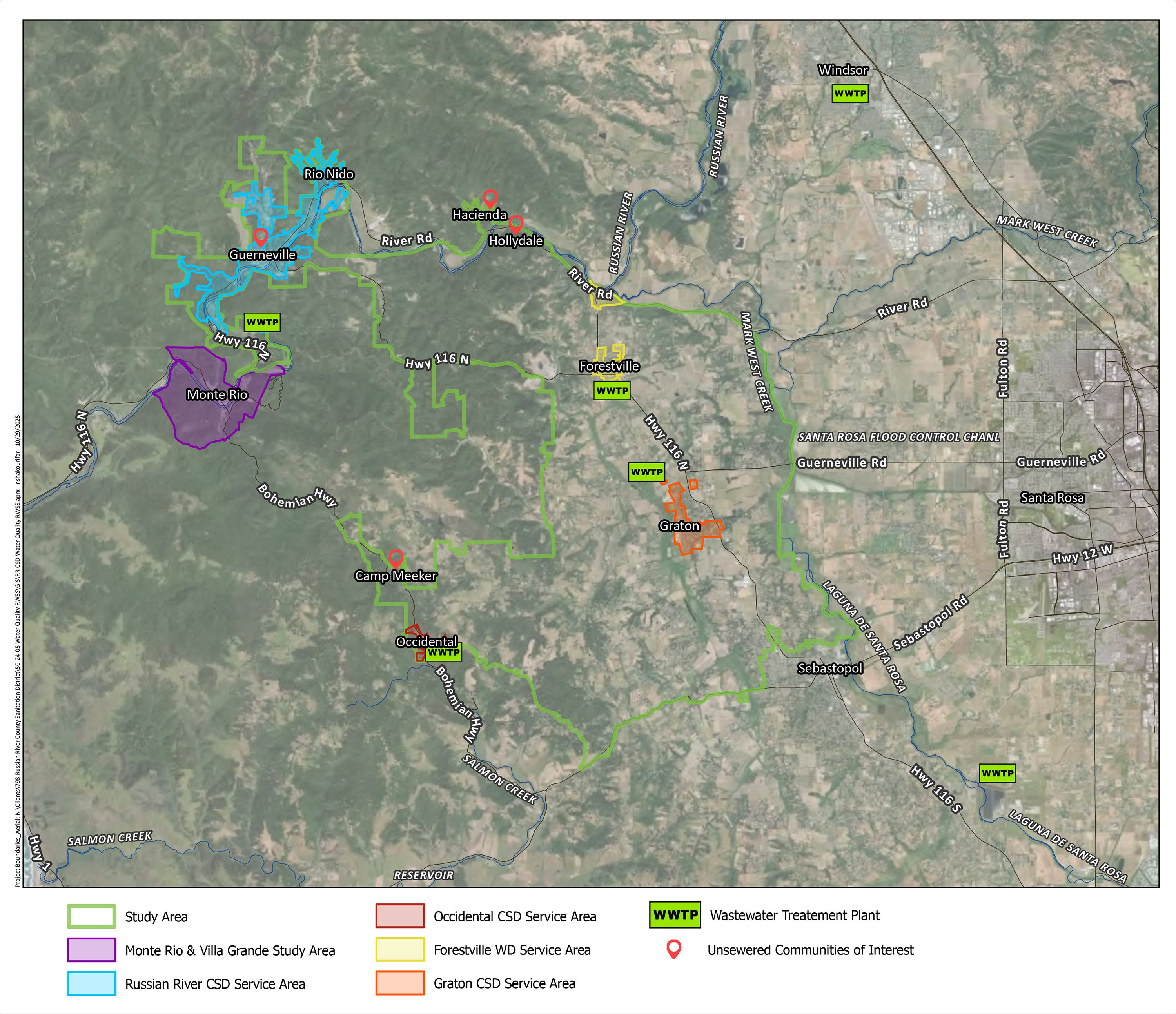
Right now, the Forestville District is working on a project to connect a wastewater pipeline system starting in Occidental through Graton, and then ultimately to Forestville. By coordinating a system that complements each community’s strengths and deficits, Davisson believes they can create a better water management system together.
The beauty of this system is that the water could be used—or should I say re-used—to irrigate local vineyards, parks, football fields, car washes and quarry trucks with a sustainable, locally produced supply of recycled water. Reusing cleaned-up water for those things means there is more water available for households when we turn on that tap.
“Graton and Occidental are already working on getting a pipeline from Occidental—that’s already happening—and Graton and Forestville also have a pipeline that was put in a long time ago that needs to be upgraded that connects their two plants,” Davisson said.
What he would really like to see is a dual pipeline system running between Graton and Forestville.
“Graton has a huge storage capacity, but Forestville has got a better treatment system and can treat the water to a higher level,” he said. “So, what we want to look at is, can we get a second pipeline put in so that we could send wastewater for treatment to from Graton to Forestville, and then send treated water back to Graton for storage.”
According to Davisson, “This could actually happen relatively quickly, but what’s going to dictate the amount of time is what improvements need to be made at the treatment plant to be able to accommodate the increased amount of material.”
At the same time, Davisson said, several West County water districts are also eyeing participation in a regionalization project by Sonoma Water to build a large wastewater treatment center that would serve multiple West County towns. (The project is in its very early stages. See the initial feasibility report here.)
Both these projects could include opportunities for residents with septic systems to connect to a public sewer system. Aging septic systems have been identified as a source of pollution in the Russian River and its tributaries.
On May 17, there was a joint meeting between the boards of the Graton Services District and Forestville Water District. “The question was, ‘Are there things that we can do in the short term together to benefit our respective communities that also would support the larger regionalization goal?’” Davisson said, referring to the Occidental-Graton-Forestville connection.
He noted that while the idea of a regional wastewater treatment facility for West County may be the ultimate goal, “That’s a long way out. But what can we do in the meantime that will help us address the challenges that we’ve got from a regulatory or infrastructure standpoint, but will also keep us moving toward the direction of the long-term goal that makes the most sense.”
Davisson said he is grateful to be part of an organization—two of them, actually—that are committed to innovation. He appreciates the caring and dedication of their boards and board members’ ability to understand challenges, think creatively, plan judiciously and figure out how to benefit our town and neighboring towns along the way.
For sure, there are challenges. Needed repairs to Forestville’s aging sewer system carry a multi-million-dollar price tag, and the district has around 1,000 ratepayers, many on septic. Thanks to years of planning and coordination, the Forestville Water District has received over $9 million in grants to improve and fix its sewer system over the next few years.
I feel hopeful after talking with Chad and proud to be part of a community that not just cares but finds solutions to our common concerns. Like having safe, clean water to drink when we turn on the tap. I don’t think I’ll take it for granted anymore. Like Luna Leopold reminds us, “Water is the most critical resource issue of our lifetime and our children’s lifetime. The health of our waters is the principal measure of how we live on the land.”
Thanks to the innovation of the Forestville Water District and all who work with them to keep these commonsense solutions happening for our towns.
If you’re interested in learning more about the long-term sewer regionalization plan, come to a meeting at the Monte Rio Community Center on Wednesday, June 17, 3 pm to 6 pm, for “The Future of Flushing: Workshop on West County Sewer Regionalization.” Register here. You can also learn more about the project here on the Sonoma Water website.
Great story Lucy! Welcome to our new family of West County reporters.
Really appreciate this story. Shows the importance of funding, research and development of alternative energy resources are to not just here but to countries around the world who have, are and will be experiencing drought conditions.