

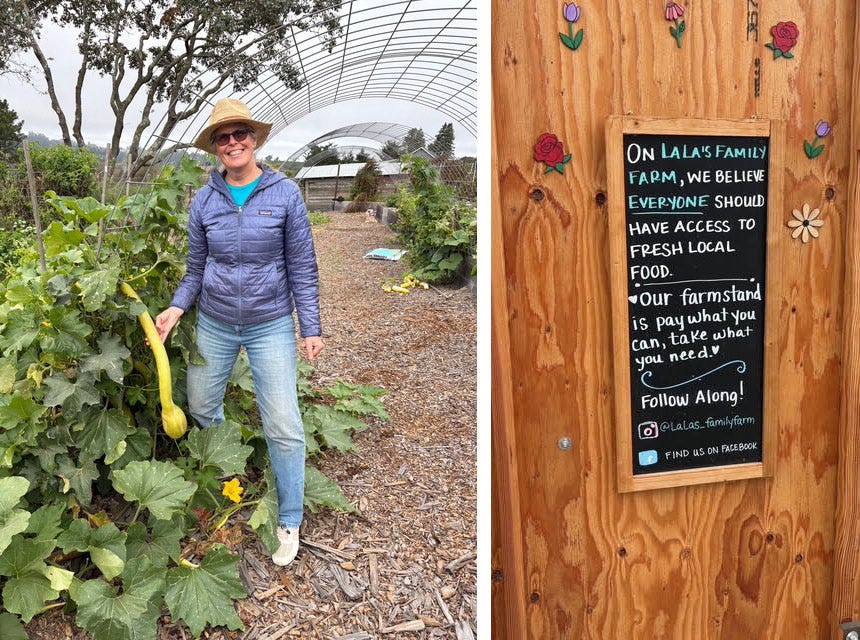
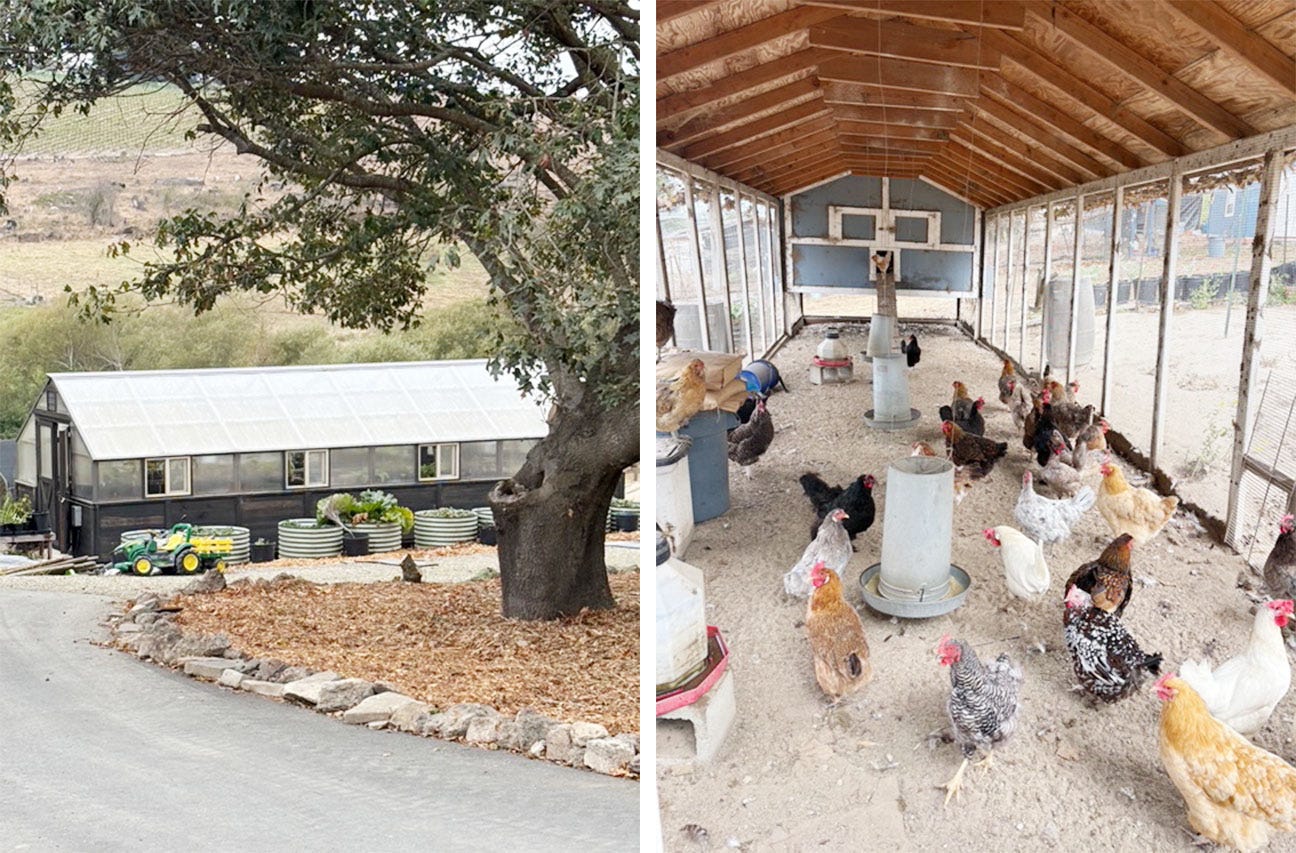
On a 5.23-acre farm, Sonoma County Master Gardener Paula Glogovac grows food for her family, experiments with new crops, and shares surplus produce with the local community. Six years ago, the property now known as Lala’s Family Farm had only 17 oak trees, a house, and a shed. Today, vegetable beds, chicken coops, and a greenhouse fill the landscape.
“We started here with nothing but the house,” said Paula, also known as Lala.
Paula has been growing food for decades. “I became a Master Gardener in 2010,” she said. “My focus has always been on edibles.”
Before the family moved to Sonoma County in 2020, Paula had an edible garden in Pleasanton and took part in local garden tours and presentations. “Eighty-five percent of my front and backyard was edible. I had no lawn,” she said
The new property gave her room to grow on a larger scale. Citrus trees now share the landscape with figs, pomegranates, raspberries, blackberries, and blueberries. Vegetable beds hold tomatoes, peppers, beans, artichokes, asparagus, and squash. A greenhouse sits toward the back of the property for plants that may need extra protection, and it also serves as a space for experimentation, including some tropical varieties.
The harvest changes with the seasons, of course. Winter crops will include Brussels sprouts, kale, cabbage, broccoli, and green onions. Paula also recommends cilantro, dill, and Italian parsley planted in the cooler months.
There are now roughly 60 chickens on the property. They forage in designated areas and have a chicken run that protects them from hungry raptors. The chickens eat insects and garden trimmings and then lay eggs. Their work is part of a growing system in which Paula tries to make the most of what the land provides.
Paula estimates that her property can produce well over 1,000 pounds of food per year. Her family eats fresh produce, dries herbs, and cans food in a pantry workspace. Whatever is left over goes to the farm stand, which sits on the main road next to the farm’s entrance. When the harvest is more than her own extended family can use, the farmstead offers a way to pass it on: take what you need and pay what you can.
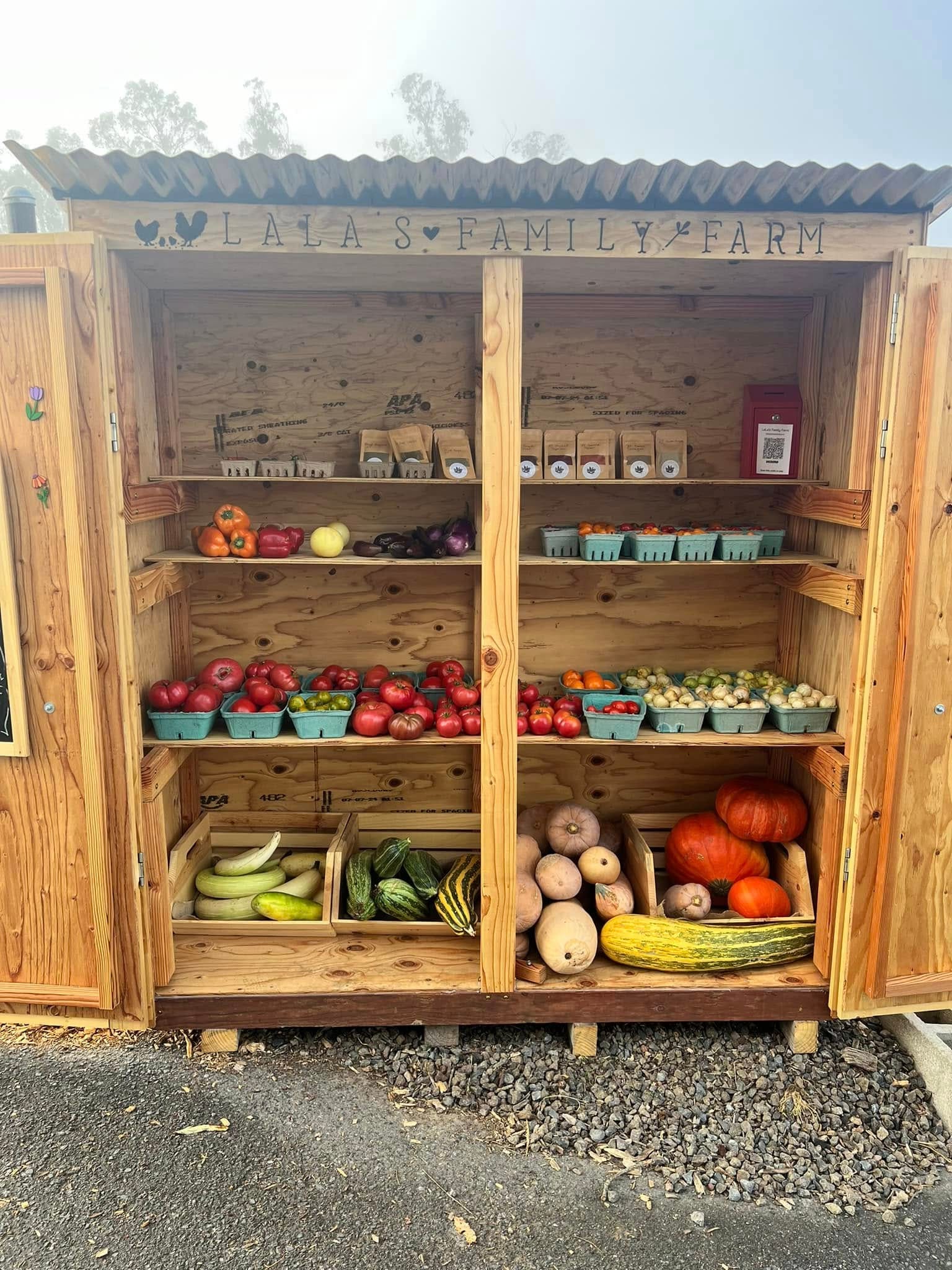
Paula reflected on an elderly visitor who found large pumpkins at the stand and worried about what to pay. “She said, ‘I don’t know what to pay you.’ I said, ‘Pay me what you can.”
This generous approach and spirit reflect the farm’s purpose: to grow food for her family and community and make surplus crops as accessible as possible. Paula said the food at the stand is the same food she serves to her family at home.
What it takes to create a garden this bountiful
The work on what is now Lala’s Farm began with the soil. Samples from the property showed low nitrogen levels, so they brought in composted horse manure. Letting the chickens clear weeds from fenced areas, while also contributing their own manure, helped increase the nitrogen levels needed to foster growing crops, some of which are less familiar to many visitors.
An ice cream bean tree, for example, was started from seed and produces pods with soft white pulp around large black seeds. “They taste like cotton candy or vanilla,” said Paula.
A Trombetta squash, which she holds in the picture at the top of this article, can be picked while green, or you can let it mature until tan. Once cut, she says you can wrap the unused portion and keep it in the refrigerator for about a month.
Asparagus is another crop with a longer cycle than its familiar edible spears suggest. Paula lets the plants grow into feathery greenery after harvesting, explaining that the foliage replenishes the roots for the next season.
“The reason why I let the asparagus go green like this and fern out is because this is what provided energy back down to the roots,” she said. These green versions of asparagus also produce berries and black seeds that can grow into new asparagus plants. Paula plans to gather some before the birds eat them and spread them around the property.
Some experiments have produced unexpected results. A volunteer tomato plant appeared on its own, most likely from seed left behind in the garden. Its fruit looked unfamiliar, but it was a hit at a community tomato tasting. Paula plans to save its seeds and grow it again, believing the plant may have resulted from cross-pollination.
Saving seed requires attention to the differences between crops and varieties. “There’s so much to know about the differences between other varieties that could potentially cross-pollinate.” The work can yield surprises—and unexpectedly new plants adapted to the garden.
Although the property is not organically certified, she describes her farming practices as organic.
“I don’t spray anything,” she said.
She does, however, line the raised beds with hardware cloth to deter gophers, which have been known to help themselves to the abundance. Paula has found everything from frogs to lizard eggs amongst her raised vegetable beds.
The farm’s philosophy is built into the daily work: save seed, use garden trimmings, improve the share, and share what the household cannot use with the farm stand.
The property remains a work in progress. Grapevines remain to be planted, garden beds to be reorganized, and new crops to try. One newer project is propagating variegated lavender that has resisted for several months.
A garden with so many crops takes continual planning. The raspberry patch has spread beyond its intended area, so the family plans to move excess plants and install planters about a foot and a half deep to contain the runners. They will replant blueberries in individual rounds. The family also plans to move artichokes into old wine barrels and plant grapevines where space allows.
For all the planning, the appeal is simple. “There’s nothing like picking something ripe and then eating it,” she said.
In August, Paula and family celebrated the sixth annual farm-a-versary on the farm, which coincided with Paula’s birthday. They invited visitors to contribute money or nonperishable food. The food bank later reported that the event helped provide more than 1,400 meals.
Locals are invited to visit LaLa’s farmstand at 4018 Canfield Road, Sebastopol. You can also visit the farm’s website or Facebook page.

Great article!