

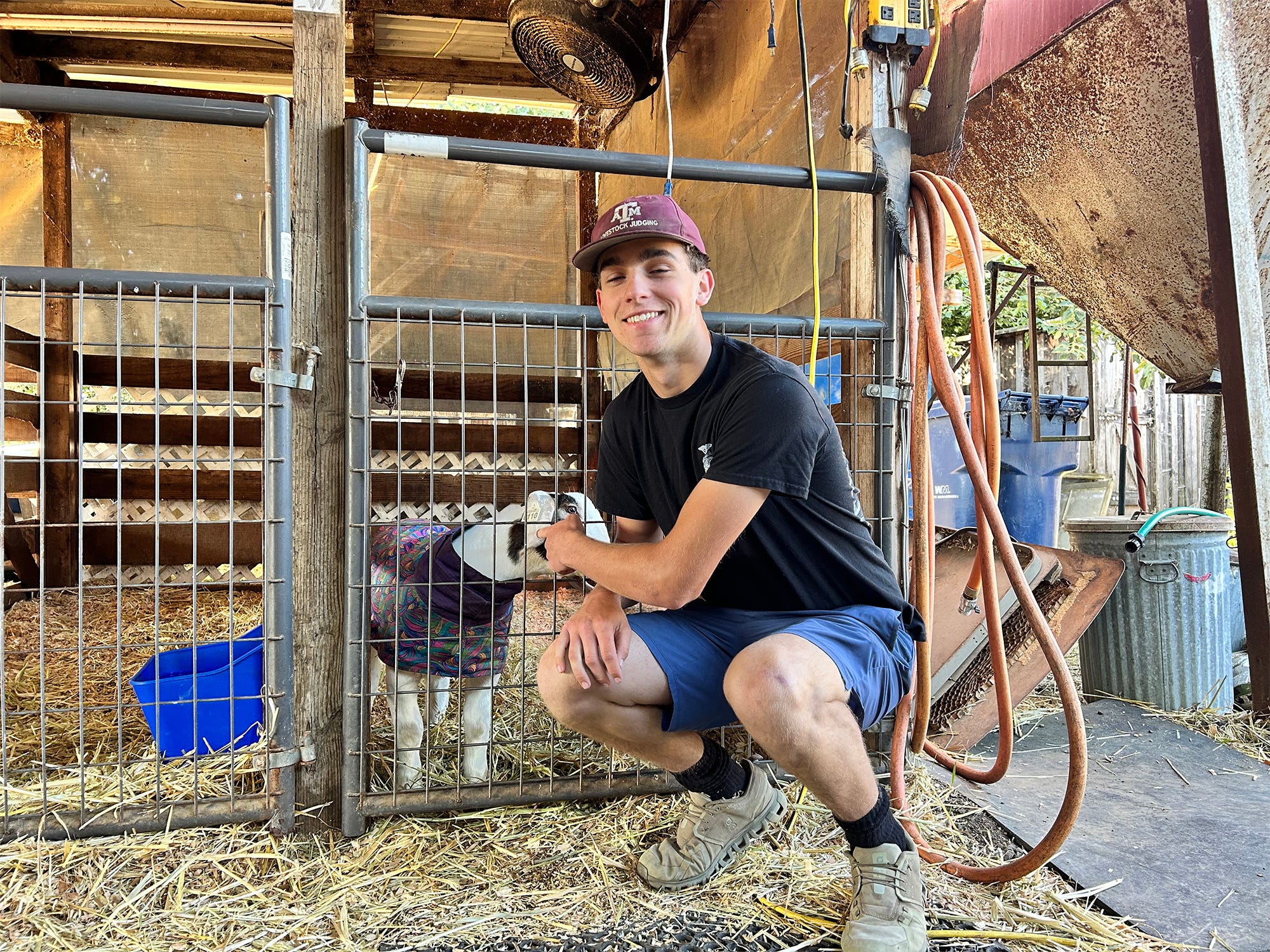
At the Sonoma County Fair, students as young as five stand up in front of an audience to show the livestock they’ve been raising and training for the past few months. Most of these students are either involved with Future Farmers of American (FFA) at their high schools or with their local 4-H groups, where they learn to raise various animals, including rabbits, poultry, goats, lambs, pigs and steers.
What is the livestock show at the County Fair?
At the County Fair, many of these students compete in the market category, where their animals will be judged for good meat. Market animals are sold at the auction, and the students who raised them get to keep the money. Students with market projects also compete in showmanship, where they will be judged on their ability to present their animals.
Michelle and Micah Sawyer, who run Sawyer Construction company and a harm reduction non-profit called Micah’s Hugs, volunteer as solicitors at the County Fair, to help kids find secure buyers for their market animals.
“They go off to the slaughterhouse and then come back as meat from the butcher. Some people think they’re gonna bring their animal home, and you know, cute little animal, they’re gonna keep it forever. So it’s also a lesson that the kids learn, the process of how food and meat gets to a store.” Michelle said.
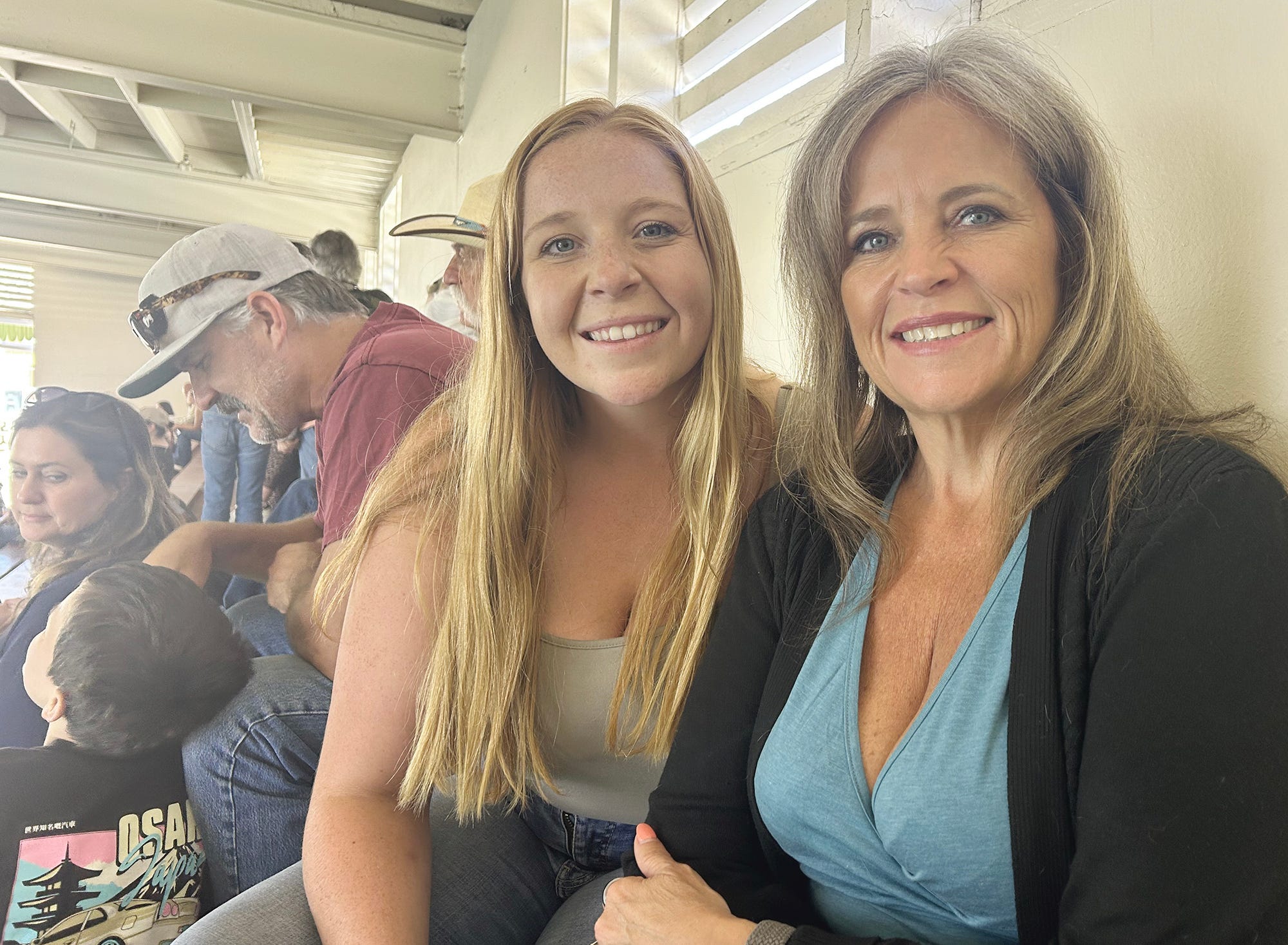
For 20 years, Sawyer has supported the junior livestock community. She was a founding member of the Sebastopol Ag boosters group, which helps raise money for the Analy FFA, and she runs the Gold Ridge 4-H club.
As a girl, Michelle showed sheep. Her daughters inherited this tradition and also showed sheep. In fact, one of Michelle’s daughters, Missy, is now a sheep leader at Gold Ridge 4-H, which provides programming for children as young as five years old, though only children ages nine and up can show large livestock (sheep, goats, cows, pigs, horses).
One student at Gold Ridge 4-H club, Bryleigh Cook, is participating in her first County Fair this year.
Meet Bryleigh Cook
Bryleigh Cook is nine years old. She joined 4-H this year as a way to feel connected to her aunt, Kylee Johnson, who passed away last September at the age of 22.
Johnson competed in junior livestock shows with lambs, and this year, Bryleigh did too.
“I thought it would be kind of cool and honorable to do what she would do,” she said.
Kylee Johnson grew up competing alongside Missy Pendleton, and the two were very close friends.
Missy mentored Bryleigh in the early stages of raising her lambs. Cook now mostly works with her other sheep leader, Matt Casarotti, but Missy continued to be present and supportive at Bryleigh’s first show.
In February, Bryleigh got her two lambs from a breeder she connected with through her other sheep leader at 4-H, Matt Casarotti. The names of her lambs have evolved over time to increasingly reflect her love of country music. “First was Spongebob and Patrick. Next was Morgan Wallen and Posty,” she said.
Finally, she landed on Brooks and Dunn, after country music duo Brooks & Dunn.
“This one is Dunn because Dunn is the bigger, taller, country singer. His name is Brooks because he’s smaller. He’s the follower,” she explained.
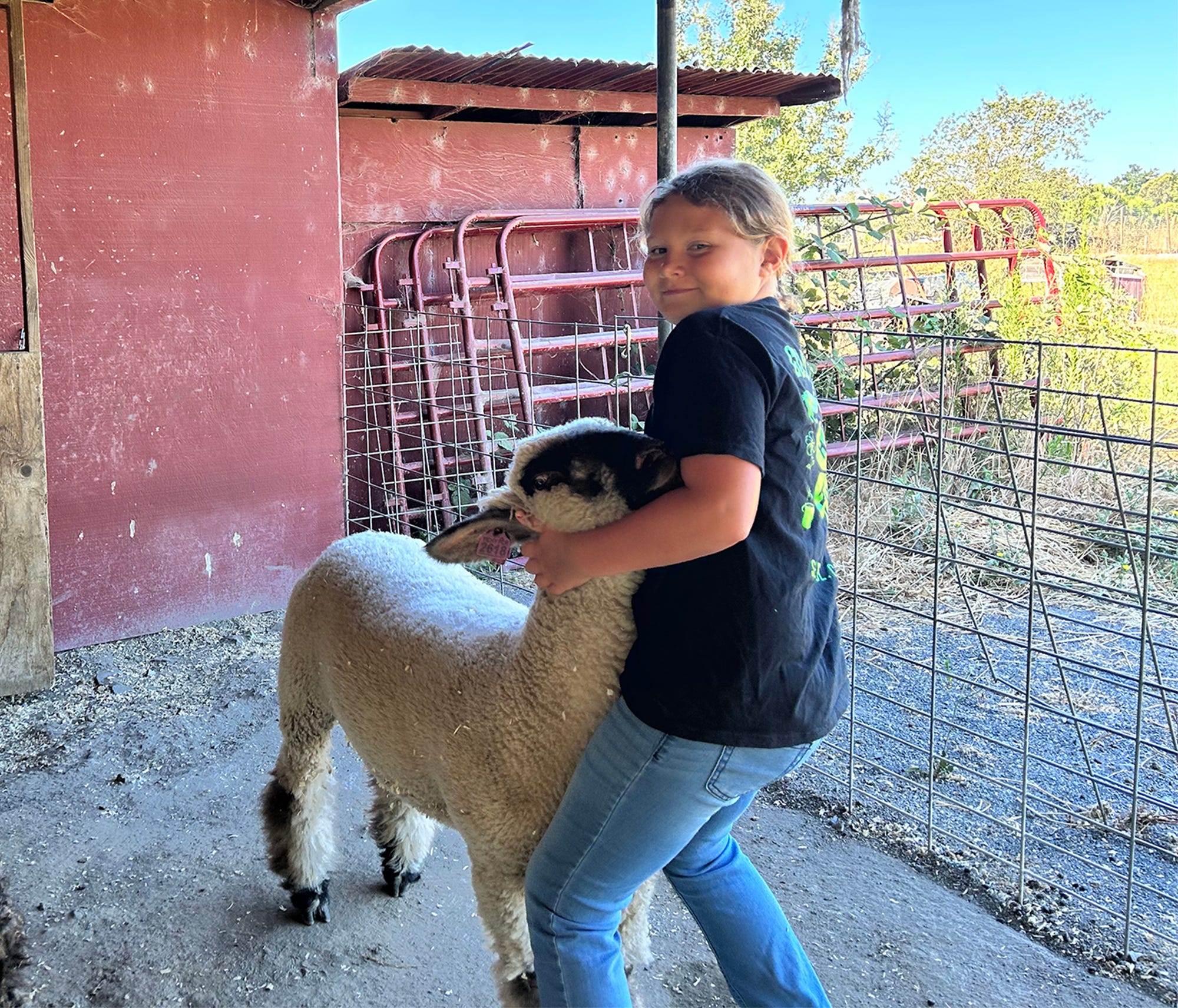
“When I come to grab them, I slowly do this thing my mom taught me. It’s called a bear hug, and then I get into the position I need to, and just start walking them for about 10 minutes…Sometimes they will just do what they want. And when they don’t want to do what we want, we just keep walking them and walking them and walking them until they get tired, and then we put them in the position.”
“You have to be the boss of them, but you don’t want to be too angry at them,” she explained. “You just gotta keep doing and doing it until they’re tired. They feed off my energy. So say if I’m mad, he’s gonna be all mad and jumping and all that. He’s not gonna want to work with me. But if I’m all calm, he’s gonna want to work with me sometimes.”
Bryleigh had been working with her lambs as much as possible leading up the County Fair.
In addition to caring for her lambs’ health and hygiene to raise them to market quality, she trained them to be shown at the fair. It takes time and effort to build the level of trust between an exhibitor and an animal necessary to keep an animal properly positioned and calm during the show.
Bryleigh’s father, Brian Cook remarked that “committing to a thing and seeing it through” is the most important thing Bryleigh has learned in the process, beyond learning about breeds, nutrition and the daily care that goes into raising a lamb.
It was the first County Fair without her aunt, so emotions for the Cook/Johnson family were complex. But Bryleigh put her best foot forward and impressed the judges.
She placed third in her class with Dunn and second in her class with Brooks. In showmanship, Bryleigh placed third.
“I feel really confident!” she said.
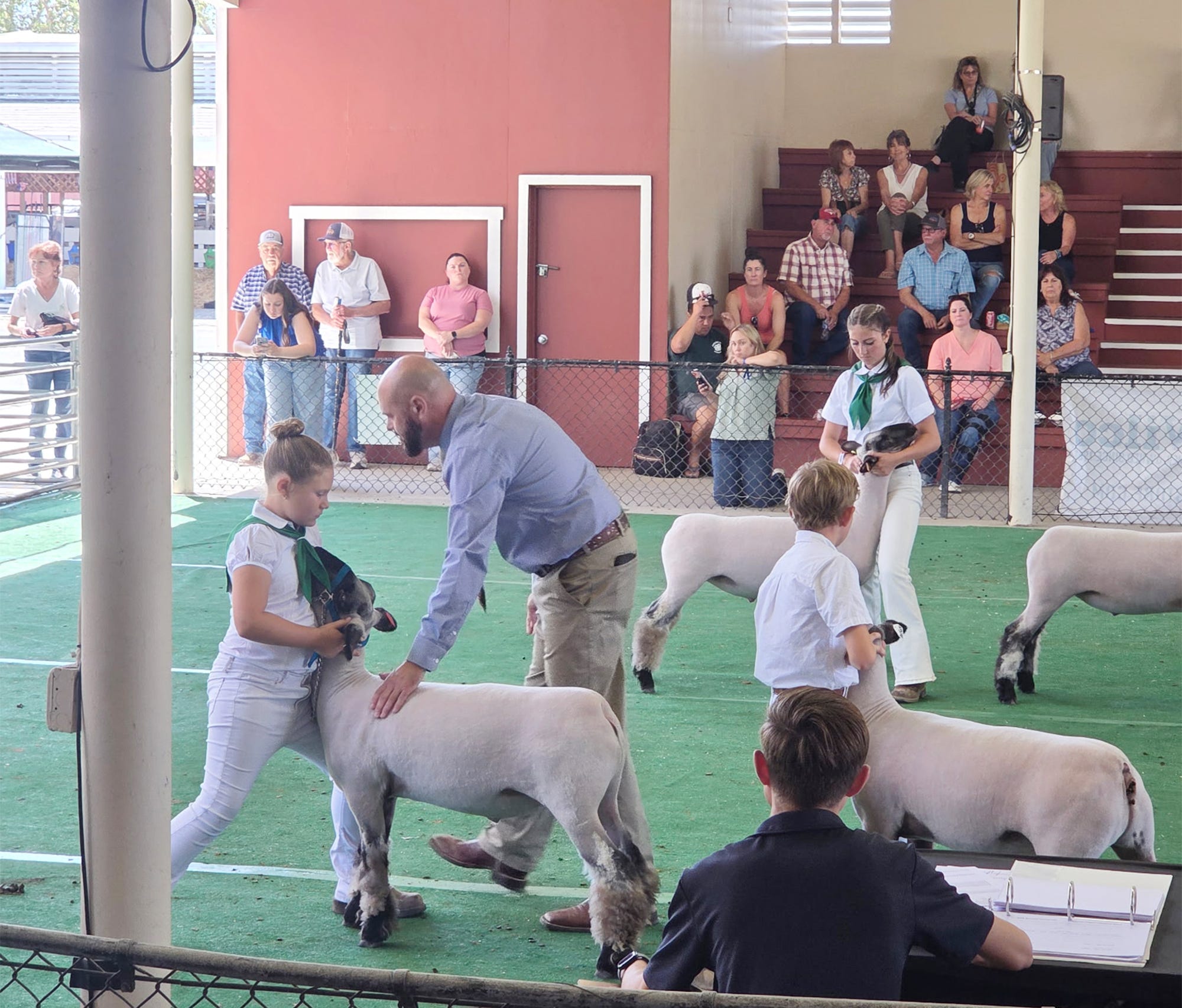
Although Bryleigh did remarkably well for her first show, her parents emphasized the sportsmanship, responsibility and community-building she has learned.
Bryleigh has developed relationships with breeders, livestock leaders and potential buyers as part of this process.
Taylor Johnson, Bryleigh’s mom, lauded “the relationship that they build with the community when they have to go out and look for buyers. They have to get dressed in their full whites, have some type of portfolio or resume-looking document, noting what work they’ve put into it, and then they have to go out and present themselves to businesses, whether they’re going to buy the animal and keep the meat for themselves, or if they’re going to buy it and donate.”
She was able to secure two buyers for her lambs that will ultimately donate the meat to community food security initiatives.
Bryleigh has also made wonderful friends. Her dad remarked, “One of her competitors was having issues with her lamb this morning, and [Bryleigh] walked back after taking pictures with family, came over, and just gave her a strong hug, and told her it’s going to be okay. And that melted my heart because it shows that she can go out there and compete, but she still understands that there’s people around her that she cares for.”
Missy explained, “We all work as a club. We all help each other. We’re all making new friends and family. That’s what it’s about.”
Meet Ian Huffaker
The community building and self-evolution that happens within junior livestock shows is on full display with one of Analy FFA’s star pupils, Ian Huffaker.
Huffaker, who is now going into his senior year at Analy High School, emphasized how beneficial 4-H and FFA have been for his personal development. Between discovering a passion, a life path, a sense of responsibility and a strong work ethic, he has learned other important life skills and gained meaningful friendships.
“FFA isn’t just animals, there’s speaking contests and leadership development and career development, and the connections that it’s brought me are great…I would say like 90% of my friends are from FFA. I have friends in Texas, I have friends in Oregon from FFA, just from traveling everywhere...If you’re going into high school, and you’re worried about making friends, just join FFA, and you will. Just take an Ag class.”
Huffaker shows year-round in “jackpots,” competitions held all over the country for kids to practice showing their market animals without having to sell them. He started 4-H when he was six.
“I started out with rabbits, and I had breeding rabbits so I could just get into it because my family’s not in livestock. My mom’s a winemaker, and my dad’s a teacher, so I started out with rabbits. Then I started showing meat pens, and I was like I don’t want to. I mean ’cause the rabbits, when you’re little, you get attached…So then I moved on to pigs and just did that for like three years, and then after that I got into the cattle and the goats.”
Raising and showing livestock has become his passion.
“There’s a lot of kids my age that all they do is play Call of Duty all day. So I think just having something where you have to get stuff done, and something you’re passionate about is really good. And this is what I’m passionate about. So I don’t really mind spending all day doing this. Like I come here around this time in the morning, and then I work.”
In fact, he hopes to dedicate his life to this work. His plan after graduating from Analy is to go to school for livestock judging.
At this year’s County Fair market competition, Huffaker showed a steer and a goat.
The goat Huffaker showed this year is a wether (a castrated male) named Kenny.
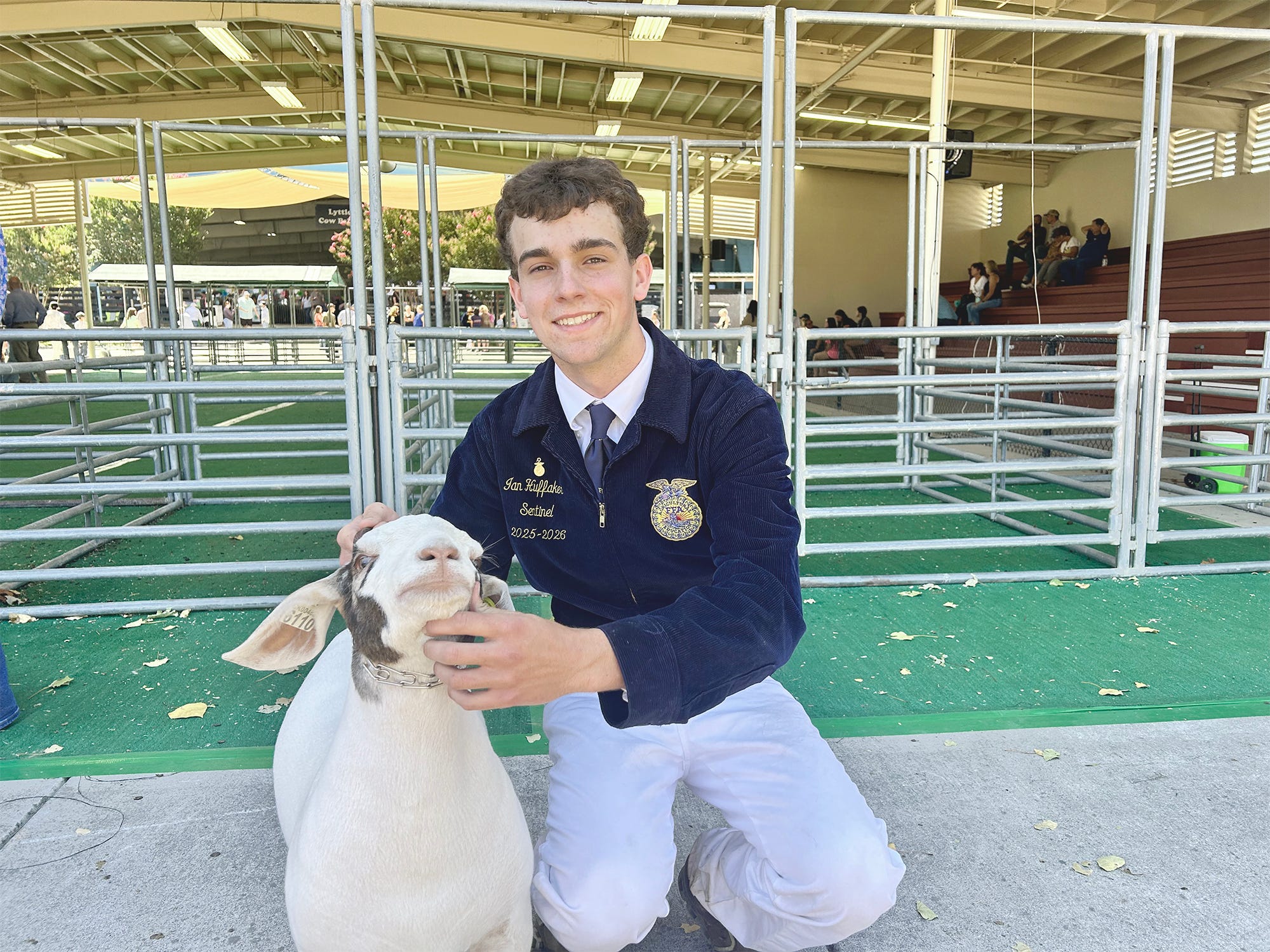
“He gets treadmilled every day. And he loves it. It’s funny; like he just runs on there, and they’re running backwards on it, and it kind of just helps them build muscle.”
Huffaker spoke affectionately about Kenny and admitted that he does get attached to the animals sometimes. He added, “But I know what it’s for.”
He added again, “But like, he’s pretty cute. He’s probably my favorite animal I’ve ever had. He’s funny.”
They’ve spent a lot of time together, especially since Huffaker believes in the importance of keeping a routine: “I work showmanship with all of these guys every day. And I think becoming successful is understanding that you really have to practice and commit yourself.”
And successful he is. This year, Huffaker placed second in showmanship and second in his class with his steer. He also showed the winning market goat (Kenny) across all 4-H and FFA classes.
He explained why Kenny was a strong goat to compete with: “You rub your hand over their rack and their loin, and you basically want them to be expressive and hard, like literally hard. So my wether, I mean, like his back feels like a piece of wood.”
Huffaker was thrilled at his success this year. “I was really excited. I mean, I’ve been shooting to win something like this.”
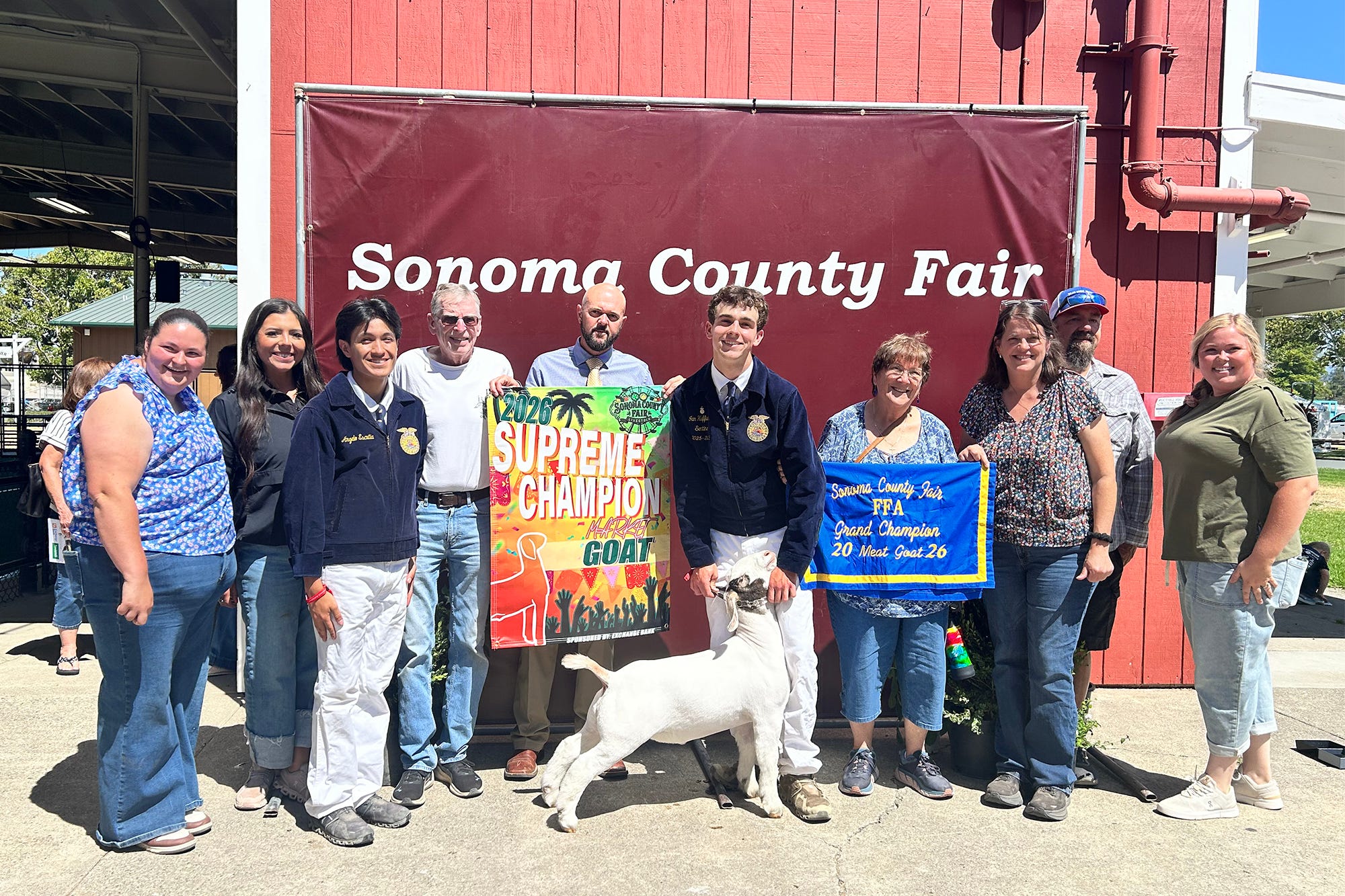
Michelle Sawyer reflected on watching Huffaker grow to be such a passionate and promising competitor, “Every once in a while you get a kid that just melts your heart.”
She remembers Huffaker “shaking her hand and looking her in the eye,” eager to build connections with people in the livestock community—a self-starter.
It takes a village
Over the weekend, the market animals shown at the fair will be auctioned and sold for meat. Students will use their earnings to support their market projects for next year and future college tuition. “It’s really like a scholarship,” Michelle Sawyer said.
Although it can be sad for students to say goodbye to the animals they’ve spent so much time with, Huffaker feels prepared: “I think I’ve done it so long where it’s like I’m kind of used to it. But he’s really cute… But I don’t think Kenny’s gonna know at all. He’ll be okay.”
Besides, the students have their families, friends, coaches, and clubs to support them. Like Huffaker said, “It really does take a village.”

Gotta love it when you have animal exploitation and child abuse...all rolled into ONE! But hey...It's tradition, so that makes it ok.