

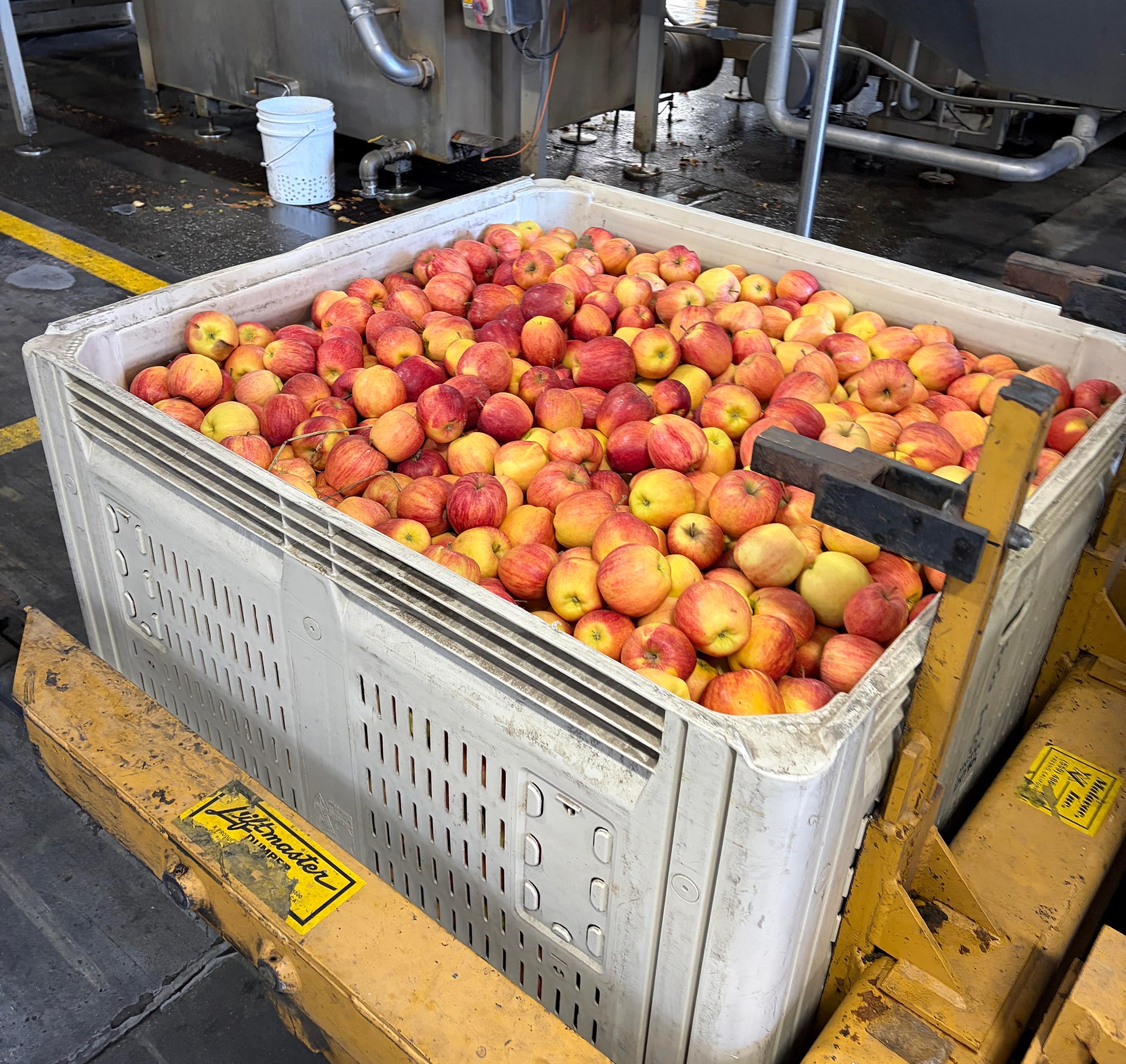
For more than a century, apples have gone into the brick plant on Green Valley Road and come out as sauce, juice and vinegar. That ends next spring.
Manzana Products will stop production in Graton at the end of March 2027, CEO Andy Kay said in a recent plant interview. Afterward, crews will spend several months emptying warehouses and tanks. “By fall of 2027, we’ll be completely finished,” he said.
The company, which began in 1922 as the Oehlmann Evaporator and adopted the Manzana name in 1945, is relocating to a former Seneca Foods plant in Sunnyside, Washington, in the Yakima Valley. Fifty-five people already work there, and Kay said the team “is growing every day.”
The Graton property, 38.79 acres across three parcels, is on the market for $7.4 million.
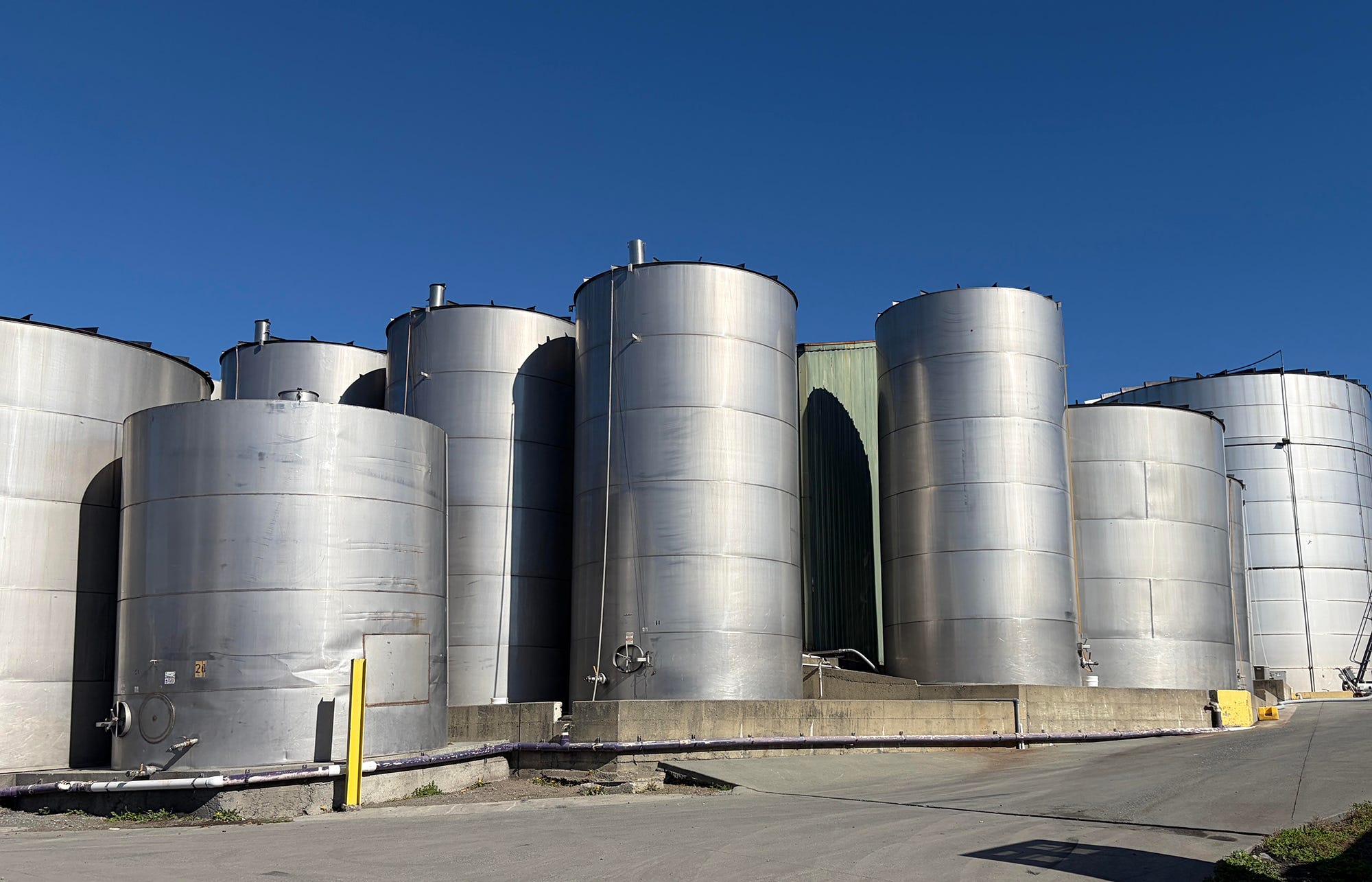
To understand the scope of our loss, Manzana is possibly the largest processor of organic apple products in the United States. According to its website, “Manzana Products has been the leading producer of organic apple cider vinegar for over 100 years.” Kay told me that if you use apple cider vinegar anywhere in the United States, it was probably made by Manzana. The property’s massive storage tanks attest to that.
Following the apples
The move comes down to fruit. Sonoma County now has fewer than 2,000 acres of apples, Kay said, and they supply less than 10 percent of Manzana’s needs. Nearly everything else is trucked down from Washington, which grows most of the nation’s organic apples.
“The major factors are the availability of apples and the cost of transporting them down here from Washington state,” Kay said. Trucking that much fruit also isn’t very sustainable, he added. The Sunnyside plant has a rail spur running directly into the building.
It wasn’t always the plan. When Agrial, the French agricultural cooperative, bought Manzana about a decade ago, “the intent at the time was to grow here,” Kay said. "The company has invested “tens and tens of millions of dollars” in the Graton facility. But Manzana has outgrown the facility. The plant is operating beyond full capacity, and some production and storage are now outsourced.
The turning point came in 2022. After COVID, supply chains were disrupted, and fuel, packaging and raw material prices spiked. Manzana was celebrating its centennial that year, and Kay had just moved from chief financial officer to CEO.
“We were looking forward to the next 100 years,” he said. With Agrial, the company studied what it would take to remain successful. One option was to stay and reinvest in Graton. “But the economics, the sustainability, and the social evaluation meant it made sense to invest in Washington State.”
California itself is part of the picture, Kay said. Food manufacturers struggle to find and retain workers, and they compete with wineries for labor. Permitting has been “complicated and challenging for everybody” since the 2017 fires. Still, he said, the County “wasn’t a major factor in the decision.”
Hiring in Washington has been easier. Some new employees worked in the same building when Seneca operated it a decade ago. Other plant closures in the region have left experienced workers seeking jobs. Kay said Manzana knows of no other purely organic processor in the area, and proximity to the growers and packing houses should help with quality and yield.
The people who stay behind
When the move was announced in early 2024, Manzana offered its Graton workers the option to relocate. Few have taken it. Kay said four employees have moved north in the past year or two, and a few more will go once Graton winds down. “But the vast majority are not moving to Washington,” he said. “It’s a long way for people to move, with families.”
You can easily sense the sadness in Kay as he says goodbye to his Graton workers. He is an unassuming man with a kind demeanor, and he became emotional when he asked that one thing be included in this story: gratitude for the workers. Some have worked at the plant for more than 40 years, and several families have had two or three generations on the lines.
“We’re trying to be as respectful and responsible as we can in how we close the facility and support employees,” he said. The company holds regular meetings to update workers on the end dates for each production line, which will close in stages over the coming months. Employees can ask questions and indicate whether they want to move. Manzana is also providing financial support during the transition. As we toured the plant, he was regularly greeted with fist bumps and waves.
Agrial is owned by about 12,000 French farmers, each with one vote regardless of farm size. “As a cooperative and farmer-owned organization, we value respect for our employees and appreciation for all they’ve done over so many years,” Kay said. At the end of the year, Agrial plans to merge with another French farm cooperative, Terrena, and the two entities will have 30,000 farmer members and revenues exceeding $14 billion.
Growers and the Gravenstein
Local apple growers have their own worries. In 2024, Manzana promised to keep buying Sonoma County organic apples through 2029. Kay said that the commitment stands, and the company is discussing how to extend it. Local apples ripen earlier than Washington fruit, which benefits Manzana.
Local growers now have another option. Gold Ridge Organic Farms has opened a 20,000-square-foot processing plant in Santa Rosa, in part because Manzana is leaving. “It gives a new outlet and a new avenue for people to choose what they want to do,” Kay said.
I asked Gold Ridge’s Managing Director of the Apple Press, Marilee Olson, about their new 20,000-square-foot facility in Santa Rosa and whether they had looked at the Manzana property. She responded by email, “The Manzana facility requires massive upgrades to bring it up to current codes. The business decision was made to build a new, state-of-the-art facility for millions of dollars less.”
Whether such upgrades would have been necessary or not, the vast size difference between the two facilities, as well as the location, would have been an immediate deal killer.
Manzana has long sponsored the Gravenstein Apple Fair. Kay said the company is considering what that support will look like once it ends. “We don’t just want to pick up sticks and leave and have a hard stop,” he said. “We want to be a good community player.”
And they are a good community player. Jenifer Butler, President of the Graton Community Services District, had nothing but praise for the company. “They have been incredible supporters of the Town Square, giving money, food, and even juice boxes for the kids. We will deeply miss them.”
The history preserved
Some of the company’s history has already found new homes. Old apple peelers, used until about 10 years ago, went to local growers and to some of Manzana’s historic suppliers in California. When I asked about the West County Historical Society, he said they are welcome to come by and see any other memorabilia they might be interested in. A family member of the former owner still works at Manzana and is also interested in preserving the history.
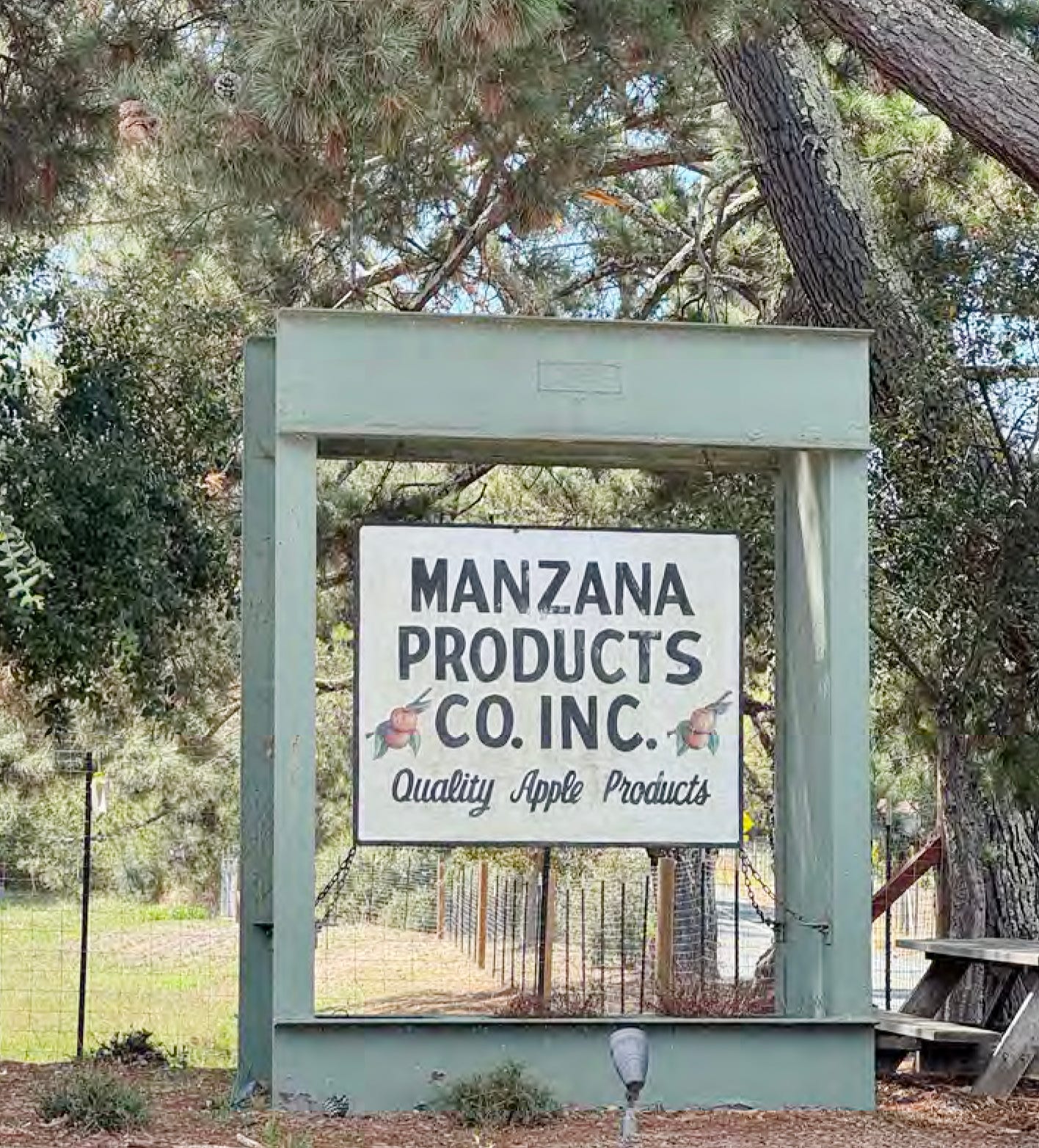
The history is traveling north, too. On a recent visit to Sunnyside, Kay brought photos and keepsakes from Graton. He told the new team that they exist because of 105 years in Sonoma County. “People were really interested in the company’s history,” he said. “That was really inspiring for me.”
Kay grew up in Britain and is half French. He started his career at Cadbury, worked for juice and smoothie startups, and joined Agrial in 2013. He came to Sebastopol as CFO in 2017 and became CEO in 2021.
Asked about the bigger picture, Kay said Sonoma County needs a long-range plan for its farmland. Farmers and supervisors should work together, he said, to decide “what do we do for the next 50 years.” Wine is going through a tough time, and he thinks the lesson is to grow many crops rather than bet on one. “From an idealistic point of view, we would have more apples, more pears and other types of fruit,” he said, as people drink less and look for food grown closer to home.
What lies ahead
Much of the plant’s machinery will stay where it is. The big tanks aren’t worth hauling to Washington. Manzana bought a new bottling line for juice and vinegar in Sunnyside, so the Graton line will stay too. The applesauce equipment is already being moved north. “Whatever is movable, we will take with us,” Kay said. “The older or fixed items we don’t need will stay here.”
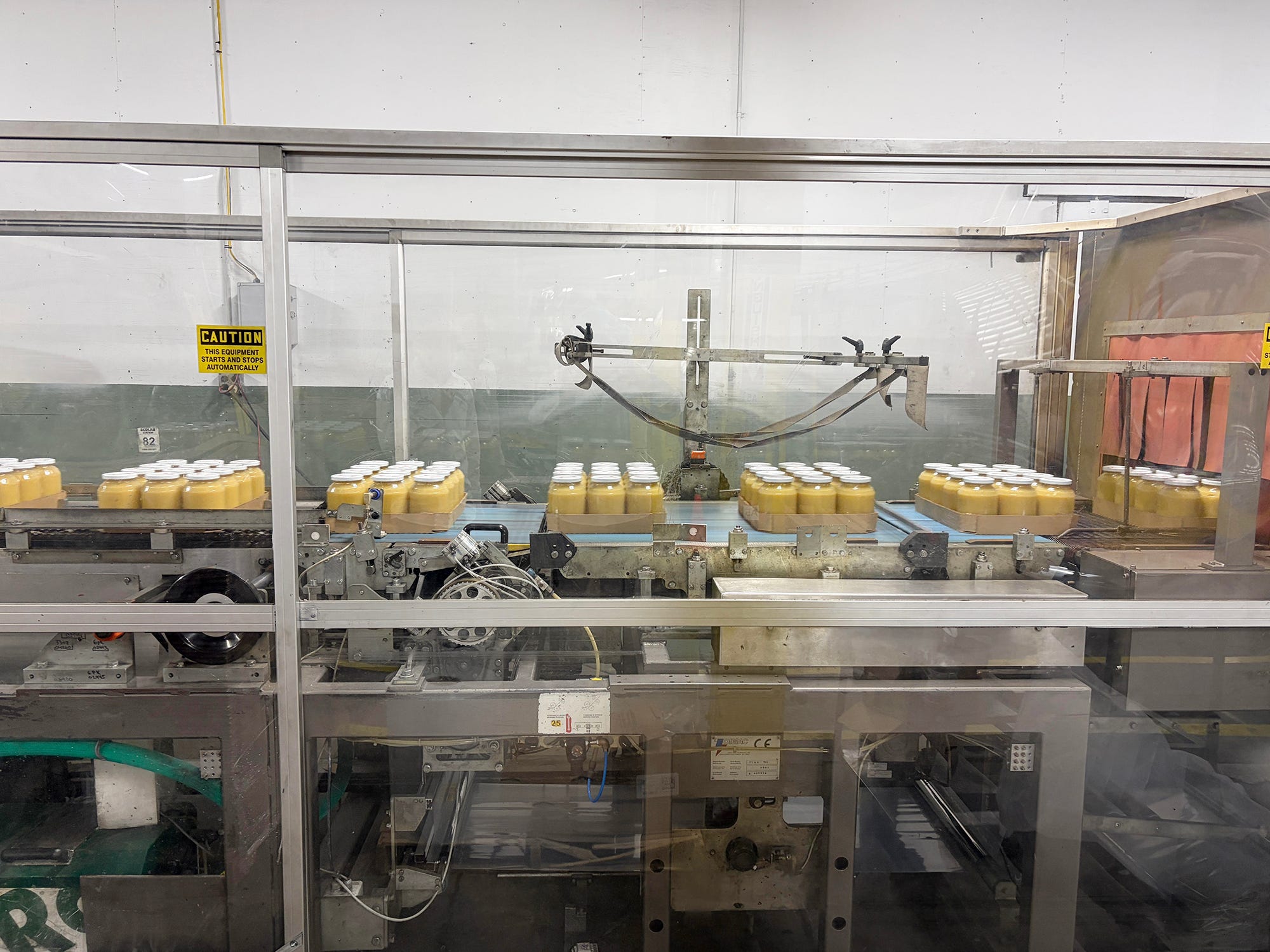
As I toured the operation, I was astounded by its size and complexity. Fifteen years ago, well before the Agrial acquisition, my wife and I wrote a book about our West County experiences and toured Manzana. While impressive, it looked like a 100-year-old plant. What I saw now, with the heavy use of robotics, could hardly be described as antiquated.
Interest in the property has been modest. “It’s a challenging market for everybody right now,” says Demi Basiliades of Keegan & Coppin, the brokers listing the property. Kay called the site unique, with frontage on the bike path and a mix of century-old buildings and modern warehouse space. “It would take the vision of whoever buys it to decide what it is they want to do.”
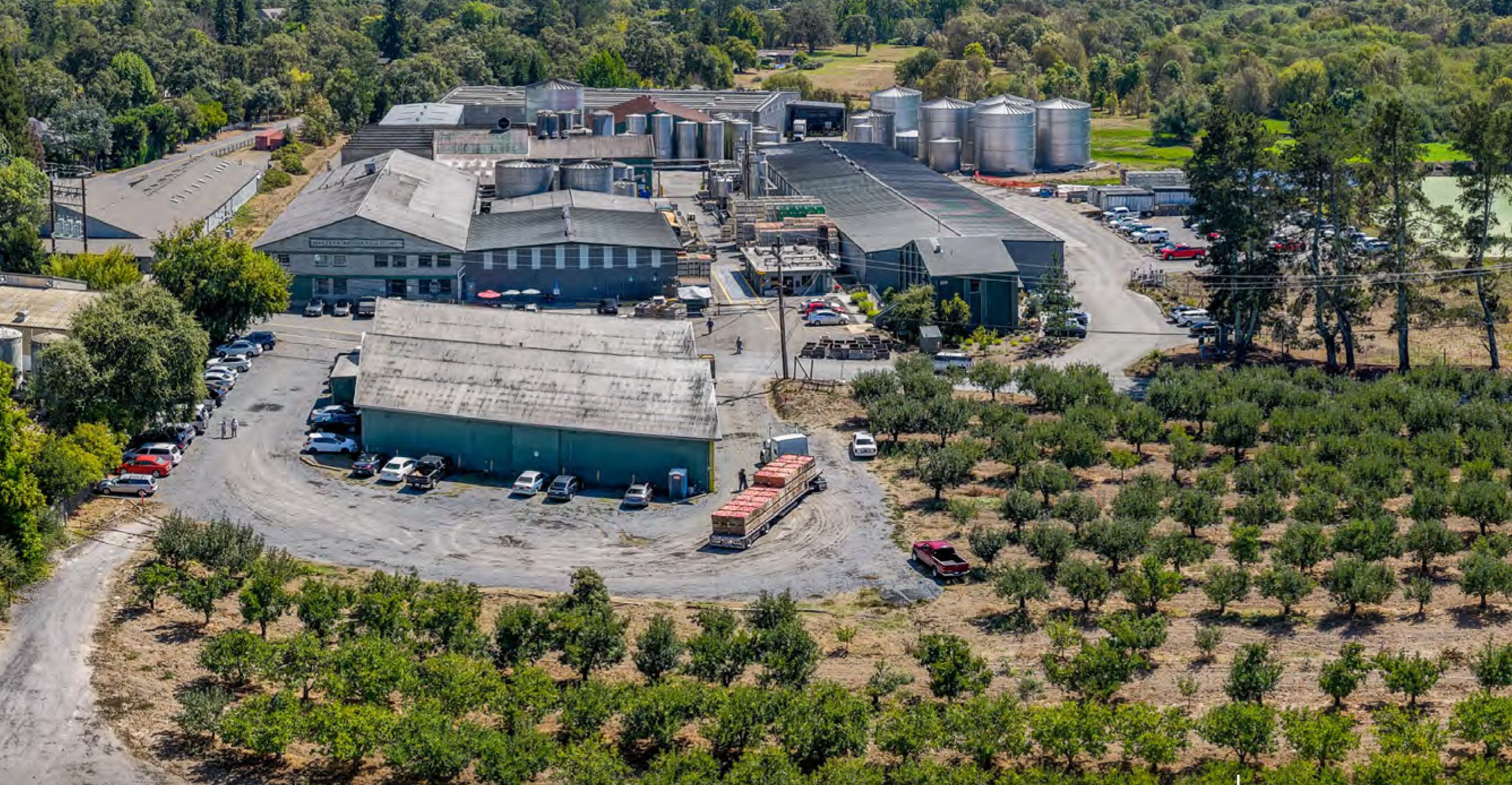
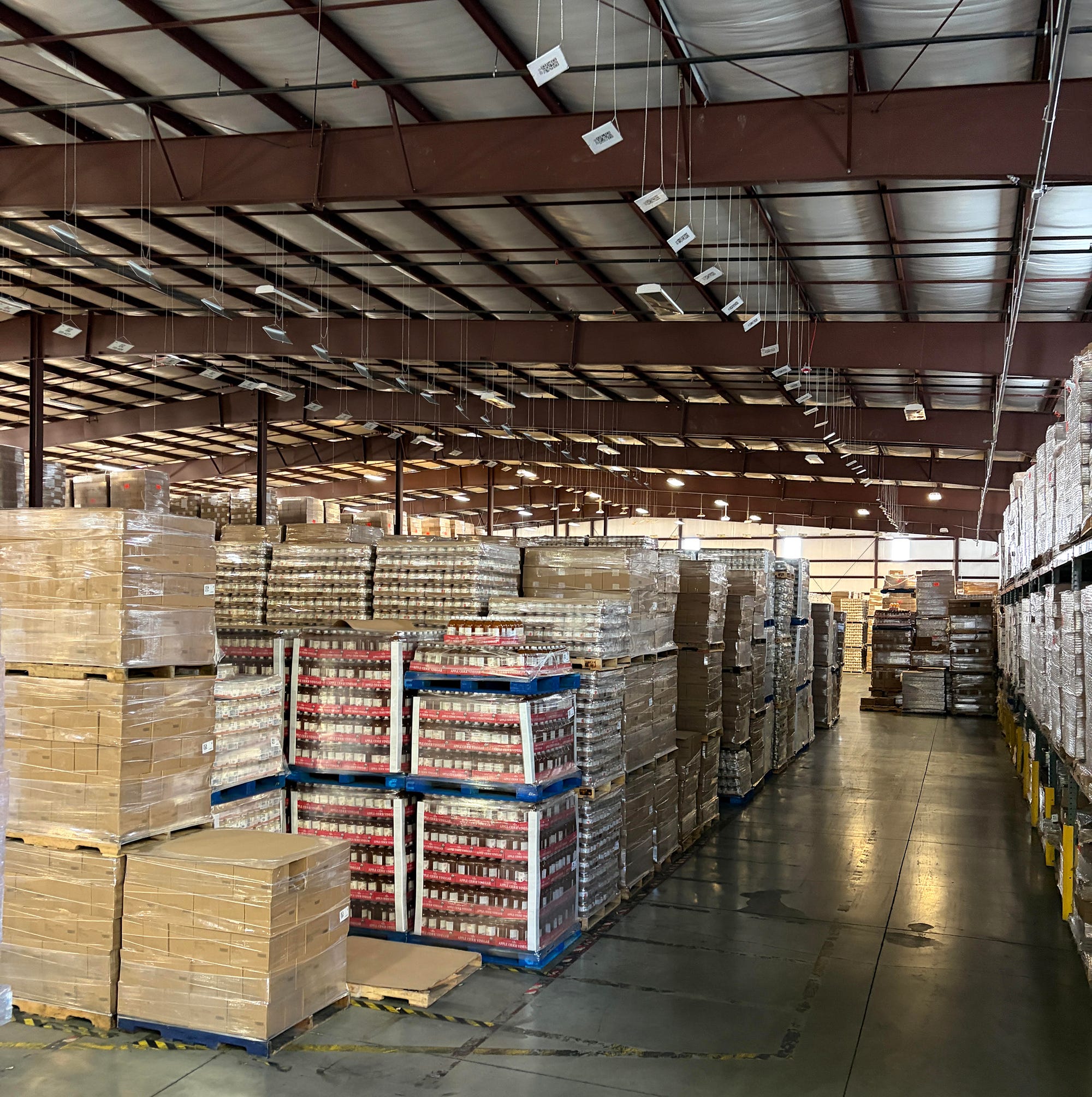
In a conversation with Basiliades, he said the complex is well positioned for any user, but not likely a wine or apple processor. It has ample electricity, water, and floor drainage, along with substantial modern storage. The other potential purchaser would be an investor seeking to acquire a fully entitled industrial property at $4.60 per square foot, which Basiliades calls a bargain in a different market. Kay noted to me that the main storage warehouse, at over 40,000 square feet, would itself be worth the purchase price in another market. Basiliades, who grew up in Occidental, also hopes the new owner will be a company that will hire people to bring continued vitality to West County.
If people are interested in an in-depth look at the property, the sales brochure is an excellent resource.

When I asked Kay what he’d like to say to West County, he responded: “We’re proud of our roots in Sonoma County and the local people who have made Manzana the successful company it is today. As we begin the next chapter of our story, we’ll carry that heritage and the spirit of Sebastopol with us.”
Thanks Sara. They are not set up for tours. Since food is involved getting around is tricky and requires special gear. It is sad that they are leaving.
Nice article! Thanks for the details and history, which gives the reader a good sense of the what and why's.