

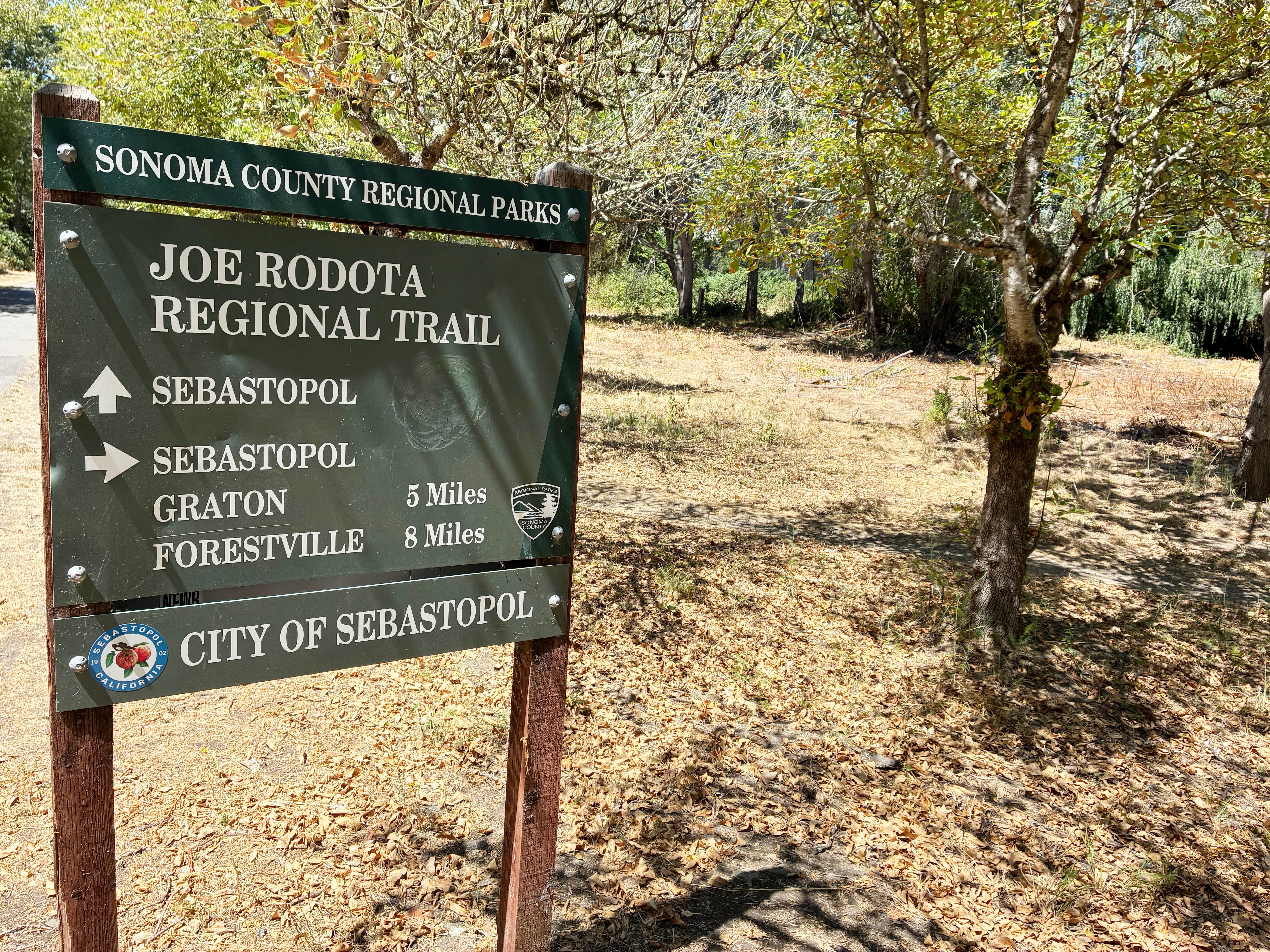
If you’ve walked on the Joe Rodota Trail recently, you’ve probably noticed that it feels a lot more open than it once did. That’s because the city’s Public Works Department and Gold Ridge Fire have been hard at work doing “fuel-reduction,” which is to say, removing brush in the city-owned Railroad Forest near the trail.
The Railroad Forest is roughly 10 acres, but initially the city is focusing on creating a buffer in those areas that are closest to homes and businesses in the city.
“Following the encampment fire on the property over the summer, the City and Gold Ridge Fire Protection District recognized the need to address the significant vegetation and fire safety issues on the City-owned property we refer to as the Railroad Forest,” said Sebastopol’s Public Works Director Oriana Hart. “Gold Ridge generously offered the assistance of its crews and volunteers and provided two days of work to get the initial vegetation management effort underway. Public Works has been following up with our maintenance staff to clear the vegetation that was cut and continue reducing the accumulated fuels on the property.”
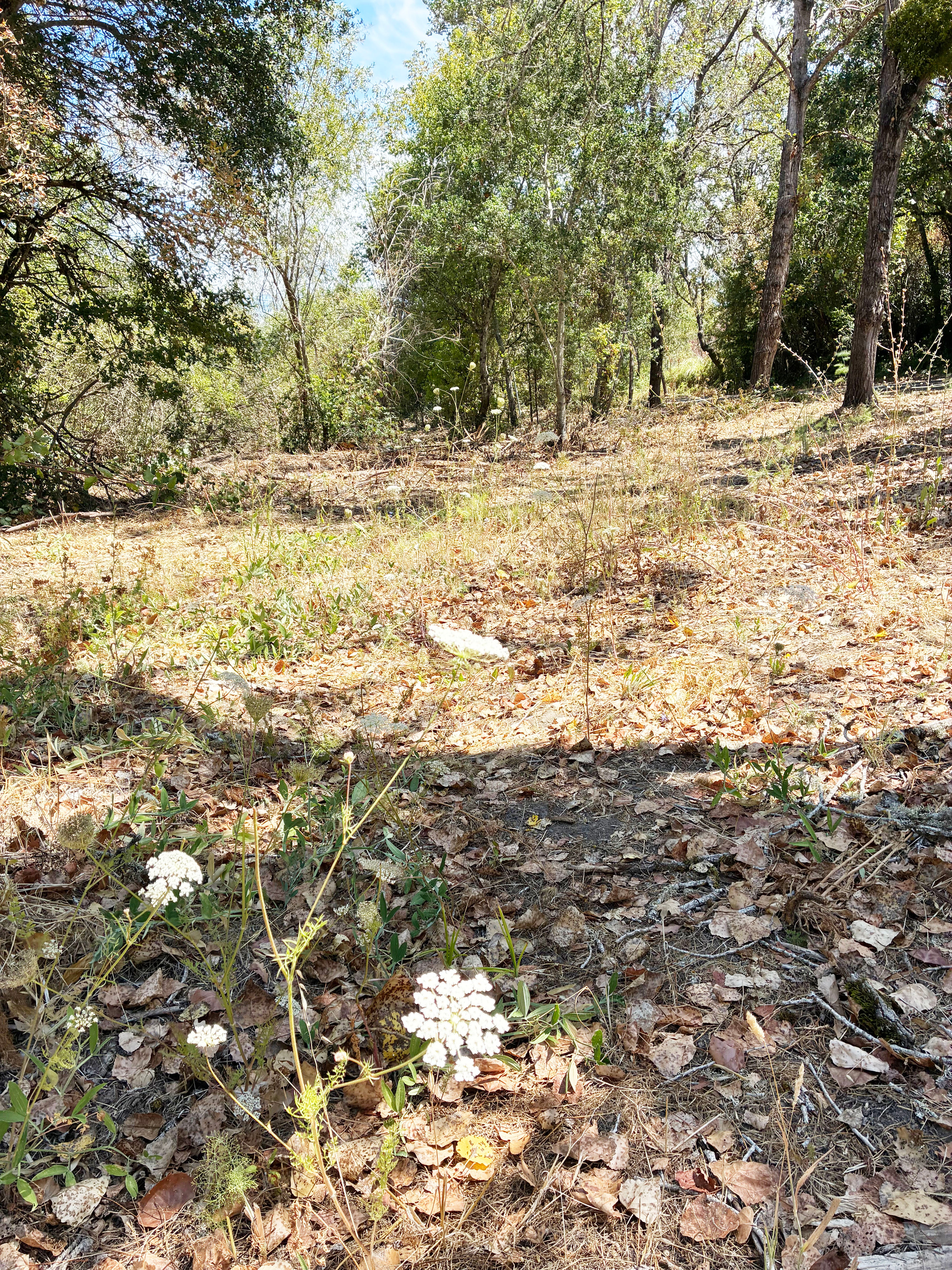
Gold Ridge Fire Chief Shepley Scroth-Cary said his team did the initial clearing, and he knows it looks a little messy.
“We wanted to reduce the threat of fire coming from this city-owned property and impacting the infrastructure, specifically the back of the hotel [Elderberry Commons], the tow yard, and then ultimately down the road, the mobile home park [Park Village] and the apartments that abut up to city-owned property. What we started with is mechanical treatment. We used a masticator on a skid steer to start that initial buffer. We fully understand that’s not a very attractive end state with that tool, but it’s the most effective, quickest way to get through the blackberry bushes because most hand crews don’t want to touch blackberry bushes and poison oak. What it did is it gave us access. We also found a whole lot of trash, and they [the city] cleaned off probably three dumpster loads worth of debris out of there.”
Scroth-Cary said the public reaction to the clearing has been mixed.
“Mostly people were very happy about what we’re doing, and then a small minority of people were like, ‘Oh, you’re destroying the environment, and why are you doing this?’ And you know, it’s tough because I see this as only good—it was way overgrown. I do understand though that it doesn’t look very pleasant right now, but in a season it will look much better.”
Aamil Targow noticed the change when he was walking along the trail last week.
“The upside for me is the reduced fire danger for my neighbors immediately above the trail on Fannen and Eleanor,” he said. “The downsides are the mess they left, and the greenery no longer right next to the trail.”
Happily, help is on the way to aid in the clean-up.
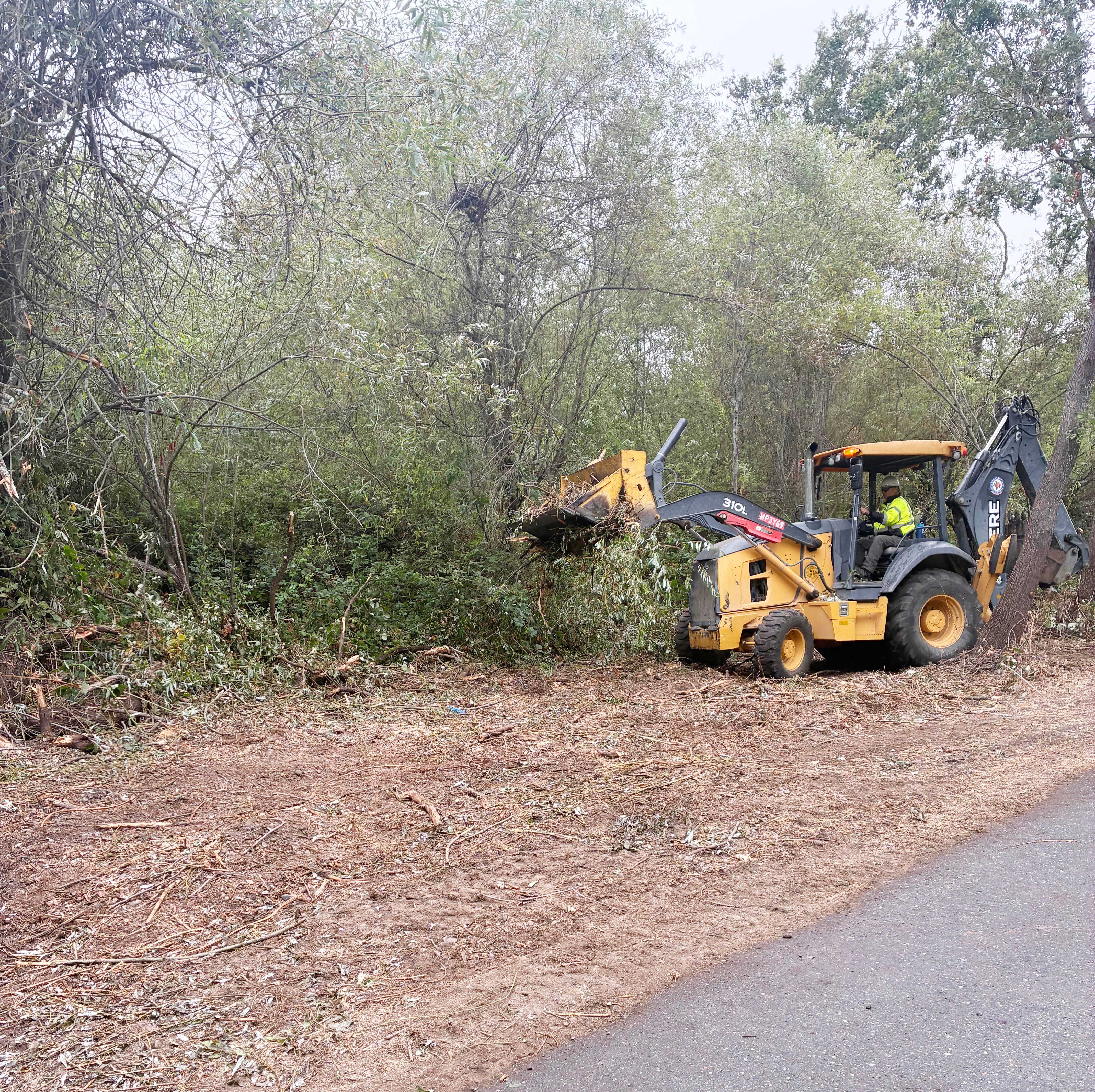
Scroth-Cary said he’s applied for some additional aid through Measure H, which is the voter-approved 1/2-cent sales tax dedicated to fire protection and emergency services, passed in March 2024.
“There’s a Measure H hand crew that is administered by North Sonoma County Fire District. In order to get that crew to a project, you have to put it into a portal, where it’s compared to all the other projects that are submitted throughout the county…We’ve submitted a project to do some handwork, meaning chainsaws and hand tools, to reduce fuels even further.”
Hart said, “We expect to have more information about the availability of Measure H-supported assistance within the next month. At that point, we will determine the next steps for vegetation management on the property, including how the City can best supplement the work through our own resources.”
With or without those funds, Hart said the city would continue to chip away at the issues in the Railroad Forest.
“We want to address the fire, vector, and general safety concerns that have developed on the property while establishing a sustainable vegetation management program,” she said. “Public Works also has funding available in our operating budget that could be used for supplemental hand crews and potentially a grazing program to provide additional vegetation management. We anticipate that even after this initial work is completed, there will likely be another significant round of treatment in the spring as we establish a regular maintenance cycle for the property.”
Hart said the city is already considering longer-term solutions for the area, including developing it as a kind of naturalistic park, centered around the creek which currently runs in an underground culvert next to the trail. This idea is part of the Calder Creek Naturalization Plan adopted by the city council in 2022.
“At this stage, we have not undertaken vegetation work within the creek corridors because that work requires additional environmental review and permitting,” Hart said. “Longer term, we would like to pursue additional funding to develop the property into more of an open space and park amenity along the trail, with Calder Creek running through the center of it.”
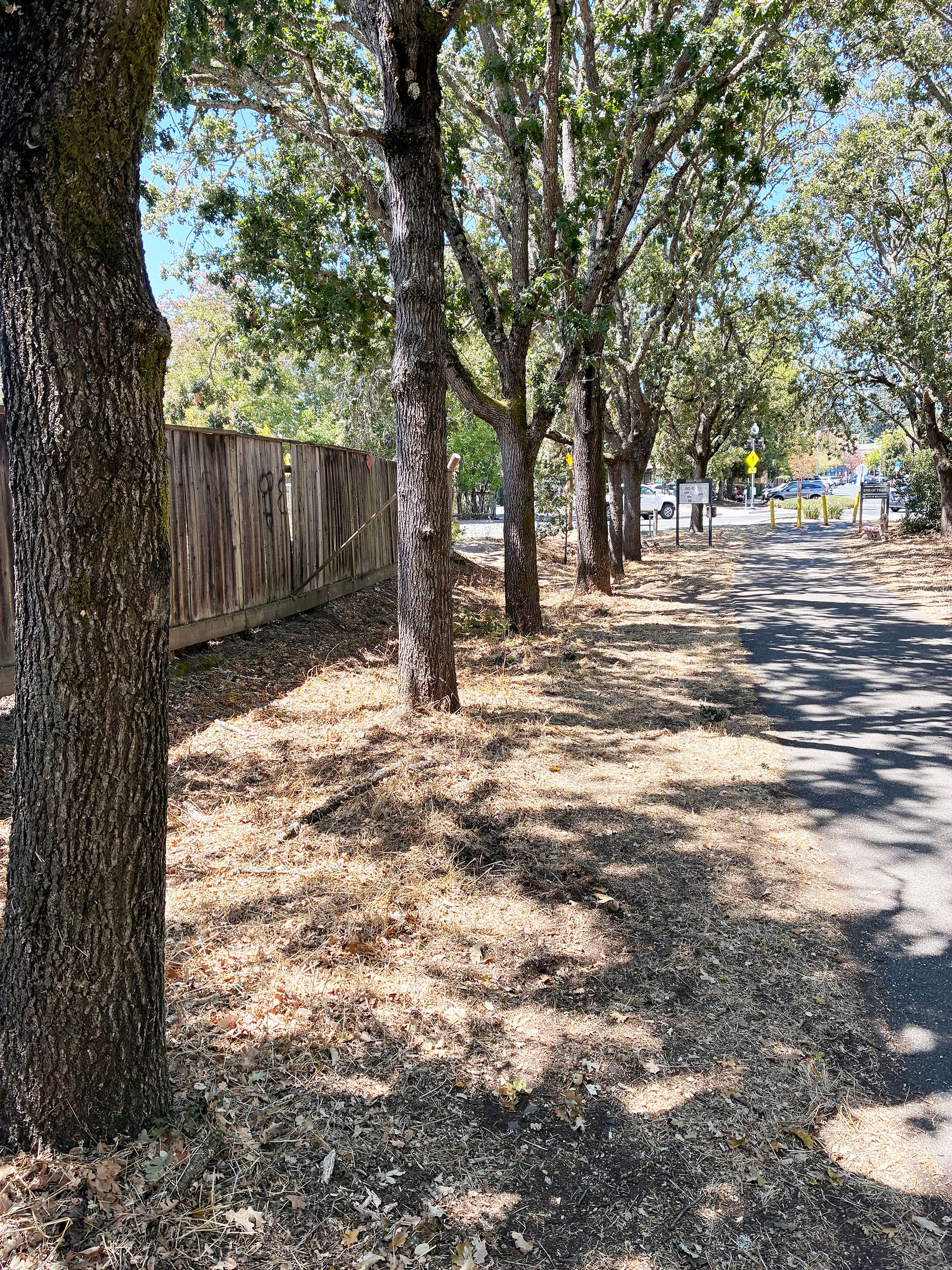
Our walking group walked the trail yesterday and we were amazed. Really good for fire safety in my opinion. And given time and attention it will probably look beautiful.
I'm very happy to see that this work is being done. I've been to scared to walk down that portion of the trail because it was so over grown and full of homeless encampments. Yay Sebastopol and Gold Ridge Fire Dept.!!