
By Hanne Jensen
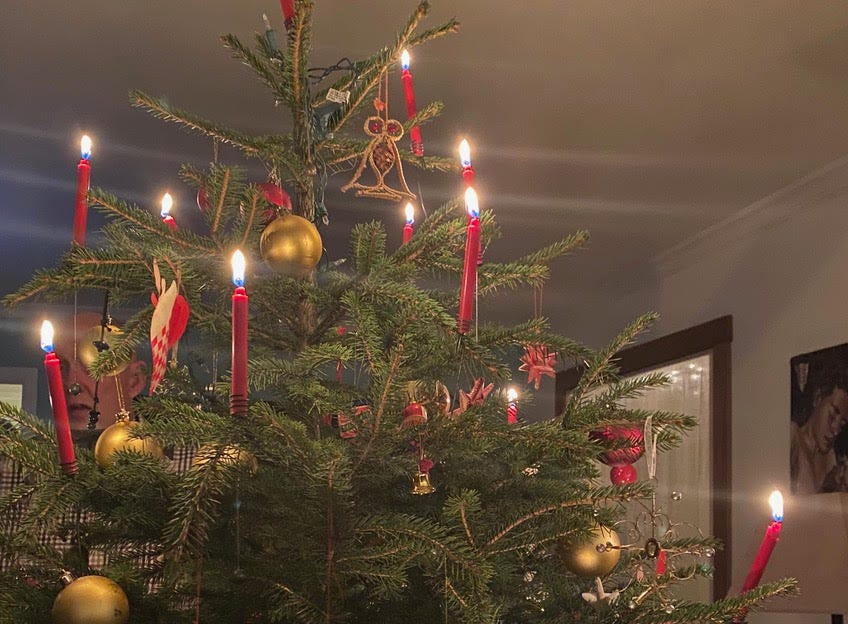
When I left Denmark in the seventies, I vowed to leave the old culture and customs behind. But for more than half a century, I have kept two Danish Christmas traditions going. The first is a raucous Yule lunch fueled by Aquavit in the spirit of the Vikings, and the second is an intimate family Christmas Eve’s dinner. That night, we light candles on the tree, as Scandinavians have done for centuries and sing the old songs, celebrating the return of the light.
For the first Yule lunch in California, we crammed two dozen friends into our tiny cabin in San Rafael, all sitting on the floor, attempting to maneuver the herring on the black bread with knife and fork, everyone dutifully following my strict instructions of etiquette. Over the years, tables have been put together in apartments, in corridors, in living rooms, small shot glasses ready for the guest of honor, the bottle of Aquavit. The party always began in proper fashion only to descend into loud singing, dancing on top of the tables, kissing under the mistletoe, and first timers crawling around on the floor looking for toes to lick or sleeping off the alcohol in the corners of the room.
In my youth, these parties were famous, and getting an invitation sought after. Before the party inevitably dissolved into chaos, there were strict rules to follow. First, the herrings and smoked fish were brought out, then the meat balls, roast and salami with all the trimmings, and then the cheeses and desserts. Each dish was accompanied with a shot of Aquavit and proclamations of good wishes for everyone. By the time we reached the sweets, no one cared about protocol. In Denmark, the Yule lunch is celebrated many times during December—within families, in offices, in small towns and big companies. These gatherings always have an air of gossip and regrets clinging to them, as the Danes, fueled by Aquavit, let go of their inhibitions, only to have to face their co-workers or partners the next day.
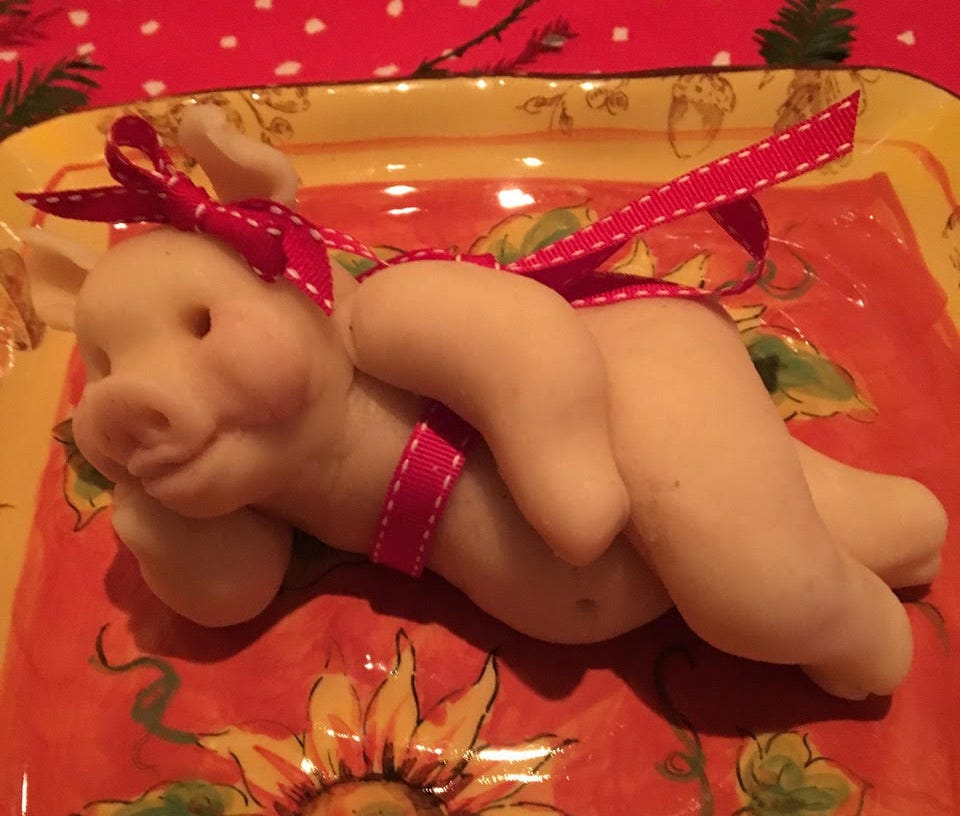
Christmas Eve is another story. The dinner is always duck stuffed with apple and prunes, pork roast, red cabbage, potatoes browned in sugar, followed by a rice pudding made with cream and almonds, as traditional a meal as the turkey for Thanksgiving. The dessert hides a whole almond and whoever finds it, wins a marzipan pig. After dinner, we light the many candles on the tree and make a circle holding hands. First, we sing the hymns and then the rowdier songs, our steps quickening with the escalating pace, until the grand finale when we run outside, shouting, “Nu er det Jul Igen, nu er det jul Igen”, which my family has translated to “Nude hooligans going to Alaska.” [The actual translation is a more prosaic, “Now it is Christmas again.”] After the candles are extinguished, we finally sit down to share our presents.
There were years when my little sister or my parents traveled from Denmark to join us for Christmas Eve. They all passed away at a young age, and I started to notice a melancholy that I couldn’t shake while cooking the many dishes for the night. Now more than ever, I wanted to give my family and our closest friends the experience of a magical Danish Christmas, but when everyone arrived promptly at 6 pm, I was often exhausted and emotional. It took several years before I realized that while I was preparing the traditional feast for the evening, I was feeling terribly lonely and lost. The rest of my American friends were celebrating Christmas Day, and my insistence on following the Danish traditions to the letter made me cranky and nostalgic. One year, I had simply had it. Why would I continue a tradition that left me so emotionally drained? We could be sitting on a beach in Hawaii instead. Maybe it was time to let go of my own expectations.
By this time, my three children were young adults. They did not hesitate. “We will do it, mom,” they announced. “We will take care of everything.” This declaration put new life into our family Christmas traditions. A decade later, all I have to do is give advice and make my special gravy. They have taken the dinner to another level. The duck and pork are from local Sonoma farms, and all the ingredients are organic. They love the old-fashioned ways and don’t want to change a thing.
And the crazy Yule lunch? That has transformed into a neighborhood holiday party, the meatballs and smoked fish mixed in with dishes from around the world in true California style. We still have a symbolic shot of Aquavit for the sake of the good old days, but most of our neighbors have a glass of wine instead.
We now have a live spruce that is brought inside the day before Christmas. We still decorate with real candles, making sure that we have buckets of water ready. We work together all day on the dinner, and the kids take turns creating the most extravagant marzipan pig. After dinner, we light the candles and make the circle around the spruce while singing the old songs, all printed in handmade books. The gifts are thoughtful and homemade. It is an evening we all look forward to, just being together as a family.
I recently talked with my 92-year-old aunt, the only relative left in Denmark, and I told her about our Christmas Eve. She laughed and then told me that no one in Denmark has had candles on their tree for decades. I only smiled. Some customs will endure as long as I live.
Delightful story! It put a smile on my face, as I have Scandinavian roots. Ah, bring out the herring!
A delight! Thank you, Hanne, for taking the time to write and then share this.