

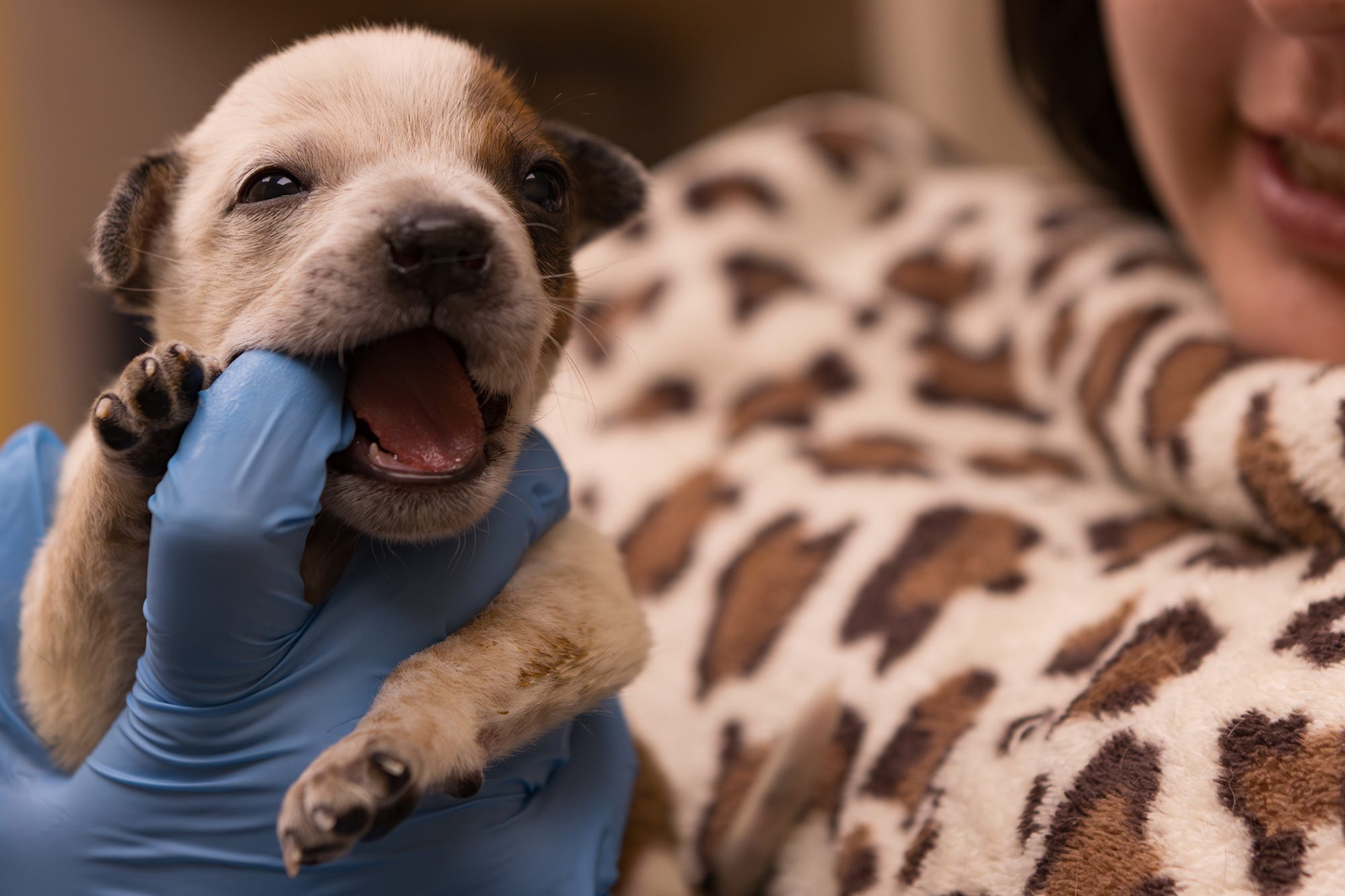
Mayor Jill McLewis and Interim City Manager Mary Gourley worked pedal-to-the-metal all week to find an alternative animal services provider for Sebastopol. At Tuesday’s city council meeting, the city joined several other North Bay cities, including Petaluma and Clearlake, that had severed ties with North Bay Animal Services (NBAS).
Sebastopol has used NBAS since July 2022 to provide animal control services, dog licensing, stray animal housing, and shelter services.
After a worrisome Sonoma County Grand Jury report last July, the city council voted on Sept. 2, 2025, to go month-by-month with NBAS, while it circulated an RFP for animal services. (Then-Mayor Zollman also ordered Police Chief McDonagh to conduct regular audits with written reports of the NBAS facilities in Petaluma.)
In response to its RFP, the city received two bids: one from NBAS for $18,900, and one from the Humane Society/Sonoma County Animal Services for $68,174. In November, the council rejected both bids, asked for a new RFP, and continued month-to-month with NBAS.
Recent media reports about deplorable conditions at the NBAS shelter in Clearlake put the issue on the front burner once again.
The staff report to the city council echoed the Grand Jury report’s concerns about NBAS:
Non-compliance with state laws, such as failing to sterilize animals before placement in foster or adoptive homes.
Not effectively managing dog licensing and renewals (rates far below averages).
Failing to offer required rabies vaccination clinics.
Not consistently submitting bite reports to the county health officer.
Unsanitary shelter conditions (e.g., overpowering odors, poor ventilation) observed during jury visits.
Lack of proper board oversight and underfunding/overwhelm leading to substandard care.
Putting together an alternative to NBAS took up much of Gourley’s time for the previous week.
“We did do our due diligence, trying to find every available solution to try to do this,” she said, noting that she’d interviewed animal agencies and rescues from Marin to Mendocino County.
Here, Gourley explained, was the solution she and the Mayor came up with: “Award a three-month interim contract with the Humane Society of Sonoma County for sheltering services, and then authorize the city manager to extend that month-to-month until such time that we can bring a contract back for sheltering as well as field services with the Sonoma County Animal Control…Authorize the Police Department personnel to do animal licensing in the interim, as well as transporting the animals to the Humane Society of Sonoma County. Terminate immediately the North Bay Animal Services contract and then approve the budget amendment resolution for the sheltering services.”
The reason that the Sonoma County Animal Control portion of this plan will have to be returned to council at a future date is that it would have to be approved first by the Sonoma County Board of Supervisors, which in the light of the exodus from NBAS, is seeing a flood of requests for services from Sonoma County Animal Control.
A combination of services from the Humane Society of Sonoma County and Sonoma County Animal Control is exactly what was offered in previous RFPs from those organizations in 2025. In the past, the council quailed at the expense.
According to Gourley, the steep price tag (first $78K, then $68K in a later RFP) was based on the care of 100 animals per year.
“My understanding, based upon the [police] chief’s estimate, is that we go anywhere from 30 to 40 animals per year, so about two to three animals a month that we transfer for sheltering services, and the Humane Society has graciously agreed to work with us on that cost.”
That sounds promising, but both Humane Society representatives mentioned in public comment that the last time they had a contract with Sebastopol—namely, for the 20 years before Sebastopol switched to NBAS in 2022—the number of animals ranged from between 80 and 100 per year.
Councilmember Stephen Zollman, who is a Humane Society volunteer, has been urging the city to move away from NBAS from months. “I’m really, really glad that this is where it is now—to hopefully have a vote to immediately terminate all relationships with NBAS,” he said. “Because if you saw the animals that I saw, those dogs and the puppies infected by Parvo and the volunteers and the staff that worked around the clock to try to save their lives, you too, would want to break ties with that agency as soon as possible.”
Zollman clarified how the new process would work in the interim until the Sonoma County Animal Control portion of the deal was approved: “If one of our residents were to be on vacation and their pet dog was roaming around—if we follow your recommendation and go with it tonight—anyone could call our police chief; they [the police] would come out to a neighborhood, pick up the dog, put it in their air-conditioned van and safely transport them over to the Humane Society, where they [the animal] would be vet-checked and looked after for however long they need to be looked after, until their owners could come home.”
Councilmember Maurer noted that this proposal would only cost an additional $7,855 from the General Fund, because the city still has money left over that was previously budgeted for NBAS.
In public comments, most of the speakers (many of whom were out-of-town animal rescue folks) supported the move away from NBAS, but frequent commenter Robert struck a note of caution or, as he put it, “a sanity check.”
“It looks like, from the staff report, that it’s going to be somewhere around $3,226 a month. Multiplying that out, that’s about $38-39,000 a year for 35 to 40 animals. So, in essence, we’re paying about $1,000 per animal, and that doesn’t include transportation. So, this is going to be one of the more expensive things in the city budget. Does this make sense? Is the owner of the animal responsible for any costs associated with the care and feeding of their animal? And what if the animal is picked up an hour after it’s been taken, is it still costing the city $1,000 per animal. I’m a little confused about how this cost structure works.”
No answers were forthcoming, but details of the contract still have to be worked out.
In the end, the council voted 5-0 to terminate the contract with NBAS and contract with the Sonoma County Humane Society for three months with a budget adjustment of $7,855.
Like too many City Council decisions, this one was made without thoughtful consideration, more emotional reaction than deliberation. Councilmember Zollman declared that police can transport animals, and it became the law of the land. Did he think through the logistical and liability concerns? Did any council members interrupt the rush to judgment and ask for a plan before voting?
First, there is legal and civil liability. California requires safe handling practices during transport—minimizing stress and injury and using proper restraint techniques. That means carriers in the vehicle, appropriate leashes and capture devices, and separation of aggressive or sick animals. It also requires proper training to recognize illness and capture animals in ways that minimize injury.
If there is a civil suit, each involved officer will be questioned about the training received and equipment available. Do our officers have that training and equipment? No one on the City Council asked.
The Council consulted its insurance carrier about liability associated with distributing NARCAN—yet gave not even a moment’s consideration to the risks of handling animals.
Next is personnel risk. It is reasonable to assume some animals encountered may not be vaccinated against rabies. An officer without proper equipment who is bitten means a city employee is injured potentially seriously. it’s added liability to the city and one more officer on sick leave.
Next are the tradeoffs. Our police already face violent and property crime rates among the highest in the county. Council decisions over the years have also created a homelessness problem that has been reported to consume up to half of the patrol time available. With current staffing, it’s a challenge to keep even two patrol cars on the street at once—and one exists to back up the other.
The Humane Society is great—no question. But that’s exactly why the city should have built a clear, workable process with defined responsibilities, training, equipment, and funding before voting to shift transport duties to police even temporarily.
It appears from comments from the Humane Society that they could have negotiated a different contract that addressed the fact that the Humane Society is planning for 100 animals and recent history suggests 30-40. That was the reason the last contract was rejected. The Humane Society said they would look at it differently if the numbers were lower. They are still sure it will be 100. They may be correct.
It appears if you release your dog, the police will pick it up, take it to the Humane Society where it gets a vet exam, vaccinations, grooming and shelter with lots of play toys. All paid for by the city and its taxpayers. 100 may not even be a high enough number once people figure it out.
The Humane Society proposed costs based on 100 animals the last time and said the new bid would reflect the lower number. We again are getting a high bid and a public comment from the Society that they could restructure the contract. Again, the city is going to negotiate. Negotiate what you just approved the contract and the cost without blinking an eye?