
By Dennis Bolt
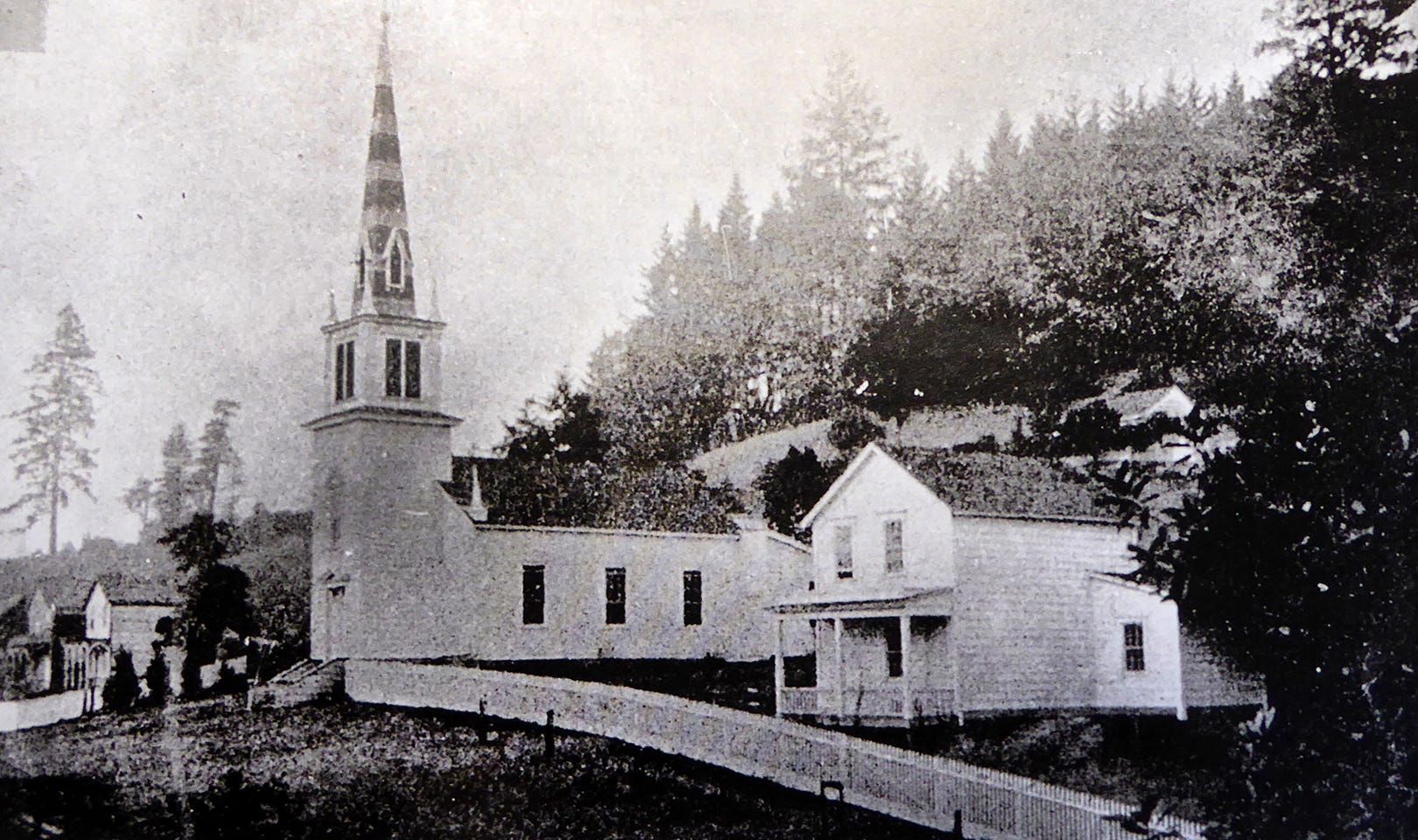
The town of Occidental had a unique beginning in 1876. While many pioneer communities started with a saloon or hotel, this settlement—at the summit of the newly established North Pacific Coast Railroad—began with a church.
In the late 1870s, two men—William “Dutch Bill” Howard and Melvin Cyrus “Boss” Meeker—competed for the position to lay out the growing town around the newly arrived rail depot. Howard was a colorful Danish immigrant attracted by the Gold Rush who was the first to settle in Occidental. Meeker was a devout Methodist who ran a lumber mill near town. In 1875, Meeker donated the land and led local residents in building the church for $750, using lumber from his mill. The church became the first building in town, a beacon on the hill above the burgeoning town.
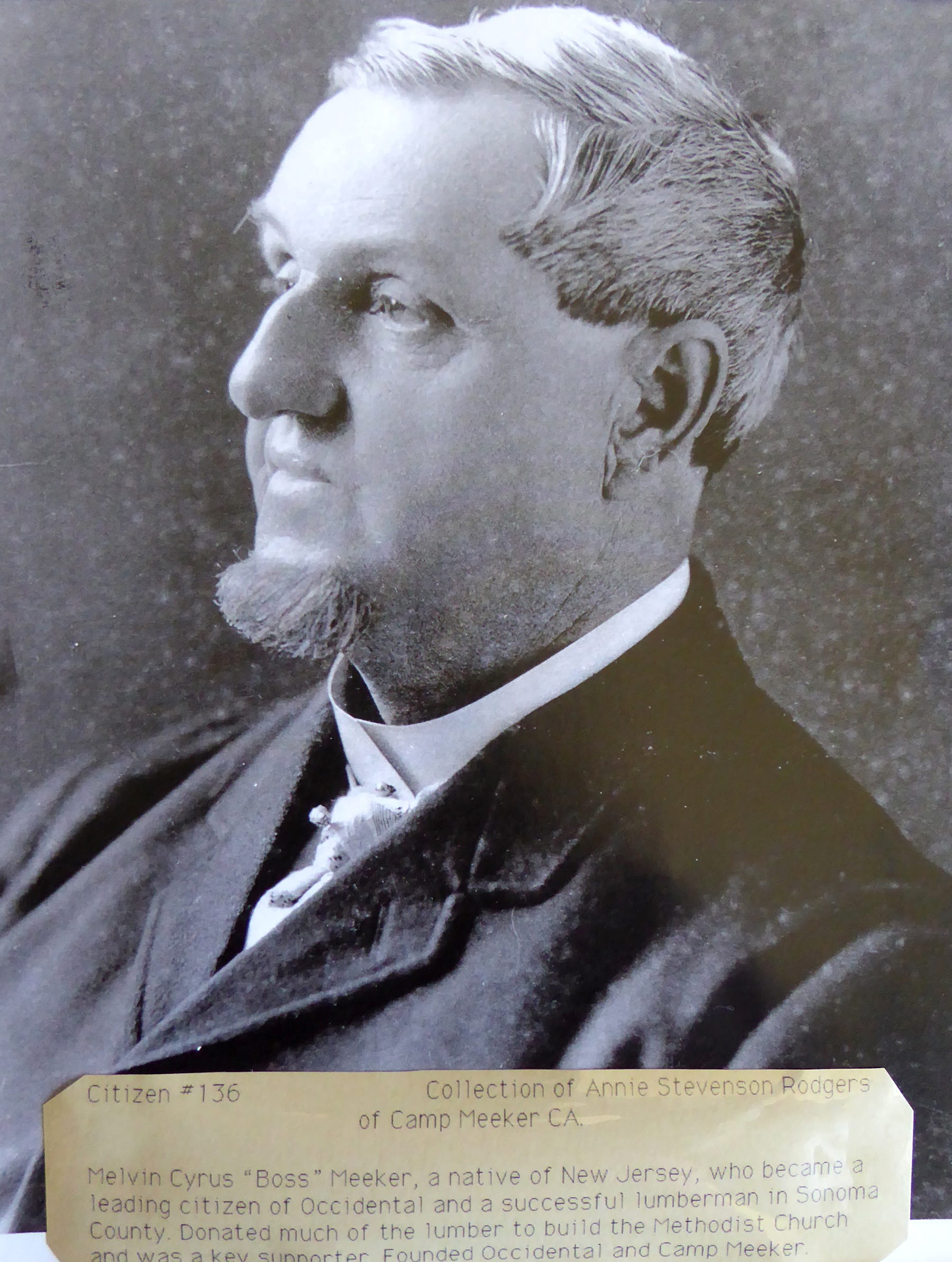
M.C. Meeker boasted in his autobiography, “The Town of Occidental owes its foundation and name to me, I having laid it out and built most of the first buildings—the church first, the hotel next, then stores and cottages.”
On August 6, 1876, Pastor J.W. Bluett led the first service in the new Episcopal-Methodist church. Forty-two “communicants” and 60 Sunday School students were recorded. The church was formally dedicated in 1877, with the congregation singing “All Hail the Power of Jesus’ Name.” During the following decades, itinerant Methodist preachers on horseback helped serve Occidental and neighboring communities. Names of members at the time read like a “Who’s Who” of Occidental: Chenoweth, Kingwell, Craig, Lapham, Meeker, and Sturgeon.
Twelve years after the church was built, a 75-foot bell tower was erected in 73 days. The origin of the bell still rings a humorous note to this day. Meeker’s brother A.P. won the $700 needed to pay for the 48-inch iron bell in a wager on the controversial 1888 presidential election. Meeker backed Republican challenger Benjamin Harrison, who defeated Democratic incumbent President Grover Cleveland. The loser of the bet was Patrick Connolly, a local Democrat. Meeker would go on to chide Connolly by saying that every time the bell rang he could “hear his money ring.”
Occidental grew into a thriving railroad and lumber town by the turn of the 20th century. Beyond timber, the railroad allowed local farmers and producers to rapidly ship goods directly to San Francisco. The trains regularly hauled wine, charcoal, tanbark, fresh produce, Christmas trees and dairy products. The railroad turned Occidental into a major recreational destination as San Franciscans could take a ferry to Sausalito and ride a train straight into the redwoods for weekend retreats along the Russian River.
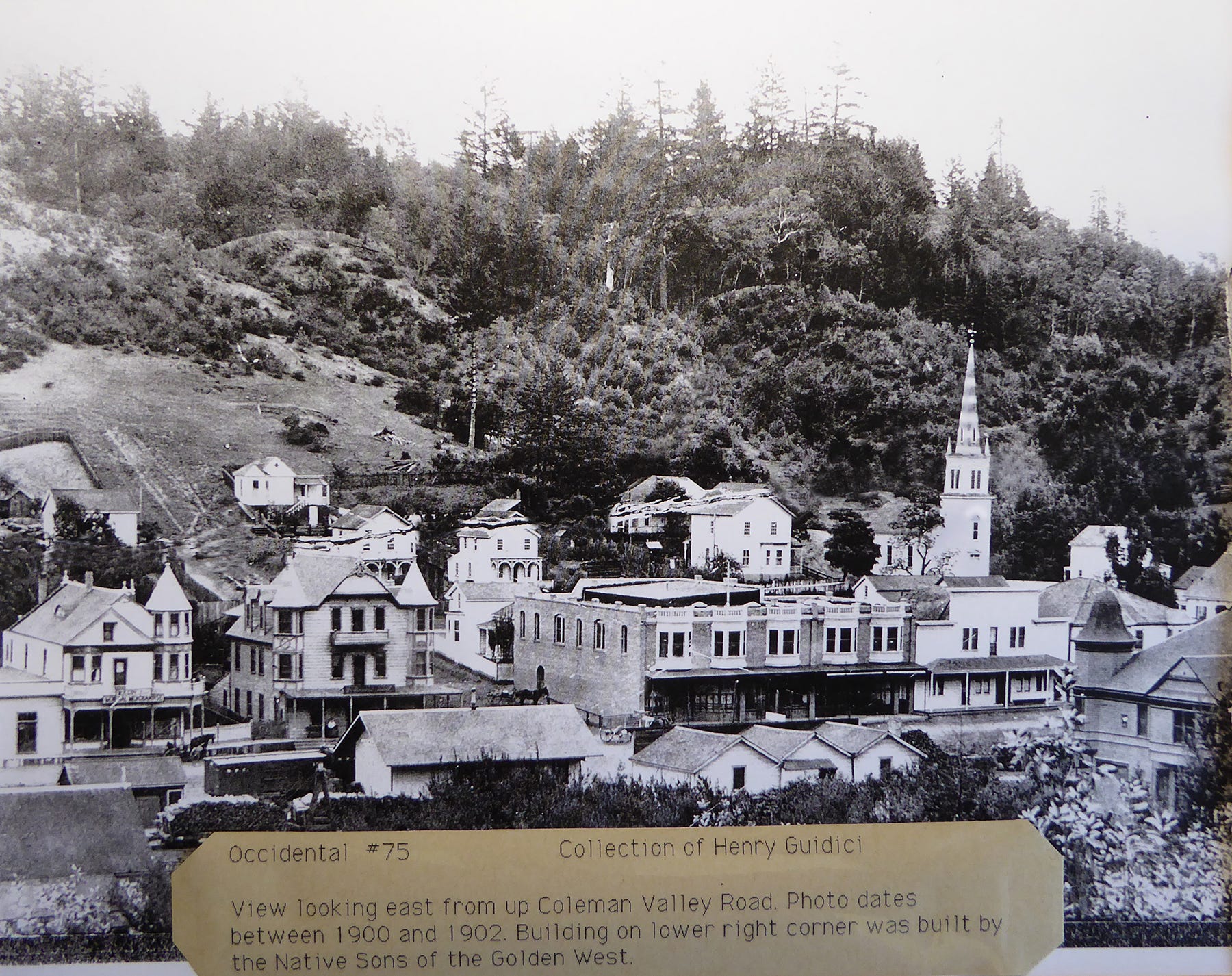
While the 1906 quake badly damaged Santa Rosa and Sebastopol, Occidental’s flexible redwood buildings survived remarkably well. However, the church’s parsonage had to be demolished, and the tall steeple was considered unsafe and was replaced by a dome in 1907. To rebuild San Francisco, the town’s sawmills ran at maximum capacity to funnel millions of board-feet of redwood south.
An important social part of the community in the early 20th century was the Methodist Ladies Aid Society, led by Ethel Coy, which raised money for the church and strengthened the church’s bonds with the town. But Occidental was changing. By 1930, automobiles and trucks had replaced the railroad, and the depot soon disappeared.
In 1955, as the church celebrated its eightieth anniversary, Ethel Coy (married name: Luce)—a member since 1893—gave a historical reading and lamented: “How about the next 80 years? Who will carry on? The timber is gone, no mills, the railroad gone for more than 30 years. But this church more beautiful than ever with bright fresh paint, new carpet, electric lighting, good heating, a bell that rings out the call to service. Looking ahead, the prospects are for better years in the eighty years to come.” Her thoughts would foreshadow the tumult that would befall the area and the nation in the late 1960s. By 1972, the Methodist congregation had dwindled and held its final service.
The church’s story might have ended there. In 1974, just four hours before the building was to be sold to Freestone antiques dealer Trudy, American Missionary Fellowship (AMF) missionary and Mt. Gilead Camp founder Rev. Dwight Jungkeit stepped in to rescue it by proposing AMF buy it from the Methodist Church. He said, “We don’t have any money, but if you can give us time to build up the ministry, we’d like to see the building used as a church.” He led the community to eventually purchase the church for $4,000 in 1976, far below the proposed $19,000 sale price. That summer, the first rebuilt ministry ran a Vacation Bible School that welcomed 32 children.
Rev. Linden Heath, with wife Janet and daughter Janlyn, came to the area in 1975 and became part of the renewed congregation, serving as full-time pastor in the fall of 1976. On August 6, 1976, the church celebrated its centennial as well as its dedication as Occidental Community Church, a non-denominational Christian congregation committed to worship, education, and outreach.
The 1980s were a decade of renewal with a new steeple and improvements all over the 100-year-old building. New ministries followed, including a preschool, youth programs, and the church’s most important local mission, Pleasant Hill Christian School in 1982. Janlyn Heath and Mary Jo Kinser became the first teachers to lead the now-70-student TK-6th grade school
Pastor Heath retired in 1993, and Rev. Peter Munson became full-time pastor in 1994. Pastor Munson served OCC for 21 years, the longest tenure of any pastor in Occidental. When he stepped down in 2015, the church found a great leader in longtime local pastor Rick Hahn.
The last decade has shown the church’s long tradition of adaptation. During the COVID-19 pandemic, church leadership used daily emails, recorded sermons, outdoor worship at the school, and livestreaming to keep the congregation connected.
In 2022 Pastor Hahn retired, and Rev. Daniel Flores and his young family came to minister to Occidental.
During its first 100 years, the Methodist Church had more than 54 pastors serve Occidental. But since 1976, the current congregation has been blessed with only four full-time pastors, creating a strong bond with families and community.
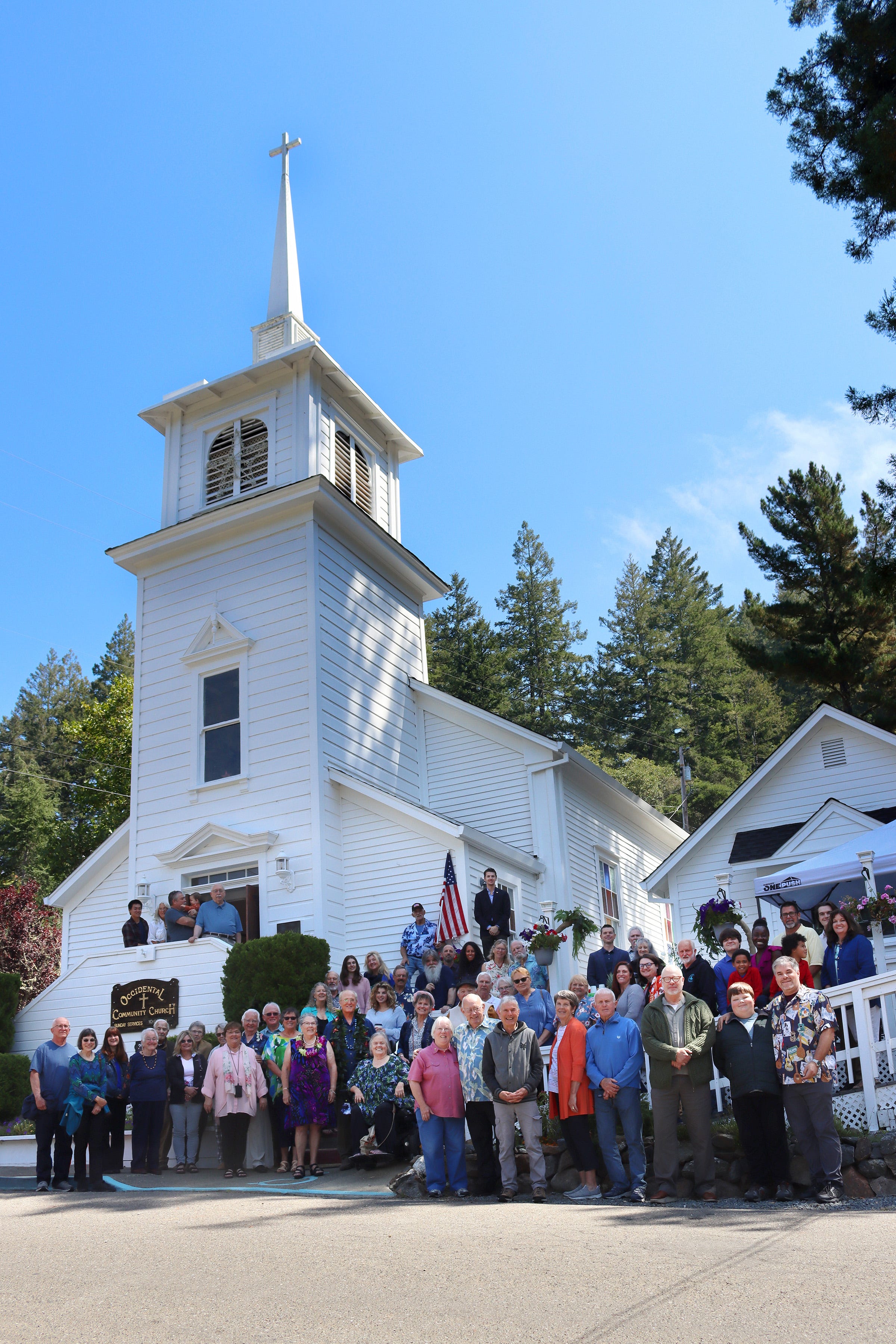
Even after 150 years, founder M.C. Meeker’s words from his autobiography ring true: “Seek first the Kingdom of God and His righteousness and all else will be added; use common sense, and be diligent in all you try to do; reverses will come; don’t be discouraged; thank the Lord that you live, and press on.”
Join Occidental Community Church in celebrating its history:
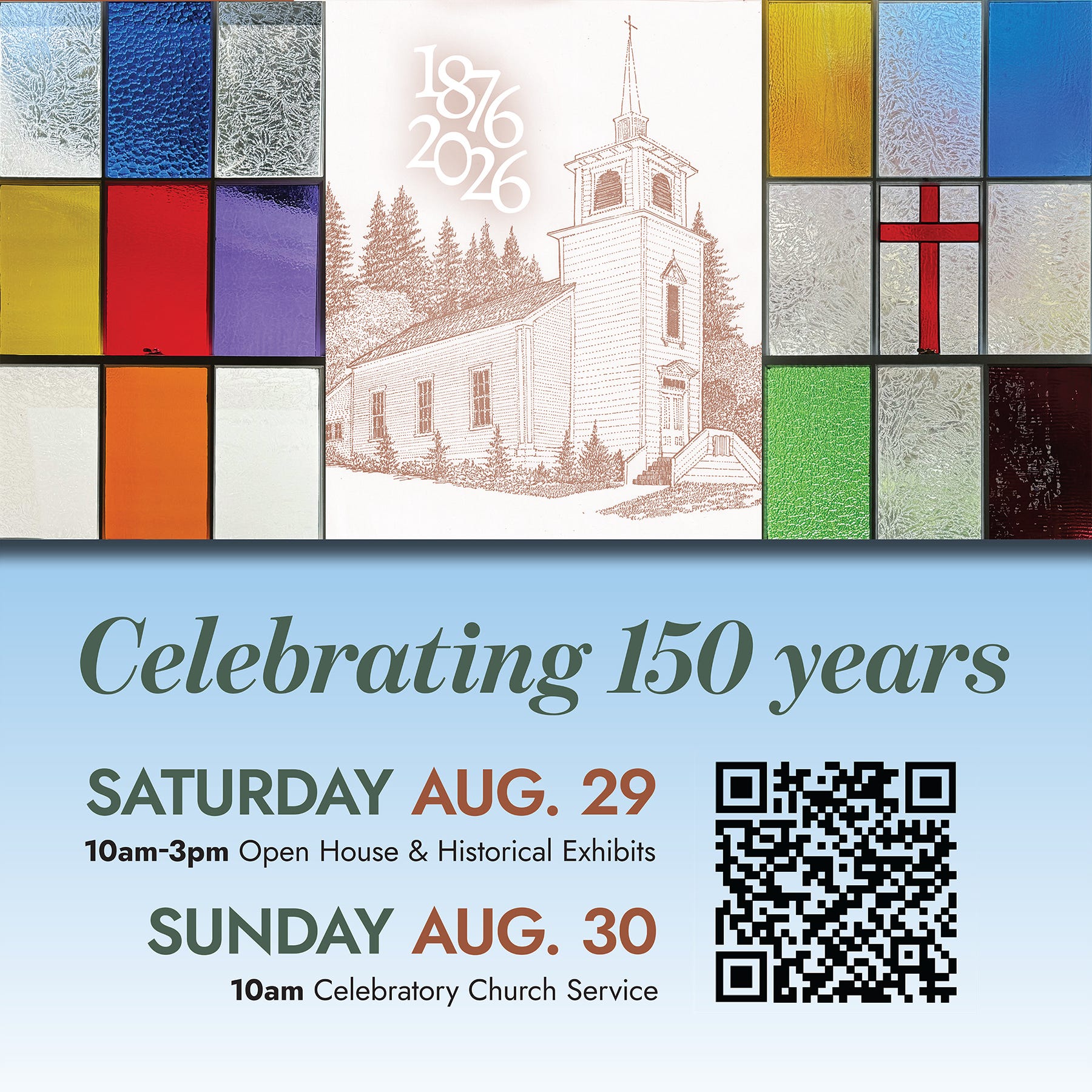
Saturday, Aug. 29, 10 am-3 pm: Open House, Historical Displays
Sunday, Aug. 30, 10 am: Special Commemorative Church Service
The church is located at 3637 Church Street, Occidental, CA 95465. More info: occidentalcommunitychurch.org.
This article was researched and compiled by Dennis Bolt, church member, historian and Pleasant Hill Christian School Board Chair.
Great! Thanks. My memory of the church stems from the years when it served as a site for Redwood Arts Council chamber music concerts: very pleasant ambience, good acoustics, hard seats.