

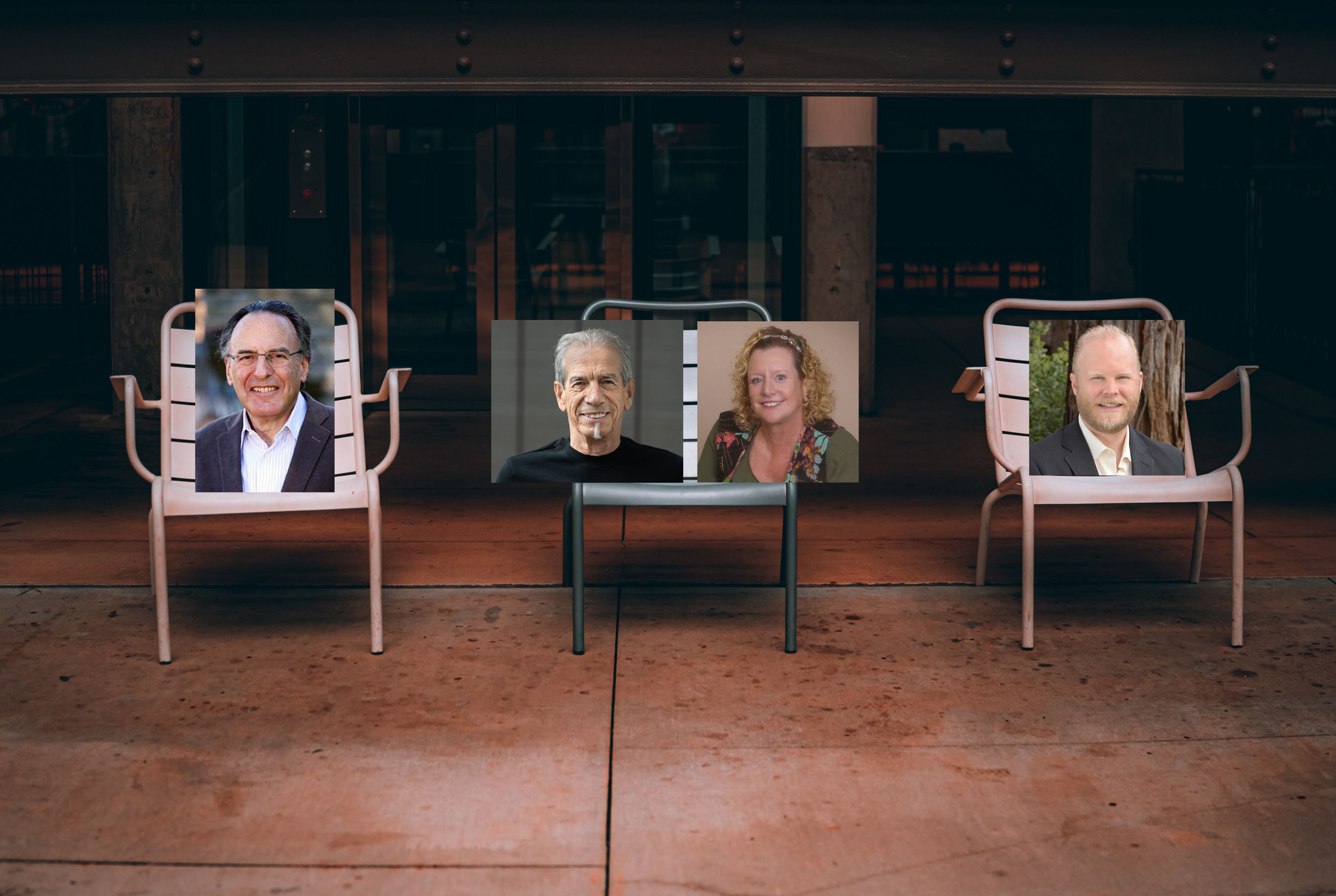
Perhaps voters already had their minds made up and had no questions for the West Sonoma County Union High School District (WSCUHSD) board candidates. It’s also true that only one of three seats is contested. That might explain why nobody came out this past Tuesday to the candidate forum at El Molino Library, organized by the Sebastopol Times. However, the three candidates were there along with eight dedicated district employees and a board member, and we got to talking education.
The candidates included:
Dani Sheehan-Meyer
Lewis Buchner
Dennis Rosatti
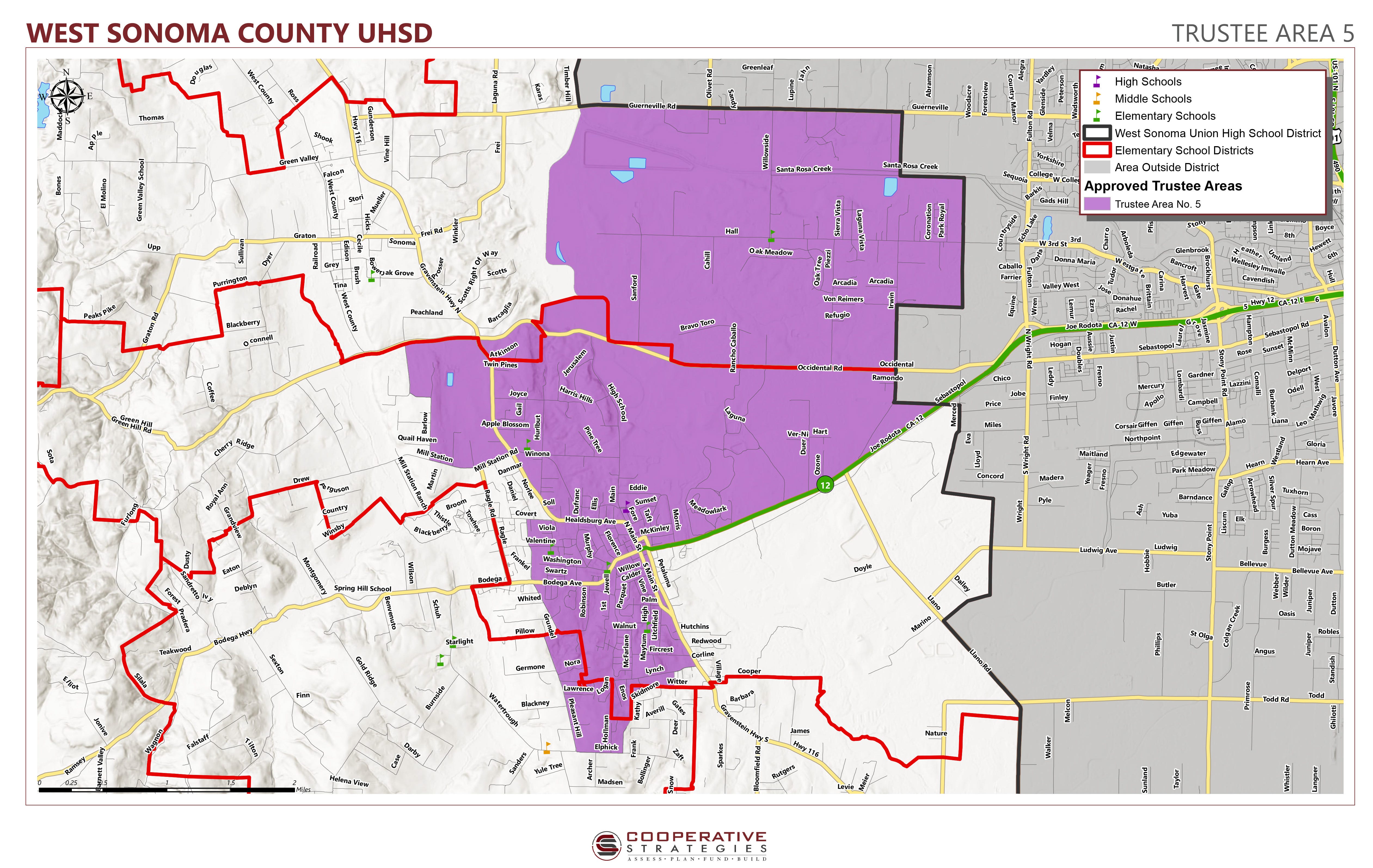
Buchner is the incumbent, having served one term, and he is running against Dani Sheehan-Meyer in Area #5, the area that includes much of Sebastopol. Dennis Rosatti is running unopposed for the Area #3 seat, which represents south Sebastopol, and Hal Kwalwasser is running unopposed for the seat in Area #1, which represents most of far west county north of Graton. He was unable to attend the candidate forum, but he provided information which we’ve included in this article.
So, although I planned for the forum to be an opportunity for the public to ask questions of the candidate, I instead engaged in informal conversation with the candidates to learn more about who they are and why they were running for the school board. I share their comments below.
Trustee Area #5: Buchner versus Sheehan-Meyer
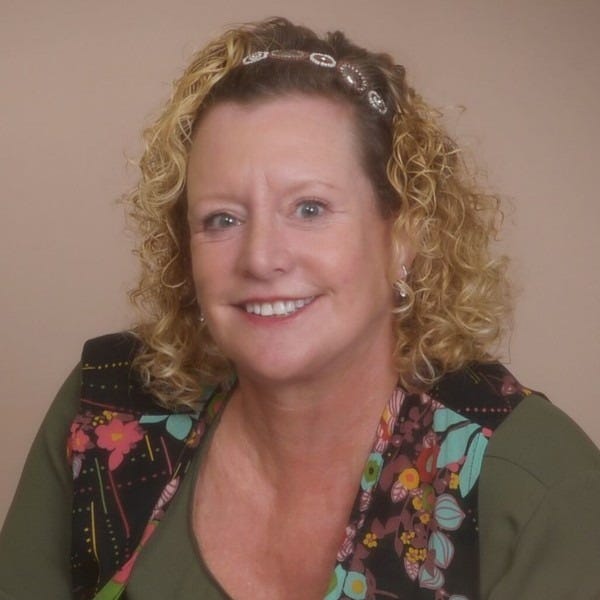
Dani Sheehan-Meyer said that most of the work she has done was in marketing. She was involved in the nonprofit Friends of SMART, doing advocacy work for the SMART train in the community. “Then Measure B passed, providing 29 more years of funding.” She realized that her work there was done.
Sheehan-Meyer’s grandson is autistic, and her daughter-in-law was frustrated with special needs programs. She encouraged her to run for the school board. “I spontaneously said, ‘Yes, sure, I’ll do that.’ She decided four days before the deadline.
“I felt there was a need,” she said. “I felt West County needed more of a voice. It’s not that I’m the representative of that voice, but I understand it.” That was part of the reason she committed to running.
School board incumbent Lewis Buchner said that he’s “a big believer in localized democracy.” He said that like a lot of people, he’s “extremely worried about the fate of democracy in this country.” But he added, “There’s not a whole lot I can do about that, but I can do this. This idea of just working, putting energy and time and effort into something very, very hyper local is a way of addressing the macro problems that we have.”
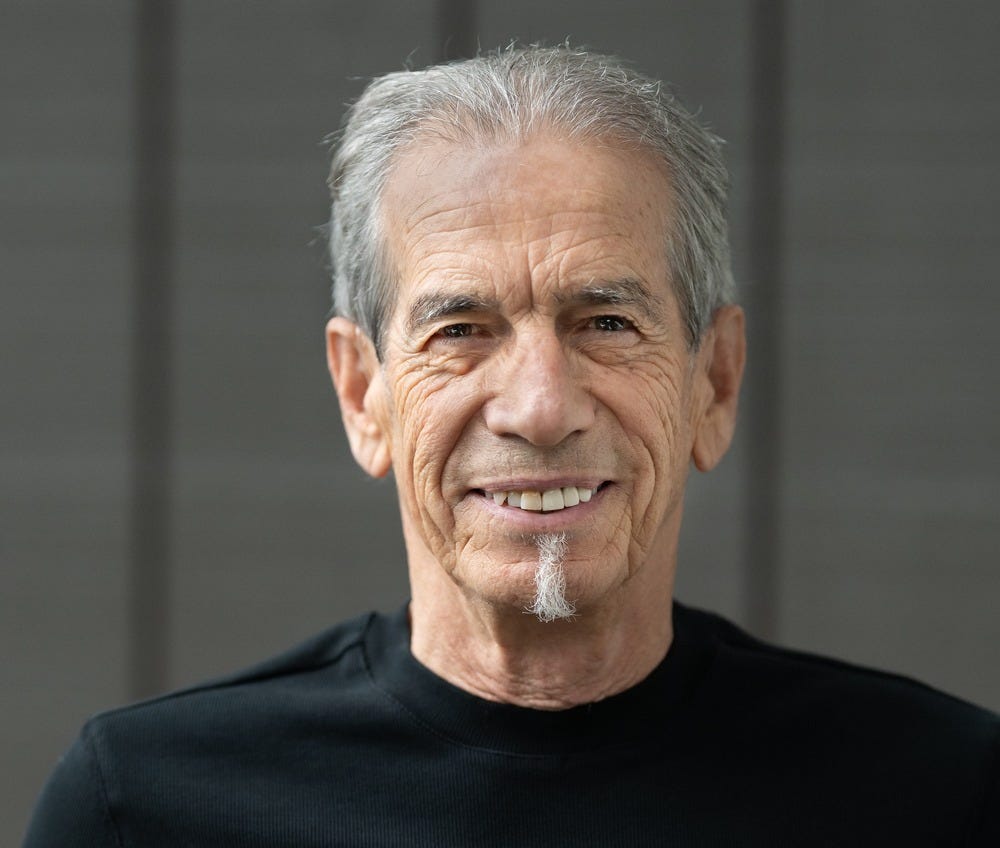
Buchner said to Sheehan-Meyer: “I’m really glad that you decided to run.” She replied with a jab: “Your wallet’s not happy.” Buchner conceded that yes, he had to spend money on his campaign, which he would not have had to do if he were unopposed.
“Lewis is a great candidate,” said Sheehan-Meyer. “If I wasn’t running, I’d vote for him.”
After that exchange, Buchner continued: “I’m a blue-collar tradesman kind of person. I now have a small design cabinet business. Luckily, my wife’s a very talented licensed interior designer. We have a shop in Penngrove with three employees, and we live on Pinecrest in Sebastopol.” He explained that he once had a much larger shop in San Francisco, and he had “to learn about budgets, legal stuff and management theories.” He said that training was a “very powerful way of looking at making decisions with a group and getting input from everybody involved in the decision. If it’s done properly, you always end with a better decision.”
He said that his three-and-a-half years of experience on the school board was the one thing that differentiated him from Sheehan-Meyer. If nothing else, he’s been able to learn some of the acronyms — “it’s an acronym-filled world.” He said that the way schools work is fascinating to him. “I’m kind of getting it now, and I’m learning more and more about it as we go on.”
Buchner said that “The board’s job was, first of all, to remember that ultimately everything we decide has to be what’s in the best interest of the students and to not get snowed by the union, or the superintendent, or other board members.” He said the board needs “to try to stay aligned with the big goals of the District.”
Trustee area #3 - Denny Rosatti
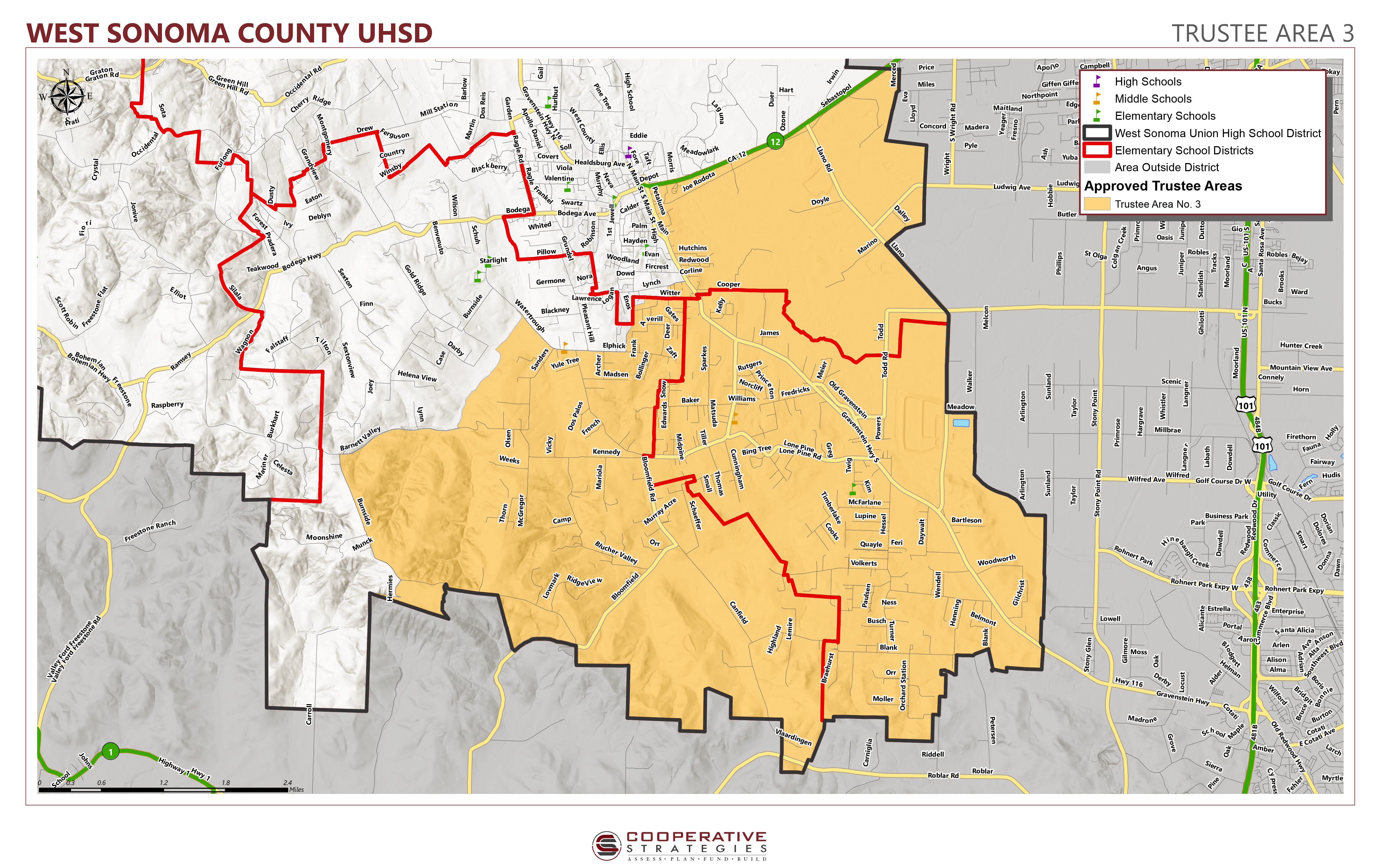
Denny Rosatti has lived in Sonoma County about 25 years. “I spent my first ten years in Camp Meeker/Occidental, where I had the privilege and honor of being on the Harmony Union School Board for six years, one year as board president,” he said. Rosatti is a local political consultant who has worked on several campaigns for ballot measures in the North Bay. He will take the seat in Area #3 held by longtime trustee, Jeanne Fernandes, who is not running. Area #3 runs along Gravenstein Hwy South below Highway 12 and then from Burnside Rd on the west and into parts of Santa Rosa on the east.
Rosatti said he was motivated to run because of the difficulty many boards and councils have in finding people to run. “Seeing that phenomenon, I was reflecting on my own past service and knowledge. I have kids in the district. Right now, my oldest daughter is a junior, and my youngest is in 6th grade. So the plan is for her to go to Analy at some point. It felt like the right thing to do. It’s an honor for me to step into this role. But it’s a little interesting that there was no one else that filed to run.”
Rosatti added that the school board job is “really important and difficult to do.” How are volunteer board members supposed to know all the technical items in a school budget? He said that he’s a curious person so he “can’t wait to sit down and find out more about the budget.”
Rosatti’s wife and partner, Kellie Noe, served on the WSCUHSD board for 16 years. “I did see a lot of the things happen over time so I’ve got a little bit of institutional history there, which is good or bad depending on your perspective. I’m really excited from what I hear from my own daughter, just in her experience about where things are at.”
Rosatti said that a board member must “remember that we have to listen to the community. We have to be conscious of voices in the room as well as outside the room when we’re making our decisions. I’ll do my best to be a good steward of our public assets and dollars and keep the students first in mind as we make our decisions.”
Trustee Area #1 - Hal Kwalwasser
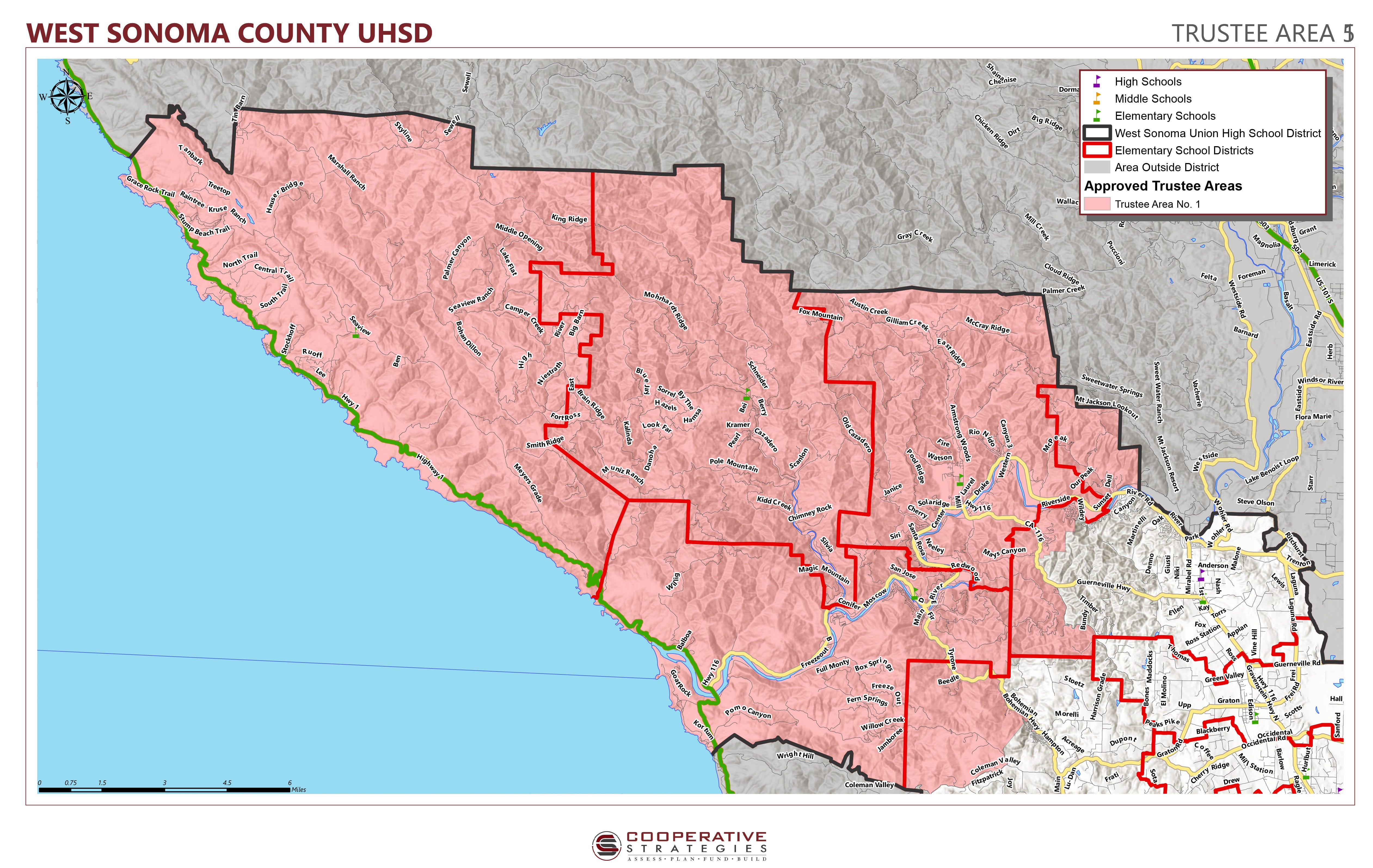
Hal Kwalwasser is running unopposed for the Area #1 seat that includes Guerneville and out to the coast. Kwalwasser was unable to participate in the forum. “I had previously committed to help oversee voter protection efforts in Michigan,” he wrote.
As a 19-year-old VISTA volunteer in Mingo County, West Virginia, Kwalwass did some teaching. He said it was “eye-opening and challenging.” Then he went to Yale Law School, practiced antitrust and trade law and eventually became the Deputy General Counsel/Legal Counsel for the U.S. Department of Defense.
A former client of his, Roy Romer, became Superintendent of the Los Angeles Unified School District and asked Kwalwasser to be his General Counsel. “LAUSD was – and still is – the second largest school district in America, and I learned a great deal about what to do – and what not to do – when educating students. After I left the District, I put that learning to use, writing and consulting, including authoring a book on education reform: Renewal, Remaking America’s Schools for the 21st Century.”
“After two decades in education, I have concluded that many districts get overwhelmed by issues that do not really enhance students’ education,” he wrote. “That is a tragedy for several reasons, the most important of which is that to continue to be good you always should strive to be better. Constantly focusing on how to improve fosters the kind of self-awareness that makes teachers and administrators want to do the best for all their students every day. Doing that takes an openness to new ideas and time and organizational space to focus on them, both of which I’ll work to ensure.”
He said that he will “try to listen to students, parents and teachers about what is working, and what is not – and then identifying the things that we can do to improve what we do.” He added: “I think most of you would be surprised at the number of relatively low-cost ideas whose implementation can have a profound effect on student outcomes.”
Do you have skin in the game (i.e., kids/grandkids in the school district)?
Because Denny Rosatti had mentioned that he had one daughter at Analy and another who also might go there, I asked the other two candidates if they had or have children in the district.
Dana Sheehan-Meyer said she had two children go through Harmony and Salmon Creek and then to El Molino. Her husband, Fred, also had two children graduate from El Molino.
“Now, my graduate son is married to a graduate daughter, and they have an autistic 8-year-old. He’s nonverbal. He has special needs, and he doesn’t like to eat lunch with the other kids. He’s perfectly delightful and very handsome, of course. He will kind of work his way out of this.”
She and her daughter-in-law were some of the people in the community confused by the District’s proposed exit from the West County Consortium, and it worried her that her grandson might not get what he needed.
Lewis Buchner said that he had a daughter at Analy, who graduated last year. “She was really why I ended up on the board. She’s biracial, and when she was in middle school, there was a lot of language issues. She was getting called the N word in middle school, and the staff didn’t know what to do about it.”
He thought the problem wasn’t the people but their lack of training in how to deal effectively with these problems. “These are really good, well-intentioned educators, but they had no training. We got together with some other parents, and we came up with a DEI program at the school. At that time, we had a new superintendent coming on board, and we were very pleased to find out that he was actually very supportive of this idea. We ended up with the first DEI committee, now the ABC committee.”
On the future of the West County Consortium
In the August board meeting, a proposal was on the agenda to have the District exit from the West County Consortium at the end of this school year, even though its contract to manage the Consortium ran through 2028. The Consortium administers special education programs for elementary and middle schools in West County, and the District has overseen it for many years. The District’s proposal to exit the Consortium caused the public to come out in opposition to the move, and Dani Sheehan-Myers and her daughter were among those questioning the move.
Buchner admitted that “the board did a really lousy job of communicating around this issue.” He said: “Analy doesn’t have any students in the consortium because we’re managing all of those special need kids in-house with our own resources. Yet, we’ve still been in the position of managing this other entity that’s been a little bit hard to manage, and there’s a lot of different cooks in the kitchen. We were struggling to manage something that’s not really inside of what we need to do to take care of our own kids.”
He also admitted that “it sounded like we were going to stop servicing special needs kids. The community turned out as they should, with a lot of angst, asking how could you possibly cut services to these poor kids that are the most needy in our community. This is not at all really what was happening, but it sounded that way.”
Buchner said that “the public input was valuable, and we were trying to push it too fast. I think we do need to (honor the contract) through the 2028 date.” He concluded: “We didn’t do a good job of communicating.”
“The board did do a poor job of telling us what was going on,” said Sheehan-Myers.
On the problem of declining enrollment
For several years, the district has operated with a structural deficit, meaning that it spends more than what it receives in revenue, and uses its reserve fund to make up the difference. At the start of the year, the district had good news in that its deficit was considerably less than projected for 2025-2026, and the reserve fund also grew. But even after making painful cuts to staff last spring, the budget deficit is an ongoing concern. The majority of its revenue comes from the number of students enrolled in the school, and the district faces declining enrollment, like almost all districts in California. I asked the candidates to discuss its impact.
“Our strategy of wanting to be a destination district and attracting transfers in is a good strategy, “said Buchner. “It’s a little bit competitive, but… the better job we do of having great teachers and great programs and diverse programs, the more we will somewhat address the loss of very local students. But it’s not a forever solution. We just have to right-size (the school).”
Sheehan-Meyer asked if the school could recruit more from Santa Rosa schools. “There’s a number of students that might want to come to West County, as opposed to where they are now.”
Superintendent Chris Meredith jumped in to explain that the district already gets about one-third of its students from Santa Rosa and other areas in the county. He also said that “it’s not necessarily something we can count on,” noting Santa Rosa City Schools had denied out-of-district transfers over the last year.
“A school has to be nimble these days,” said Rosatti. “You can’t just be in a silo on your own. You got to make sure you’re integrated into the greater community, if you will. We’ve got 10 elementary school districts. To me, how do we capture as many of those butts in our seats as possible, to get them to come to our ninth grade, right?
“The district has done a good job of marketing and bringing in others from outside because that’s what you got to do today. Crazily, elementary school districts within our territory are doing the same thing to each other.”
Rosatti said he’s a believer in consolidation of school districts, but only if the State covers the costs to make it happen. (There are 39 districts in Sonoma County.) But there’s too big a financial hit on the districts to consider consolidation. “Otherwise, who in their right mind, with declining enrollment school, is going to go forward and spend money (to pursue consolidation)?” He added that consolidation “can be really difficult and painful, and it can also be really fruitful if it’s done the right way.”
Special shoutout to the District employees who attended this forum. It says a lot about them and how much they care for good public schools.