

A new sign at the eastern entrance into town says “There’s no place for hate in Sebastopol.” It was a response to the hateful graffiti that was spray-painted on walls throughout the city on the eve of the November election, as well as the hateful words and symbols that were painted on the walls behind Safeway last spring. Of late, older members of the community, including retired teachers, have shown up at board meetings for the high school district this fall and appealed to the board and administration to address a whole list of issues including racism, sexism, homophobia, classism and antisemitism.
In January of 2023, the District formed the Diversity, Equity, and Inclusion (DEI) Advisory Committee, which later became known as the Access and Belonging (ABC) Committee. For several years, Anita Sandwina served full-time as the DEI TOSA (Teacher on Special Assignment) until she retired in the spring last year. While the name change might reflect a backing away from the practices of DEI to eliminate harm, the ABC name also reflects a broader reframing of the issues.
In May 2026, a board resolution directed “the District administration and staff to develop and implement a simple, plain-language, and sustained education effort to clearly explain what constitutes hate speech and bias; and reinforce expectations for respectful behavior.
“We don’t want students to know just that some language is prohibited,” said Analy Principal Chuck Wade at the November board meeting. “We want them to understand why it’s harmful, what it does to other people and what their responsibility is when they encounter it. We need accountability and education. When students cause harm, there are consequences.” He said that school’s leaders “need to be intentional about creating the conditions where students develop a sense of belonging, learn to value one another, and feel connected to their school and community.”
For all practical matters, this work falls on Jerod Brown, a teacher at Analy. This year, he took on the role of the Access and Belonging TOSA at Analy, which is 40% of his time. Recently, Brown followed Wade at the November 5th board meeting and gave a good presentation about his work so far this semester. “I want to stress that this is not meant to replace necessary discipline, which is required by Ed Code and Board policy,” he said to the board. “There are certain things that are not okay and there’s discipline attached to that. But we also know that doling out discipline and punishment is not enough.”
A lot of what Jared Brown does is working one-on-one with students. “Unfortunately, a lot of really well-meaning folks cause harm often through ignorance, and there’s a time and place to reintegrate them,” he said. So far, this semester he’s met individually with 62 students, some of them repeatedly.
Sebastopol Times sat down with Jared Brown to learn more about him and his role.
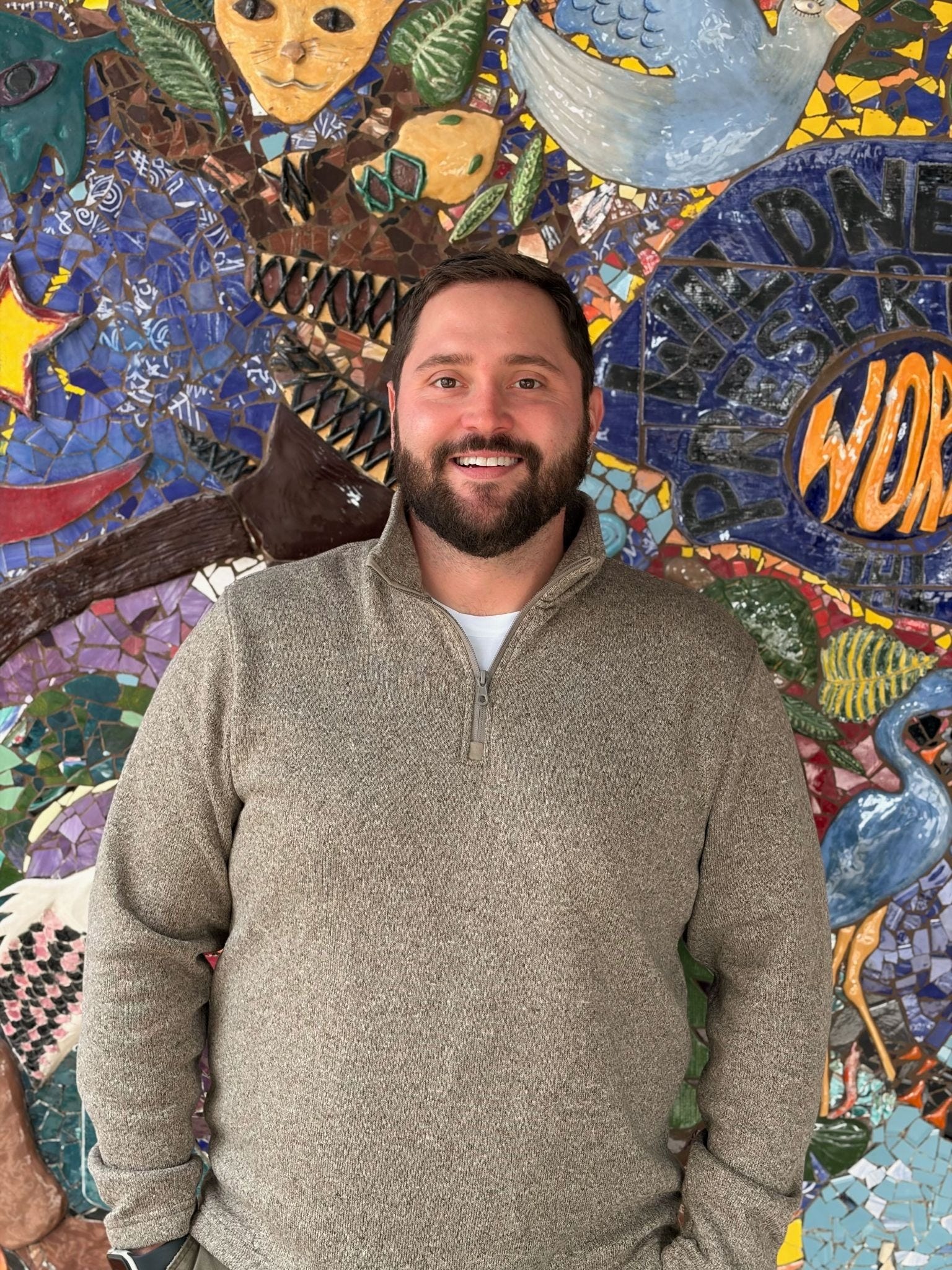
Dale: You’re new to this role, but you’ve been at Analy for a while.
Jerod: This is my 10th year teaching. I taught at El Molino. When the schools consolidated, I came here. I originally was a football coach at El Molino as well. And I also went to El Molino.
I stepped away for a couple years to do some college stuff, and then came back and was coaching and transitioned into teaching. I began in world language and English language development, so teaching English to non-native English speakers. At Analy, I’m in our world languages department still. I teach one period of Spanish, and then I’m also our activities director, so I do leadership, and then now 40% is this role as Access and Belonging Teacher on Special Assignment (TOSA).
Dale: Can you talk about why you took on this position?
Jerod: That’s a great question. If I think back even to consolidation and when that happened, I was early enough in my career, to be quite frank, where I could have pivoted and gone somewhere else but I have just felt such an obligation to serve the broader West County community. And it’s just continued. A lot of this has to do with working as a football coach and just really seeing all of those kids come in and viewing them as our team. It doesn’t matter if you’re from Sebastopol or Fort Ross. That was the beginning of just really a deep level of care for the community.
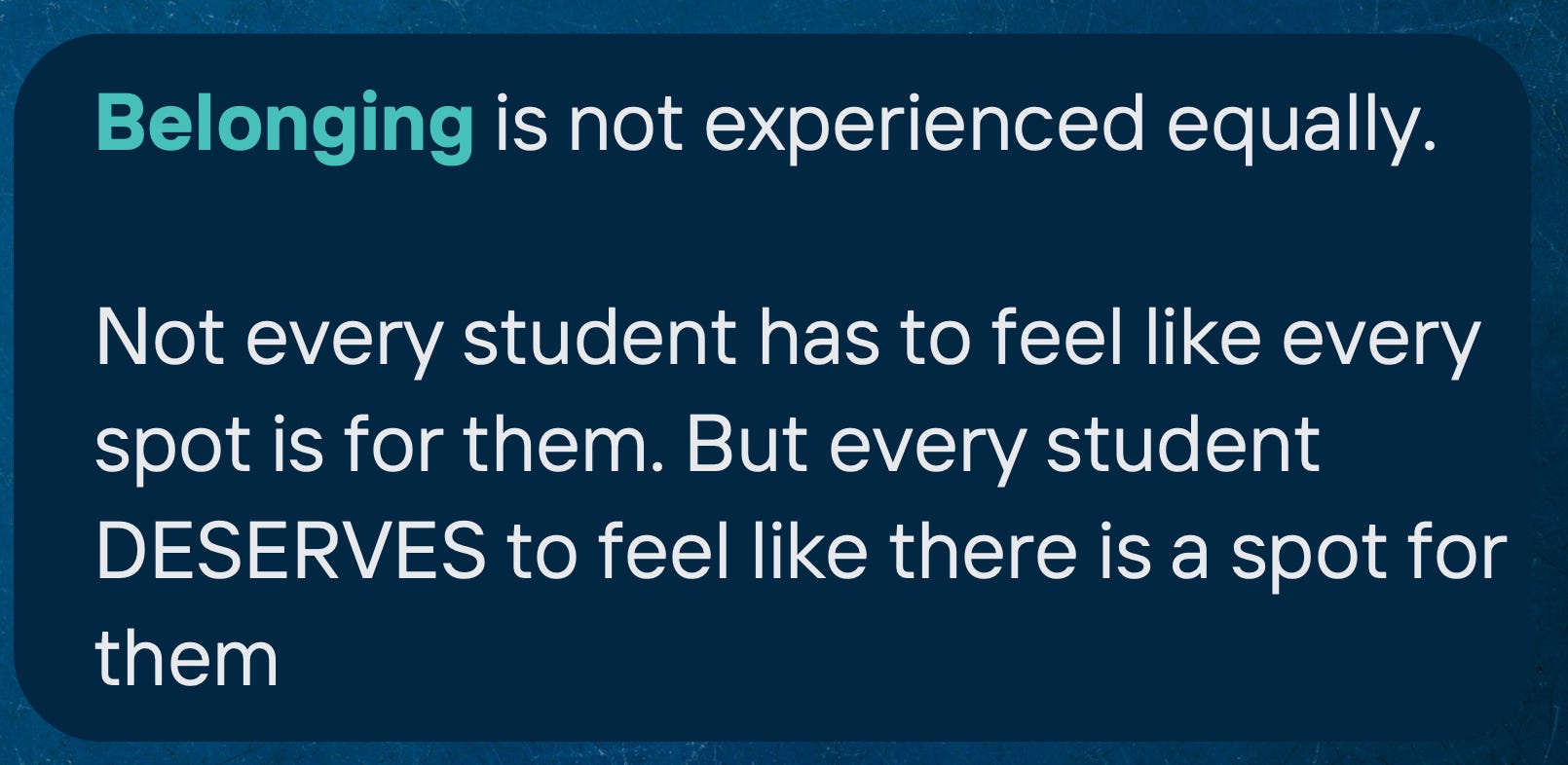
I was fortunate to have a really wonderful high school experience at El Molino. I was able to play sports and do theater and choir. I just felt like I had such an opportunity to really engage with everything I wanted to do; everything that really made me feel like I could be myself, and I just believe that our students deserve that. Post-consolidation, post-COVID, we’re improving, but there’s anxiety and fear around just being your authentic self and enjoying all the things you can enjoy and taking advantage of the free opportunities to enjoy it. So I think it’s really wanting to ensure that our students can engage here completely and authentically without concern or fear or worry of judgment.
Replacing Anita Sandwina
Dale: You replaced Anita Sandwina, who was the first person in this position?
Jerod: When Anita Sandwina was getting ready to retire, I admittedly wasn’t sure to what degree the role would continue. It’s numbers and money, and there’s a bunch of different groups of folks who have opinions about how it should be spent. It’s not lost on me that paying for even forty percent of a full-time teacher to do this work is a financial decision that’s made.
For me, when Anita was stepping out, I understood the value that she brought to our campus. When I was speaking to (Analy Principal) Chuck Wade prior to officially accepting the job, he said it’s not a stretch to say that she really saved 15 to 20 kids who we would have lost for a variety of reasons. Some were transferring elsewhere, going to different schools, and some much more severe loss than that. I feel a duty to ensure that even if it’s only 15 kids, that those kids can be here. That’s what really drove the decision to step into this role.
Dale: And you felt you could make a difference?
Jerod: I just have done so much on campus and so many different little things that I felt like, okay, I’ve got a good pulse of who and what’s going on around here.
What Belonging Means
Dale: I was talking to a parent recently whose his son is African American, and in his freshman year, some kid said something to him (the N-word), and a teammate in sports also said the same thing. He wanted to leave Analy and go to another school. He was saying: “I don’t wanna be in that environment.” So that’s real.
Jerod: Yes.
Dale: And how that creates a feeling that they don’t belong.
Jerod: Totally. One of the challenges of this role is that is knowing that those things happen on our campus. It would be much easier if every time we even heard whispers that something like that was happening, we just drew a hard line in the sand. Unfortunately, there’s systems and protocols way out of the school or district’s control that just says you can’t.
Instead of drawing these hard lines in the sand, I see my role as setting expectations and asking myself how can really be impactful in building a community here that just says, “We just don’t do that. That’s just not who we are. That’s not what we’re about.”
Dale: One of the reactions I see from the community is that hate or hate speech shouldn’t happen here. In Sebastopol, at Analy. But it does.
Jerod: It does.
Dale: In your role, what do you do about it?
Jerod: I fortunately have built some kind of social cachet on campus in the different places I’m in. In the conversations that I have with students, I’m just really upfront that I have some thoughts about what you’re saying and doing, and I want to tell you why it’s hurtful because I’m not so sure you know why or see why or whatever.
At the same time, when you leave this campus, when you leave this school, I have no idea what the folks who support you outside of here, what they talk like, what they allow, what they believe, and it’s not my place to change it. I am really cognizant of, particularly around DEI and things like that, that some people believe there’s a kind of indoctrination.
I try to be really clear with kids. I’m gonna tell you about the impact of your actions because that’s real, regardless of whether you believe certain things or not. When you leave here, the folks that support you outside of here might allow it. But not here.
Most of the conversations begin with some really clear policy clarification. “Hey, you said something. We have to talk.” Before we really even get into the why and what your thoughts are, I want to be really clear what our school board policy is. When we can corroborate things in this nature, there is discipline and accountability, and we are very explicit about that. It’s not just a little mistake. Students have to be accountable for these things.
Dale: You and Chuck have said that being an education institution that you’re not here just to discipline. You’re here to educate and help them understand what they are doing means.
Jerod: Which is hard. I really believe some of it comes from what they see on social media. Particular words are just so flippantly used. In many cases in our community, what I’m finding is that when people use pretty hateful language, the N-word, for example, they don’t use it in what they believe to be a derogatory way. They don’t turn to a person of color and call them the N-word, but they’re walking on campus, and they’re using it like it’s just another word.
So there’s this education piece that goes into working with those folks to understand that it’s not just about turning to a person of color and using that language, but that you’re in a common space with a bunch of folks with different backgrounds. Folks of color may not be not there. Either way, that’s not language you use, period. And the education around that takes time, particularly in young men, to build relational empathy. I might say: “I’m not calling you a bad human. You made a mistake and it hurt someone, and it doesn’t make you weak to own up to it, to apologize.” There’s unfortunately a lot of social media influencing about what it means to be an alpha (male) and to optimize and to be this leader and all these good things. I have to let them know that really one of the best things you can do is to be vulnerable enough to say you made a mistake and to do something different moving forward. How do we support young folks and particularly young men in seeing empathy and vulnerability as a strength and not a weakness that has to be covered through posturing?
Dale: On the discipline side, kids can get suspended but even suspending a kid doesn’t necessarily change them.
Jerod: We do have some stuff that’s really concrete, like it or not. You said this thing, it’s been corroborated by multiple folks, that’s a suspension. Oftentimes when that discipline is put in through the administration, I almost always get a referral. “Hey, this kid’s gonna step out for X amount of time. When they come back, put them on your radar. Can you call them in?”
Like I said, one of the challenges is that we do have to have evidence at least from an administration perspective for some of the discipline. There’s also an element of how do we build enough momentum on campus for folks to say, “Hey, we don’t do that here, and I’m going to let someone know you did.”
It’s not just one kid who’s saying “I’m hearing this,” but we need kids to be upfront. We have a growing student body who recognizes this, particularly white students, quite frankly, who are more willing to step in and hold other white students accountable. Most folks on this campus are students, and so the more that we can hear from them and work in partnership with them, the quicker things can be addressed.
Unfortunately, some students believe that if you talk to an adult, you’re a certain thing. If you’re working with the adults on this campus as opposed to being cool then you must be X, Y, or Z, right? And so there’s some of that, too. It’s working to empower the students to speak up.
Dale: In your role, you’re trying to develop trust. You talked about in the board meeting about being really available by walking around and having your antenna out there and seeing what’s going on.
Jerod: It’s important that more students see us, and I think really particularly me, our administration, et cetera, out and about on campus as opposed to isolated in this room, which is not particularly welcoming or available or accessible.
Dale: Could you give me some examples of how students approach you?
Jerod: For the vast majority of them, the door’s open all the time, and they just come right in.
Dale: Are they coming in to report a problem that something happened to them?
Jerod: One example is some students heard something and weren’t quite comfortable addressing it in the moment but knew it needed to be addressed. In many cases, it goes from office to me from a discipline perspective, but there have been some where it comes to me. I do a little bit of investigation of sorts, and I’m like, “Oh, this is like more than someone said, ‘You’re not cool,’ and we have to mediate.
The vast majority of students find me just by walking through the door, or out and about on campus. I’ve also had quite a few staff members just directly email me, “Heard this, saw this, think this and I’ve got some concerns. Can you check in?”
Dale: High school is famous for cliques and rival groups, but kids in small groups and can be mean and bully each other. One student told me how mean a player on a team was to the younger teammates and she no longer wanted to be on the team. That’s also about belonging, right?
Jerod: A lot of our students for a variety of reasons by the time they get to us, they’ve been in school for eight to 10 years; they have seen certain things on social media and music and other media. In many ways, they’ve been conditioned, I think, to believe that some of the interactions are just like the “normal” high school experience – which I just completely reject.
It doesn’t have to be that way with cliques and jocks, and they bully this kid. You’re allowed to say: “It doesn’t feel good for me to be a part of that.”
Dale: That’s where leadership needs to understand that dynamic.
Jerod: I ran three unity circles with a freshman sports team because the coach identified a dynamic that wasn’t working. She said, “Can you come in?” We did one in August, we did one in late September, we did one in late October, like the beginning, middle, and end point of the year.
There’s also still a level of education that has to happen here on campus with the adults to realize that we have this opportunity to intervene. For example, I had another teacher two days ago stop me and say, “Hey, I wanna talk to you about some bullying stuff that I recognized in my classroom. I don’t think it’s severe yet. I don’t think it’s gotten to that, but we can redirect some of these boys who could be spending some time doing different things.” There’s that too, such as messaging out to our staff.
Again, some of our students don’t even recognize what they’re doing and why it might cause harm. There’s one student in particular that I’m planning on meeting with to explicitly say, here’s what is being observed. Tell me from your perspective, why is this the interaction you’re choosing to have with that kid?”
There’s certainly power dynamics at play, and at least as it relates to the young men on campus, I want to empower them to be kind. It’s really cool to be the coolest guy in the room and also the nicest. That’s okay and it doesn’t make you weak. It also doesn’t mean you have to be friends with everybody.
I think we can swing the pendulum a little too far and put up signs that say, “Everyone’s welcome here.” That’s also not human nature. It is okay to say, “We choose to do different things. We’re just different folks,” whatever. But we do have to be 1,400 of us on this campus this year, and so how do we make it so that you can all coexist?
Ninth-grade Teams
Dale: Principal Chuck Wade talked at the board meeting about the teams initiative this year. He had some statistics that showed real changes in positive student outcomes.
Jerod: We are fortunate. Granted, I’m not in one of the teams in terms of teaching, so I can’t say for sure, but what happens is that several teachers have shared students, and there are three to four adults who know a lot about a group of kids. To me, that is the singular closest thing to El Molino that we’ve brought to this campus.
At El Molino, in a school of five hundred and fifty kids, there were three or four folks in the English department. That was it. There were four in our math department. The freshman English teacher also had a ton of crossover with the math one teacher, who had a ton of crossover because we only had one frosh PE teacher. We just were intimately aware of who the kids were, and I think that’s one real benefit of what’s happening with the team stuff.
There’s an opportunity for the adults to validate certain things that they’re seeing. I’ve been a part of a few email strands where teachers are talking; something’s up with this kid, and it doesn’t feel quite right. I’m able to pull that kid in and, “Hey, some folks are seeing this. What’s going on? Can you tell me what’s happening?” There’s that element of some targeted support before it gets to the point of “I don’t wanna go to school.” Or the student is “checked out” and not engaging.
We have an opportunity because the teams are so intimately aware of who the kids are to intervene before it gets unrecoverable, which unfortunately in large schools can happen. Kids slip through the cracks, and by the time anybody notices, it’s the end of the first semester and that kid has failed all of their classes, and now they’re behind. We can work as hard as we want that second semester and do credit recovery and all that, but they’re behind where they need to be and they won’t have the opportunities we want them to have.
Dale: Being a football coach, you understand building teams. In some ways that sense of belonging in high school often comes from the extracurriculars.
Jerod: Totally
Dale: One of the challenges is how do you shift that so you feel like you belong to the school and you have that connection to each other. They do things together.
Jerod: The extracurriculars, which anyone would agree, are so important and also becomes such an identity for kids. Part of it is also supporting their learning and understanding to say, you can be all of those different things. You can be football kid and theater kid and do track, love playing in your friend’s band or whatever. Getting them to see that those pieces of your identity are not all or nothing. They’re fluid, and they’re flexible.
Safeway and Community Partnerships
Dale: I want to bring up the Safeway and the kinds of things that happen out in the community that people get upset about. It’s off campus.
Jerod: My approach is that the student who is on our campus or out in our community causing harm needs something. I really try to identify first, what is this kid asking for? Is this kid asking for attention and getting it the wrong way? Is this a kid who we haven’t served here on campus and is feeling lost and isolated and found some companionship in two other friends that want to go cause some harm?
That’s not to excuse the actions or the behaviors but to say that we do have an opportunity to intervene. So the first step is to ask do they need some resources that we can’t or are not providing right now?
The next step is what our administration in the district office is doing to create some strong community partnerships both with the Sebastopol Police Department, now with Safeway, because the reality is that really does have to be a partnership. We’ve got hundreds of kids going in there every day spending money or not spending money. We have an obligation to support that back and forth.
We had a community group come on campus last month of about six or seven folks who are understandably interested in all of this and sat with me and Chuck and Gianna De Persiis Vona, one of our vice-principals. Our number one obligation is to just really strengthen those community partnerships. When things happen, we can quickly get the information that we need and then move from there.
However, the kids have some misunderstandings about school discipline. When things happen off campus that cause harm to our community, and that harm is then brought back on campus for a variety of reasons, we can intervene. Some students think that from 8 am to 3:30 pm, if I do something here, I’m in trouble, but not whatever else I go.
There’s some education about when you step out off our campus in a physical space or you cause harm on social media because you say or do something you shouldn’t, and it comes back on campus, we can point to that and say, “This has disrupted our learning environment.” We can intervene even more frequently and with a stronger approach.
Phone-free campus
Dale: Either you or Chuck said at the board meeting that one of the interesting things about being a phone-free campus was less messaging between students, fewer incidents of someone saying something mean to another student in a text message or social media or whatever it is.
Jerod: Totally. For better or worse, kids are more accountable for what they say now because they have to say it. They can’t hide behind a keyboard. You’re accountable for what you say out loud. To some degree, that’s good. I believe that it has lessened some of those interactions. On the flip side, the ones that do happen are often nastier because if you feel bold enough to say that or to do that or to walk around and use those words, then there’s a much deeper issue than surface-level not being nice. So it’s an interesting dynamic.
Friendly but not welcoming
Dale: At the board meeting, you talked about the YouthTruth data. The highest rated response was to a question about whether most students at school are friendly. But the lowest rated response was that they didn’t really feel a part of the community. It’s like everyone is nice but not really welcoming.
Jerod: I might make folks mad. I believe that really encapsulates Sebastopol. The vast majority of folks here in Peacetown, they’re good folks, and they’re kind. Most folks would agree, we don’t use that kind of language, and we don’t do that, and yet at least the young people in our community are saying there’s a disconnect about how how they really feel here.
Dale: Many don’t live in Sebastopol. One-third of Analy’s students are coming from Santa Rosa, a third from West County and only a third from Sebastopol.
Jerod: It’s unique because one of the really great things about our community is the wide geographical region this school serves, and it’s one of the real challenges. A certain school in Santa Rosa that only has mostly kids from those surrounding neighborhoods. All those kids when they talk, they say where they live is Santa Rosa.
Here we just represent and serve such a large community, which is great, but there’s no doubt that we’re working against decades of beliefs…
Dale: Of in or out?
Jerod: And it goes both and all ways, right? It’s not one group or one area or one community. There’s not one single story about what that means.
Dale: Is there anything I didn’t touch on?
Jerod: I know we have the board’s support — board member Lewis Buchner has been really instrumental in driving this stuff, which has been helpful. The biggest thing to me is just reminding folks that those ABC meetings are considered meetings of the board and are open to the public. All of this has to be a real community effort.
I live in Santa Rosa, and I just put my daughter in school at Park Side as a kindergartner. I am invested in sticking around here and doing this right, not just for our current students, but for the kids in my daughter’s kindergarten class. It’s really important to me that we get this done.
I don’t know if we’ll ever get it right, but that we just continue to do it to me is the most important thing. So if the community wants to be a part of stuff, I welcome it. I think it’s... the more folks that we have who really just fundamentally say, “That’s just not who we are here,” the better we’ll be.
The next meeting of the Access and Belonging Committee is today, Thursday, November 19, 2026 from 4:00 PM - 5:30 PM at Analy High School.
This was an informative interview. It's powerful to intervene at high school age by offering tools that mitigate abuse and bullying. One of the most effective programs for postive connection is the Connection Practice <https://connectionpractice.org/>. It's a valuable teaching tool for educators. It's a successful program for teaching the practice of non-violent communication.
I’m really liking this topic and how so much of our Analy and Sebastopol community are flying into what’s going on with belonging and inclusion. I don’t know Jerod Brown, but I have seen him in action at a school dance. As soon as he noticed my disabled child, she was spotted and looked out for by Brown and other admin. The teachers working together to create a place for all kids is heartening. I know it’s complicated and challenging. I see the big effort. Thank you.