

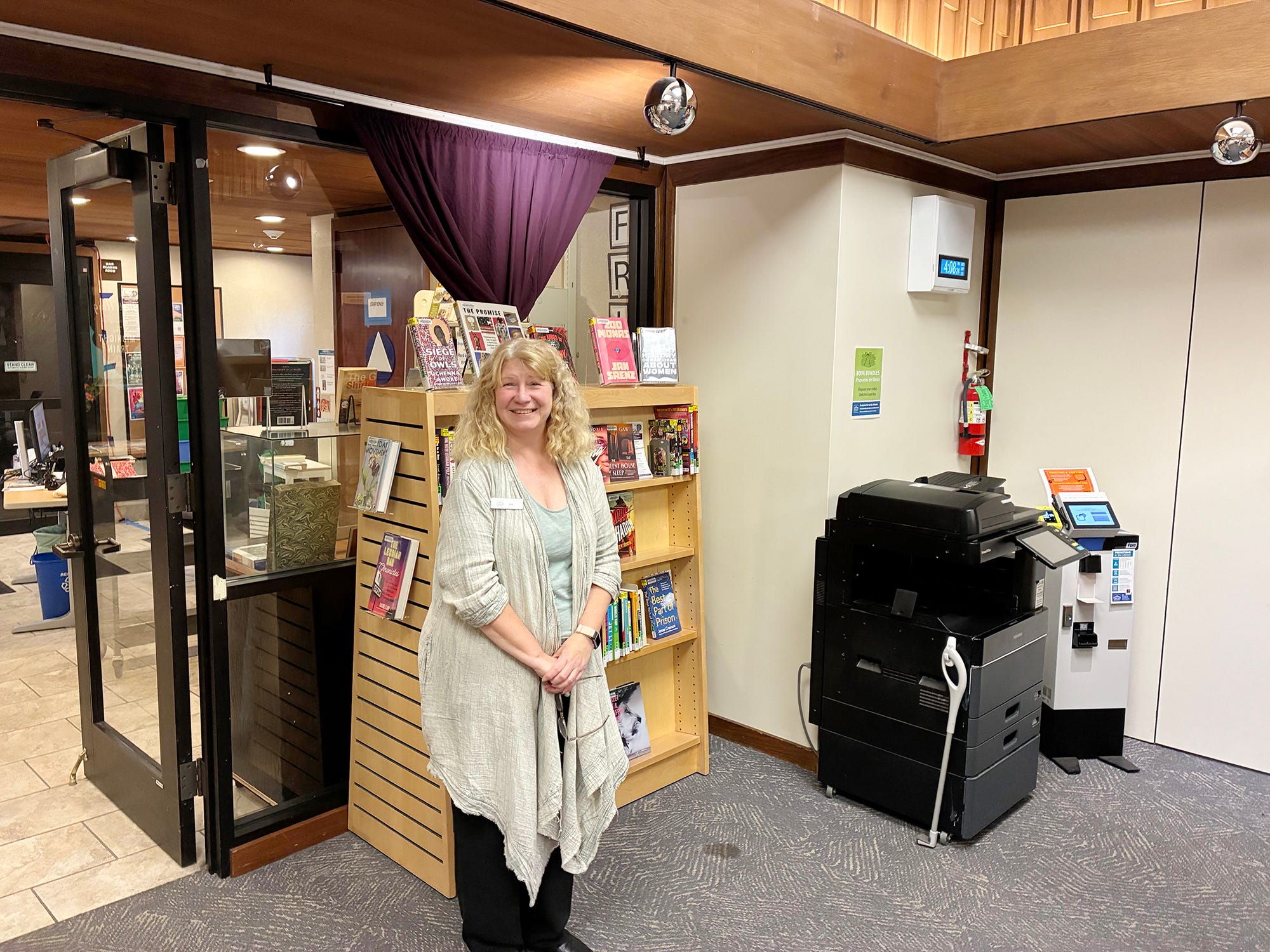
There’s good news and bad news at the Sebastopol Library: the mold removal has been completed and the building has tested clean, but the clean-up required such an extensive tear-out that the library probably won’t be open until the end of December or the beginning of January.
In the meantime, Branch Manager Deb Hoadley said library patrons have been coming to the Library-to-Go site in the building’s converted conference room, and they’re keeping the staff quite busy. She said there are regularly over 2,400 books on hold for Sebastopol patrons.
“There are so many readers in Sebastopol!” she said.
Sebastopol City Council approves $74K contract to rebuild the library’s interior
At last week’s council meeting, there was a short presentation and discussion about what’s happening with the Sebastopol Library, after which the council unanimously voted to award DMR Builders a $74,250 contract for interior repairs.
Public Works Director Oriana Hart began her presentation by reminding everyone of how this all began. “As everyone knows, we had an emergency closure in June when some mold was found, and on July 7th, council approved the contract to do the mold remediation of the interior of the library. That work started in the middle of July, and it finished towards the end of August. So the mold has been removed. The building has been tested, and it is currently clean. But the walls are now studs.”
At this point, Hart said the city faced a difficult decision. There has been a tremendous public clamor to reopen the library—a goal everyone shares. The problem is, despite intensive investigations, neither the city nor any of its contractors have been able to definitively determine where the moisture that caused the mold came from.
There are theories, however.
“What it’s looking like from what we can see on the walls is that the moisture is coming through the brick veneer, and the waterproofing — the moisture barrier behind the brick veneers — failed, so there’s going to need to be a CIP project to do the exterior siding of the library and, at some point, to do the drainage around the library. But engineering all of that will take some time as a government agency, and getting it right so that this doesn’t happen again will take some time.”
With the goal to reopen the library as soon as possible, Hart recommended the following: “Put the insulation and sheet rock back on the interior walls and paint them so that the library can reopen because we can do the exterior work while they’re open.”
The council received a number of letters questioning this approach. Some of these theorized that the cause of the leak was the solar panels on the roof, a suggestion Hart dismissed.
“One of the comments that keeps coming up is that somehow the solar on the roof has caused the roof to leak. The solar on the roof of the library does not penetrate the roof. There’s not a roof leak,” she said. “We’ve been in the attic, so that’s not where the moisture is coming from.”
“It really looks like it’s coming up from the bottom,” Hart said. “So we are going to ask the contractor, while they’re there, to work on some drainage solutions that’ll get us through this winter. Before we start putting anything back, we’re also doing moisture testing to see if there’s any really obvious spots where we can see water coming through. There just wasn’t a smoking gun.”
Hart also said the way the building is “sunken into the landscaping” with soil built up over the foundation could also be a source of the problem.
Hart believes that once the water got in—however it got in—the sort of plasticized, impermeable wallpaper installed by the library kept it there and caused the mold.
“The original assessment, I think, is still true. The wallpaper that was on the interior of a library was kind of holding the moisture there, so that was a driver of why there was mold there, and we’re not putting that [the wallpaper] back.”
It was clear from their comments that all the councilmembers—with the exception of Phill Carter, who was impressed with Hart’s speed and efficiency—were concerned about rebuilding the interior before the cause of the moisture had been identified.
“I hesitate to go ahead and authorize when we know there’s other problems that still need to be analyzed,” Councilmember Neysa Hinton said. “I really don’t want us to have egg on our face and go ahead and spend this money, and then all of a sudden we’ve got a problem because we rushed into it.”
Both Mayor Jill McLewis and Councilmember Stephen Zollman asked about the predictions for an excessively wet winter because of the current El Niño conditions in the Pacific.
Hart responded that they would be monitoring the moisture inside the walls – something she said they’d previously done at City Hall – to ensure that everything was OK.
The other option, Hart said, was to keep the library closed until next summer.
No one wanted that.
“I feel the library is such an important piece of this community, and it’s been so missing,” Hart said. “So this is an interim solution. It’s not the final solution. We do have more work to do.”
Hart also noted that Sonoma County Library had pledged $75,000 toward the library’s repairs. In public comment, Oliver Dick opined that “The County should be paying for the whole thing, and the county should be paying a proper rent as well.”
The council voted unanimously to move forward with the Sebastopol Library Building Rehabilitation Project in the amount of $74,250, authorizing the City Manager to approve change orders up to 20% of the contract award, or $14,850.
After the unanimous vote, McLewis said, “I am concerned about doing this. I publicly want to put that out there. I understand the need and all of that, but it really is very concerning for me.”
Hinton seconded that concern. “I’d rather move a little more slowly and make sure we have our ducks in a row, but if you’re telling me it’s okay, I’m going to support it tonight.”
At the Library to Go
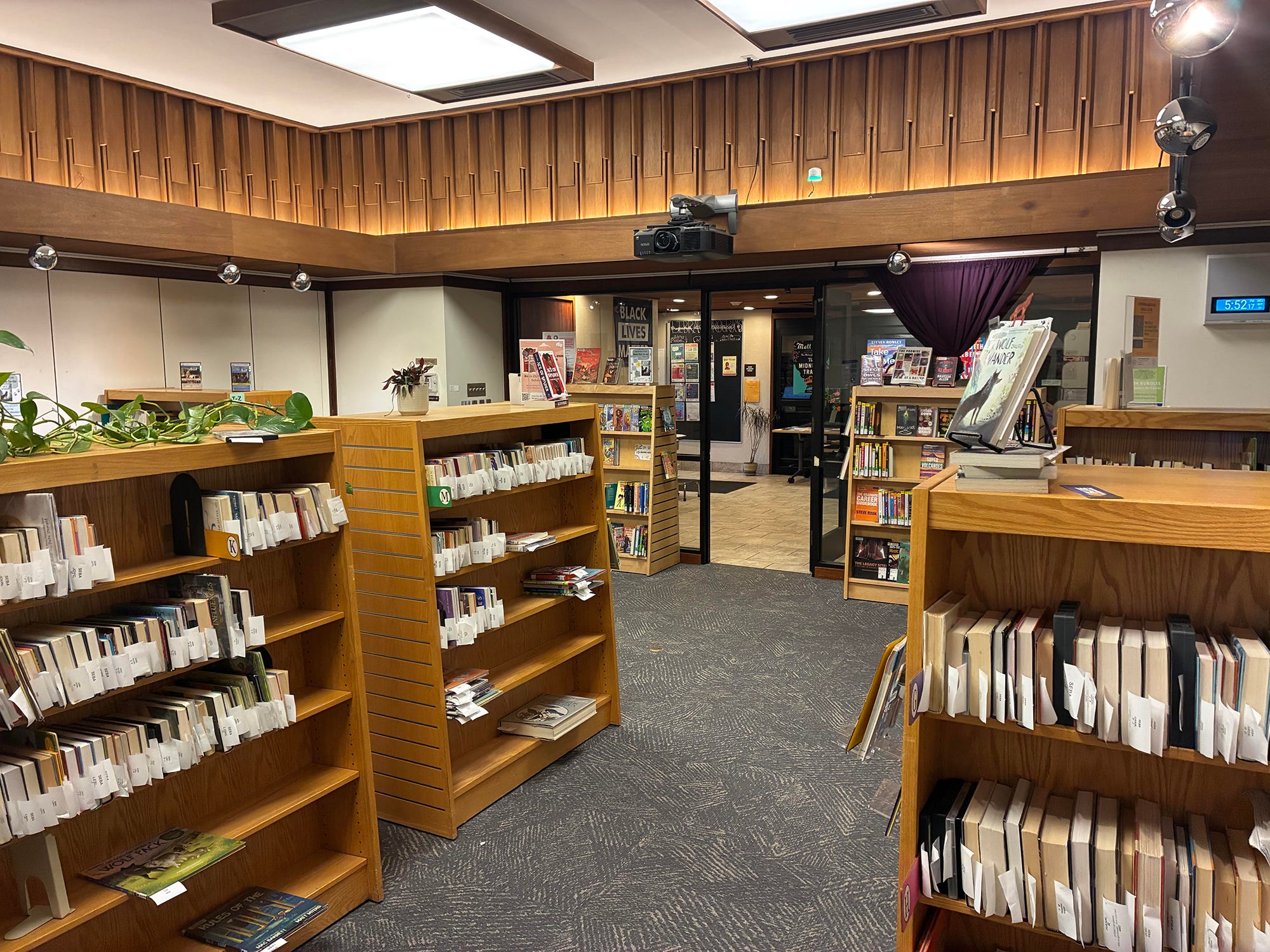
The Sebastopol Library to Go, located in the building’s entryway and conference room, opened in August and has been busy ever since, according to Hoadley. Library patrons can pick up holds they’ve placed online and browse a small section of new and “lucky day” books for adults.
What, you may wonder, is a “lucky day” book?
“A lucky day book is a book that can’t be put on hold, but if you find it on the shelf, it’s your lucky day because you can check it out,” Hoadley said, noting that these are usually in-demand titles with a lot of holds.
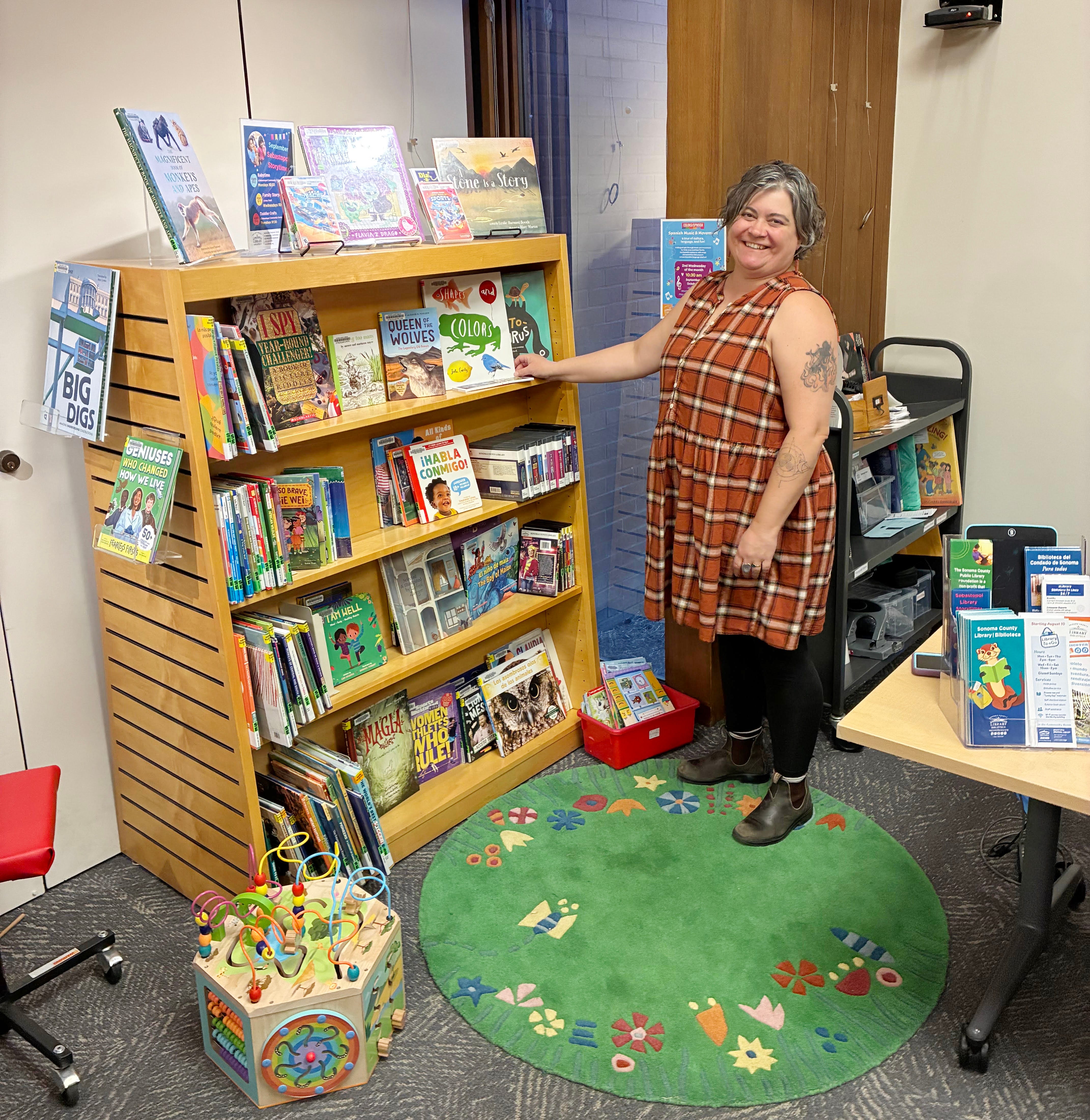
Although there’s a small children’s section at the library to go, most of the children’s programming is now held at the Sebastopol Youth Annex at 425 Morris St. “We’re still doing some family story time at Ives Park on Wednesday, but Baby Time and all the other children’s and teen programs are happening over at the annex,” Hoadley said.
What Hoadley is most excited about right at the moment is that they finally got a new printer-scanner that’s available for public use. “Our patrons were really missing our printer-copier,” she said. The trick is you need to bring your own device (phone or laptop) or you can upload your print job from home using the library’s e-printing service. The printer also does scanning.
The hours for the Sebastopol Library to Go are Monday, Tuesday, and Thursday from 2 pm to 6 pm and Wednesday, Friday, and Saturday from 10 am to 2 pm. Closed on Sundays.
Would it be helpful to understand what the original construction and rental/use agreements were for the Sebastopol library?
The original Sebastopol public library was funded by a $7500 Carnegie grant in 1916 and dedícated on June 4, 1917, operating under standard Carnegie municipal agreements requiring the town to provide the site free, public access, and an annual maintenance budget equal to 10% of the grant.
Original grant and construction:
The land designated on the original 1871 parcel map first housed a schoolhouse and later Lincoln Hall (a meeting place, early town hall, and community center). The original library was designed by Petaluma architect Brainerd Jones as a simple Classical Revival building.
Use and agreement terms:
* Carnegie mandate: Under the terms of the original 1916 Carnegie foundation agreement, the City of Sebastopol was (is?) legally bound to furnish the land for the building and pledge an annual tax or public maintenance fund of at least 10% of the value of the grant ($750 per year) to support ongoing operation, staffing and book purchases.
* Free public access: The agreement explicitly dictated that the building remain a free public library dedicated to the local community.
* Evolution of the site: After the original building was damaged and deemed too costly to repair after the 1969 earthquake, it was demolished in 1975. A new facility was constructed on the same historic civic-use parcel in 1974-1976.
I appreciate the work being done to remedy the problem. I love living in a town in which the community highly values and frequently utilizes the library!