

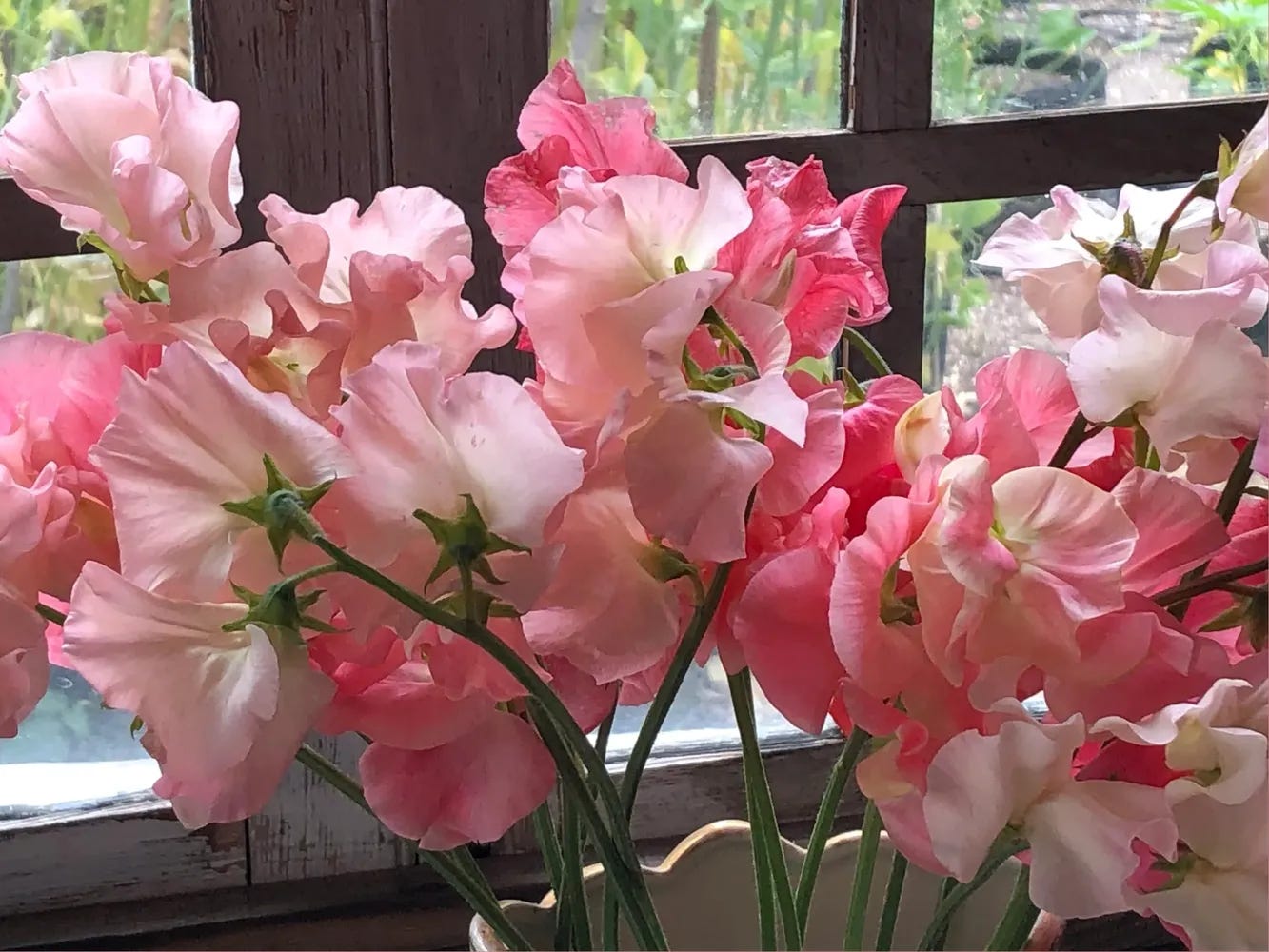
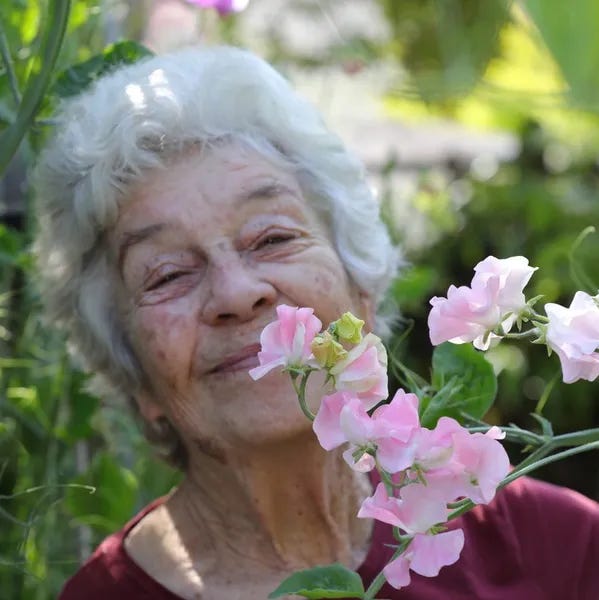
Glenys Johnson has been growing sweet peas almost all her life, and at 78, she’s still at it—growing them in tubs in the small backyard of her house on Florence Avenue.
Johnson, who grew up in Southern California, is the owner of Enchanting Sweet Peas (enchantingsweetpeas.com). She moved to Sebastopol in 1975, and she and a friend who grew herbs each decided to try making money from their love of gardening.
For several years, Johnson grew sweet peas for florists and farmers markets, but in 1997, she shifted to selling seeds. But not just any seeds. When she began working with florists, they told her about a variety called English Spencer sweet peas, which have a longer stem and a larger blossom.
“So, I started buying seeds from England, and it was true,” she said. “They were stupendous—I mean, all sweet peas are beautiful and fragrant, but these things were so giant. The blossoms were giant, and the stems were really long, and I started selling those.”
Sweet peas are thought to have originated in the Mediterranean region—in Sicily, parts of southern Italy, and the Aegean Islands. But they had their apotheosis in England at the beginning of the 20th century, with the family of Lady Diana—formerly Diana Spencer.
According to the National Sweet Pea Society, a British organization, “The first of the tall, large-flowered, frilly sweet peas which we know so well today was introduced in 1901 and named ‘Countess Spencer.’ All subsequent varieties with this form are known as Spencers, and they are the most popular form grown today.”
“All sweet peas come from one small, fragrant one,” Johnson said. “Supposedly, the Earl of Spencer and his gardener noticed that one of the sweet peas had a little bit bigger blossom or had a ruffly edge, and so they saved the seed from that, and from that came all these other different colors.”
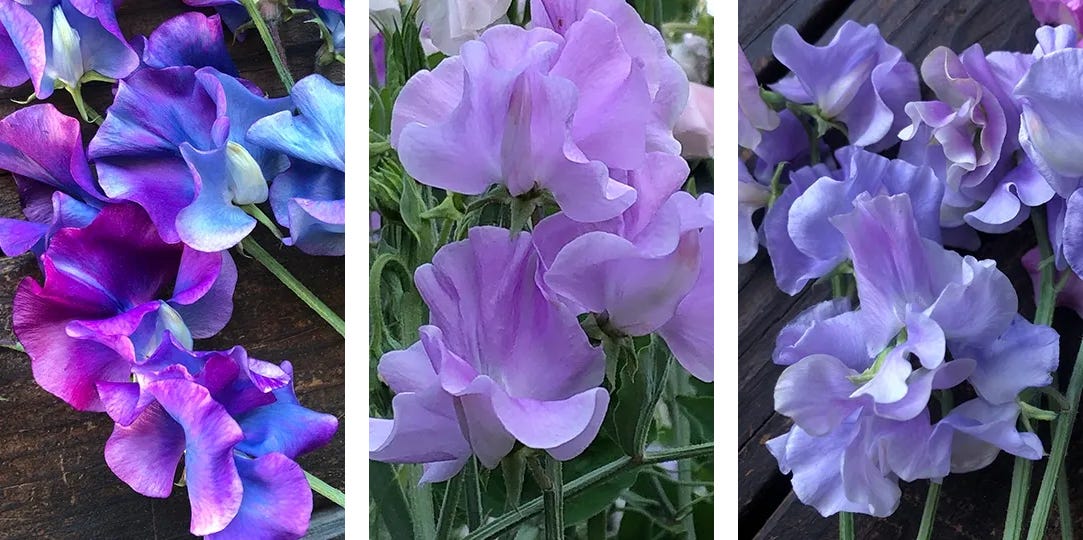
But the real joy of sweet peas isn’t just about their color or their shape, it’s their gorgeous fragrance. “The fragrance isn’t like any other, and it transports you back in time to when you first smelled them, like when you were with your grandmother,” she said. “It really is lovely, and it’s been very fun to grow them.”
For years, Johnson grew her sweet peas — and had annual sales — at a gated, empty lot next to Analy Veterinary on Gravenstein Highway at the north end of Sebastopol, where she held well-attended annual sales. When the owner of that property decided to do something else with that lot, Johnson hired a local woman to grow Spencer Sweet Peas on her farm in west county—not for the flowers, but just for the seeds. When that woman found something else to do, Johnson resumed planting them in her backyard in town.
Sweet peas are generally planted in the fall—she starts selling seed in September—but they can be planted through winter. Right now, we’re at the very end of the planting season for sweet pea.
Johnson said that different varieties of sweet peas can be grown close together without the fear of cross-pollination because “the pollination happens before the flowers even open up, because they have male and female in the same one, so they tend to stay true.”
Unlike many the owners of many seed companies, Johnson invites her customers to save the seeds from their plants for the next year.
“I tell people here they can save the seeds from them if they want,” she said. “Inside each flower, each blossom has a little pod, that gets bigger and fills out. Wait till the pods turn brown and the seeds kind of rattle in the pod. Then you can harvest them. Put them in a paper bag or something so they can breathe. They will pop open on their own. In fact, you can hear them on a hot day. Sometimes the pods will pop open and seeds will fly out and hit things.”
Interestingly, Johnson said that in the 1950s, the area that is now Rohnert Park was once famous for its sweet peas.
“I think it was like 50 acres, or quite a lot of acres. It was right along Old Redwood Highway, and people would drive up from the city or take the train up, to see them all in bloom and to smell them. And then later on, it sounded like firecrackers going off because they were all popping.”
Johnson is proud of the life she’s built from the humble sweet pea—and even though she’s scaled back some as she’s gotten older, she still enjoys the job she created for herself.
“I do everything, you know: the marketing, the planting, the harvesting, the packaging, the shipping. I’m a one-man band.”
Which part of her job does she like the most?
“I like the growing part. I like the germinating part. But I also like designing the postcards I send out to customers,” she said.
She also enjoys speaking at local garden clubs. “I have a lot of wisdom that I have gained around sweet peas. I don’t know that much about a lot of other plants, but I know a lot about sweet peas—though, of course, there’s always more to learn.”
You can order seeds and get the benefit of Glenys Johnson’s sweet-pea wisdom at her website, enchantingsweetpeas.com.
Thank you for this great information right around the corner from me. Just placed my order for some seeds. I planted some regular ones awhile ago but i don’t think they’ll be anything like these. Very excited. Hope they grow!
Are sweet peas poisonous to dogs?